

Gastric sleeve surgery is often presented online as a short route to a smaller stomach and a fixed price abroad. That description leaves out the parts that matter most to a patient: whether surgery is appropriate in the first place, who is responsible for each stage of care, how risks are assessed, what long-term nutrition and follow-up involve, and whether travel plans are clinically sensible.
A sleeve gastrectomy is one type of metabolic and bariatric surgery. It can be an important treatment option for some people, but it is not a cosmetic procedure, a substitute for medical assessment, or a guarantee of a particular weight, health or appearance outcome. The right procedure and care plan depend on the person’s health, previous treatment, eating pattern, medicines, reproductive plans, support system and ability to engage with long-term follow-up.
For an overview of the wider treatment area, explore Venoramed’s Bariatric Surgery treatment information. Patients who are researching named clinicians can also compare published Bariatric Surgery doctor profiles before requesting consultation support.
Venoramed is a medical marketplace and coordination platform. It does not perform bariatric surgery, decide whether a patient is suitable, prescribe a diet or supplements, provide emergency care, or guarantee a clinical outcome. Any decision to have surgery, stay abroad or return home should follow an individual assessment and written plan from the treating clinical team.
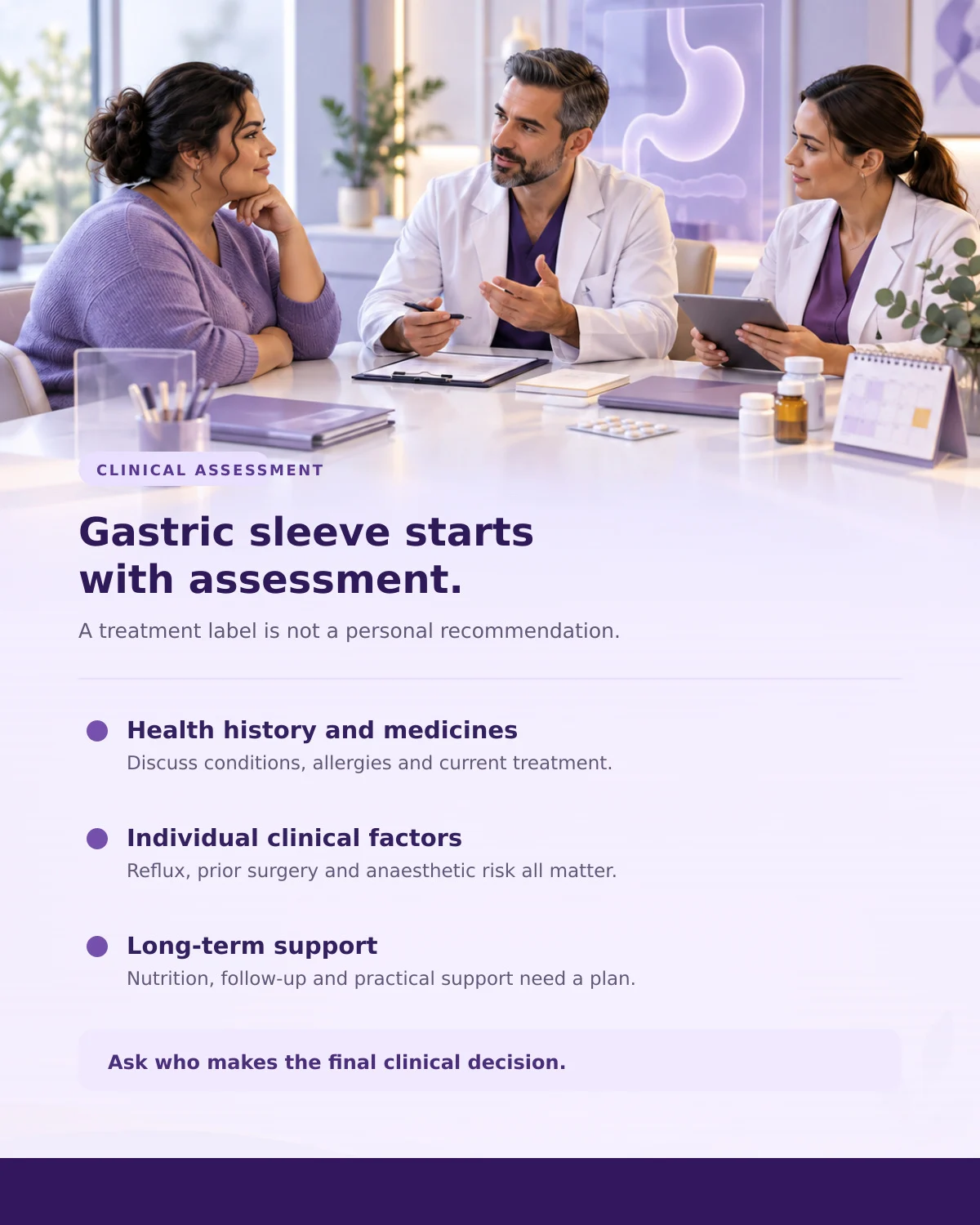
What gastric sleeve surgery means – and what it does not promise
In a sleeve gastrectomy, a surgeon removes part of the stomach and leaves a narrower, tube-shaped stomach. Unlike gastric bypass, the procedure does not reroute the small intestine. It is usually described as an irreversible operation because stomach tissue is removed. The exact surgical approach, anaesthetic plan, length of admission and recovery instructions are individual clinical decisions.
The operation can affect how much a person can comfortably eat and can change hormonal signalling related to appetite and metabolism. Those effects are only one part of care. Eating habits, protein and fluid intake, vitamin and mineral supplements, blood tests, movement, mental health, medications and follow-up still matter after surgery.
No article can tell a reader that a sleeve will be the best procedure, that it will resolve a particular medical condition, or that it will deliver a particular amount of weight loss. Responsible discussion starts with diagnosis and goals, then compares the options that a multidisciplinary team considers appropriate.
Who may be considered for gastric sleeve surgery?
Body mass index (BMI) can be part of an initial conversation, but it is not an online eligibility certificate or a price threshold. The 2022 ASMBS/IFSO indications recommend metabolic and bariatric surgery for adults with a BMI above 35 kg/m2, regardless of co-existing conditions, and say it should be considered for some people with metabolic disease and a BMI of 30-34.9 kg/m2. National guidance, local regulation, insurance rules and the individual clinical picture can differ.
A safe assessment should also consider factors such as:
- Weight and health history, including previous attempts at non-surgical treatment.
- Type 2 diabetes, sleep apnoea, high blood pressure, fatty liver disease, joint disease and other relevant conditions.
- Reflux, swallowing symptoms, stomach conditions and previous abdominal or bariatric surgery.
- Current medicines, allergies, nicotine use, alcohol or substance use, and anaesthetic risk.
- Nutritional status, previous deficiencies and the ability to take and monitor supplements.
- Mental-health history, eating behaviour, expectations and practical support after surgery.
- Pregnancy plans, fertility considerations and the need to discuss timing with the relevant clinicians.
- Whether the patient can access structured long-term follow-up after returning home.
These factors do not work as a tick-box list and none should be self-interpreted as automatic approval or rejection. A team may recommend further tests, medical optimisation, non-surgical treatment, another procedure, delayed surgery or no operation at all. That is a sign of clinical planning, not an administrative obstacle.
The choice between gastric sleeve and gastric bypass should likewise come after assessment of the individual’s health, symptoms, risks and long-term needs-not after comparing marketing labels or hotel nights.
Why multidisciplinary care matters
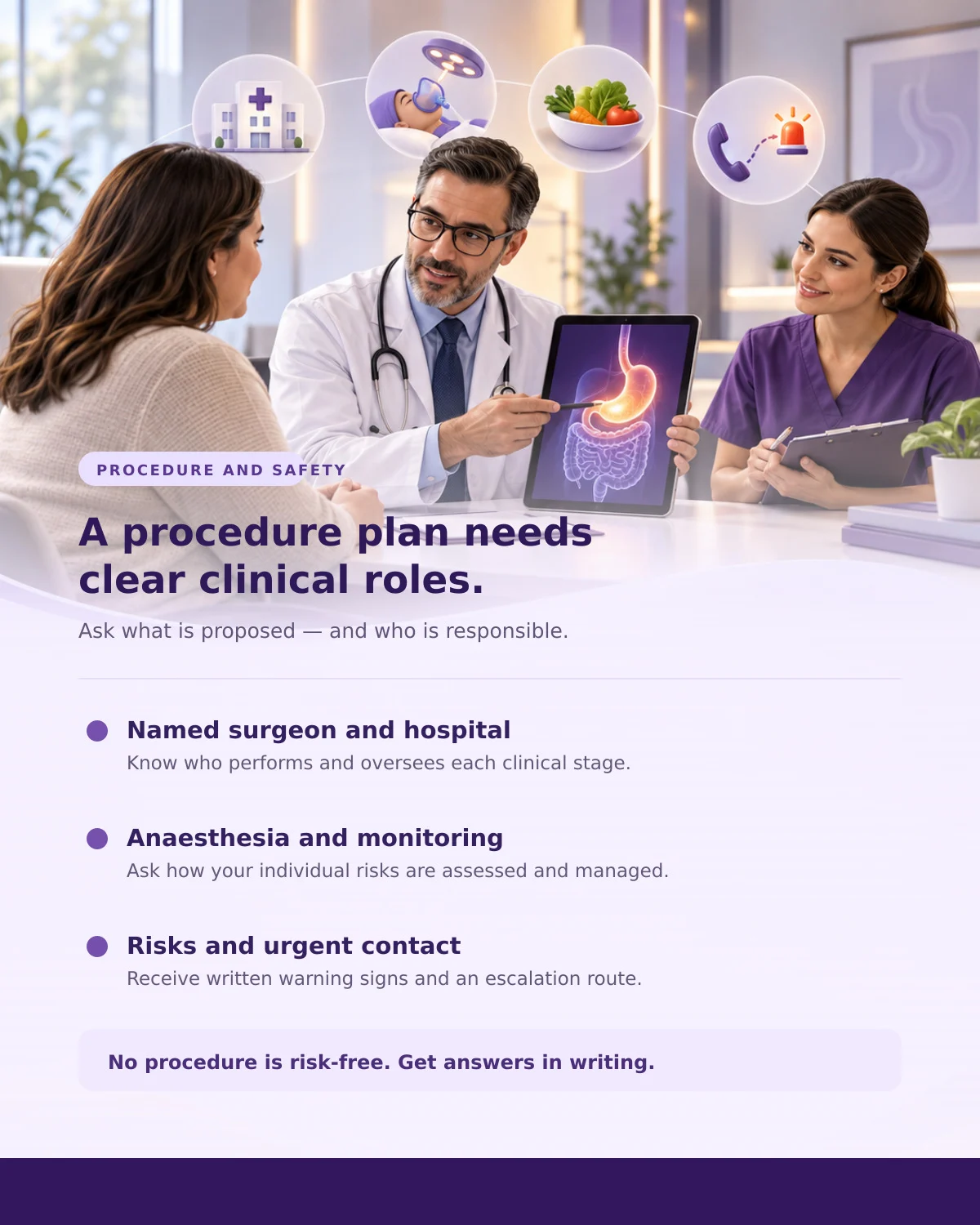
Surgery is one stage of a longer treatment pathway. A well-defined bariatric service should be able to explain who assesses the patient, who makes the final clinical decision, who delivers nutrition support, how anaesthesia is planned and who remains available if concerns arise after discharge.
| Role | Questions a patient can ask |
| Bariatric surgeon | Who recommends the procedure, performs it, explains alternatives and remains clinically responsible for the operation? |
| Anaesthesia team | How will anaesthetic fitness, medicines, allergies, sleep apnoea and other risks be reviewed? |
| Physician or relevant specialist | Which health conditions need optimisation or ongoing monitoring before and after surgery? |
| Dietitian or nutrition professional | What are the staged diet, protein and fluid goals, supplement plan, blood-test schedule and route for questions? |
| Psychological or behavioural-health support | How are expectations, eating behaviour, adjustment and support needs assessed? |
| Nursing and aftercare team | Who provides discharge instructions, wound guidance, escalation advice and follow-up contact? |
The American Society for Metabolic and Bariatric Surgery describes integrated care as involving disciplines such as surgery, nutrition, behavioural health, nursing, exercise and obesity medicine. The purpose is not to make a package look more comprehensive; it is to make sure decisions and follow-up reflect the patient’s whole clinical situation.
Before paying a deposit, use a written doctor and clinic safety checklist to verify the hospital, named clinicians, roles, credentials, emergency arrangements and post-discharge contact route. A coordinator can help with scheduling, translation and travel, but coordination is not the same as clinical assessment or surgical responsibility.
Preparing for an online consultation and hospital assessment
An online review can help a bariatric team decide what information is still missing. It should not be represented as a final surgical clearance unless the treating clinician says so after the appropriate assessment.
Ask in advance which records are needed. Useful records may include a medical summary, medication and allergy list, weight history, relevant blood results, reports of previous abdominal surgery, sleep-study results, diabetes information and any existing gastroenterology or mental-health documentation. The exact list must come from the clinical team.
Venoramed’s medical-records checklist for an online consultation can help patients organise information before they share it through an appropriate, secure route. Ask who will review the records, how unanswered questions will be resolved in person and what circumstances could change the proposed plan.
It is also sensible to obtain written answers to these questions:
- What is the suspected reason that a sleeve is being considered for me?
- What reasonable alternatives are being considered, including non-surgical options?
- Which pre-operative tests, specialist reviews or lifestyle changes are required?
- Who is the named surgeon, and which hospital will be responsible for the admission?
- What happens if the assessment finds that surgery should be postponed or changed?
- What is the emergency pathway while I am in Turkey and after I return home?
The operation, recovery and risks: discuss the full picture
Most sleeve gastrectomies are performed using keyhole techniques, but a patient should obtain the details of their own proposed procedure directly from the surgeon. It is more useful to understand the decision-making and safety arrangements than to focus on instrument names or a generic operation timetable.
Every operation carries risk. Depending on the person and procedure, possible early complications can include bleeding, infection, anaesthetic complications, injury to surrounding structures, a leak from the stomach staple line, blood clots, pain, nausea, vomiting or dehydration. Some risks may appear later or require long-term management, including reflux or worsening heartburn, narrowing or swallowing problems, gallstones, nutritional deficiencies, weight regain and the need for further assessment or treatment.
The probability and relevance of each risk are individual. A patient should ask the surgeon which risks matter most in their own case, how they are reduced, how complications are diagnosed and treated, and whether the hospital has appropriate facilities if a higher level of care is needed.
Do not wait for a message from a coordinator if symptoms are severe, rapidly worsening or potentially life-threatening. Follow the emergency instructions given by the treating team and seek urgent local medical care for symptoms such as severe difficulty breathing, chest pain, loss of consciousness, uncontrolled bleeding, severe allergic reaction, or any other emergency symptoms. For international-care planning, read Venoramed’s guide to complications after treatment abroad before booking travel.
Diet stages, vitamins and long-term monitoring
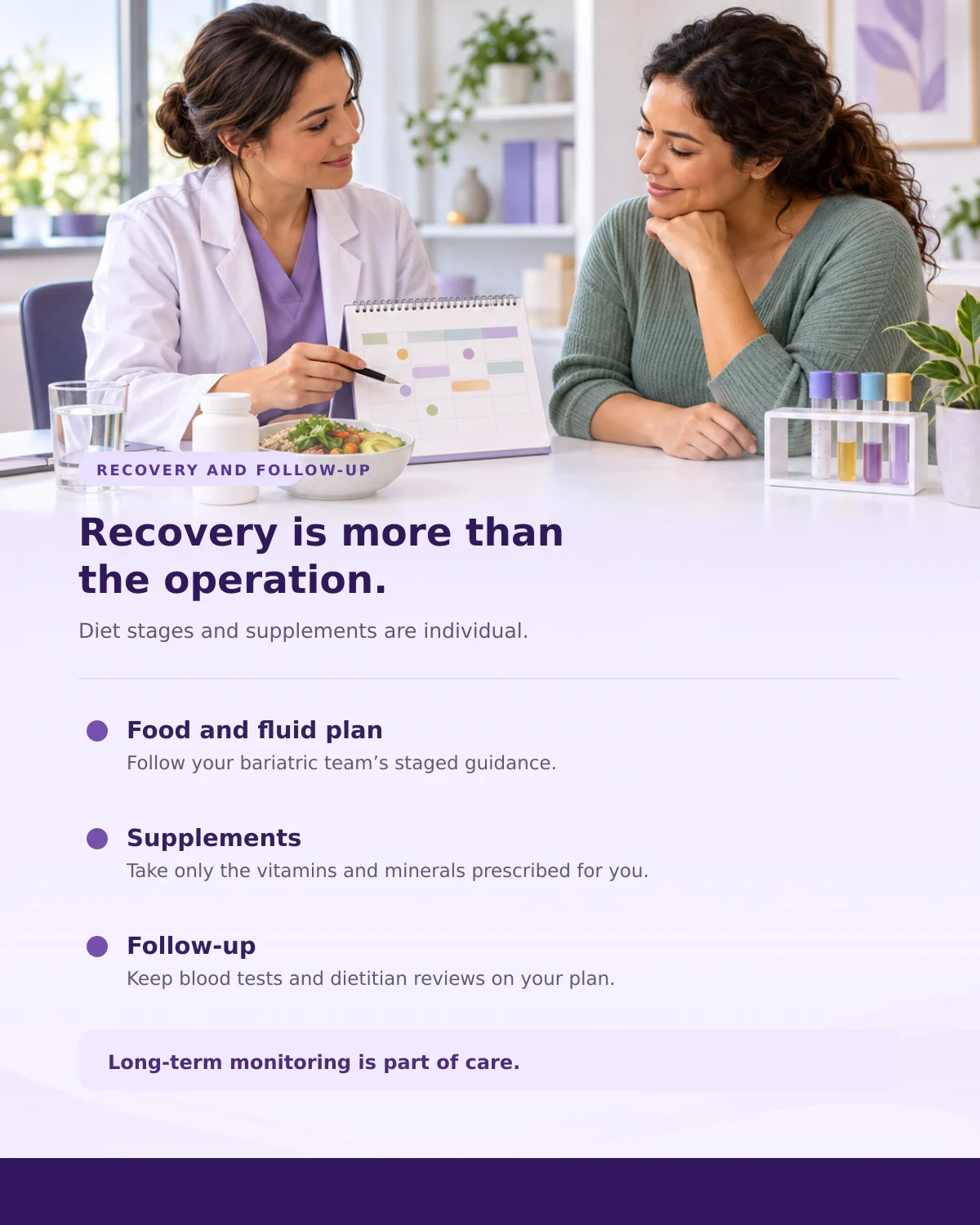
The first weeks after surgery usually involve a staged progression in food and drink, but the timing, permitted textures, portion guidance and medications must come from the treating bariatric team. A generic online menu can be unsafe because patients differ in their procedure, tolerance, co-existing conditions, hydration needs and clinical recovery.
Before discharge, ask for written instructions that explain:
- The phase-by-phase eating and drinking plan, including what to do if intake is difficult.
- Protein and fluid goals that are appropriate for the individual.
- Which medicines can be taken, in what form, and who will review changes.
- Which vitamins and minerals are prescribed, how they should be taken and who will renew them.
- Dates or criteria for blood tests, dietitian reviews and surgical follow-up.
- Which symptoms require a routine call and which require urgent medical assessment.
Long-term nutritional care is a core part of bariatric treatment, not an optional extra to remove from a quotation. ASMBS patient guidance says that bariatric patients need ongoing vitamin and mineral supplementation and monitoring. BOMSS guidance likewise stresses that nutritional deficiencies can occur after bariatric surgery and that long-term follow-up is essential. The precise supplements and blood tests depend on the procedure and the patient; they should be prescribed and interpreted by the responsible clinical professionals.
The phrase life after bariatric surgery should include more than early recovery. It includes follow-up, nutrition, mental and social adjustment, ongoing health care and planning for any future changes in weight or health.
Previous surgery, persistent symptoms and revisional care
Someone who has had a previous gastric band, sleeve, bypass or another abdominal operation may need a more detailed review. Persistent reflux, difficulty swallowing, malnutrition, unexpected weight changes, complications or weight regain should not be treated as a simple reason to buy a second procedure abroad.
The aim of assessment is to identify the cause and decide whether medical management, nutrition support, endoscopy, imaging, another specialist review or surgery is appropriate. Any discussion of revisional bariatric surgery should be led by an appropriately qualified team with access to the relevant records and investigations.
Planning travel to Turkey without treating travel as aftercare
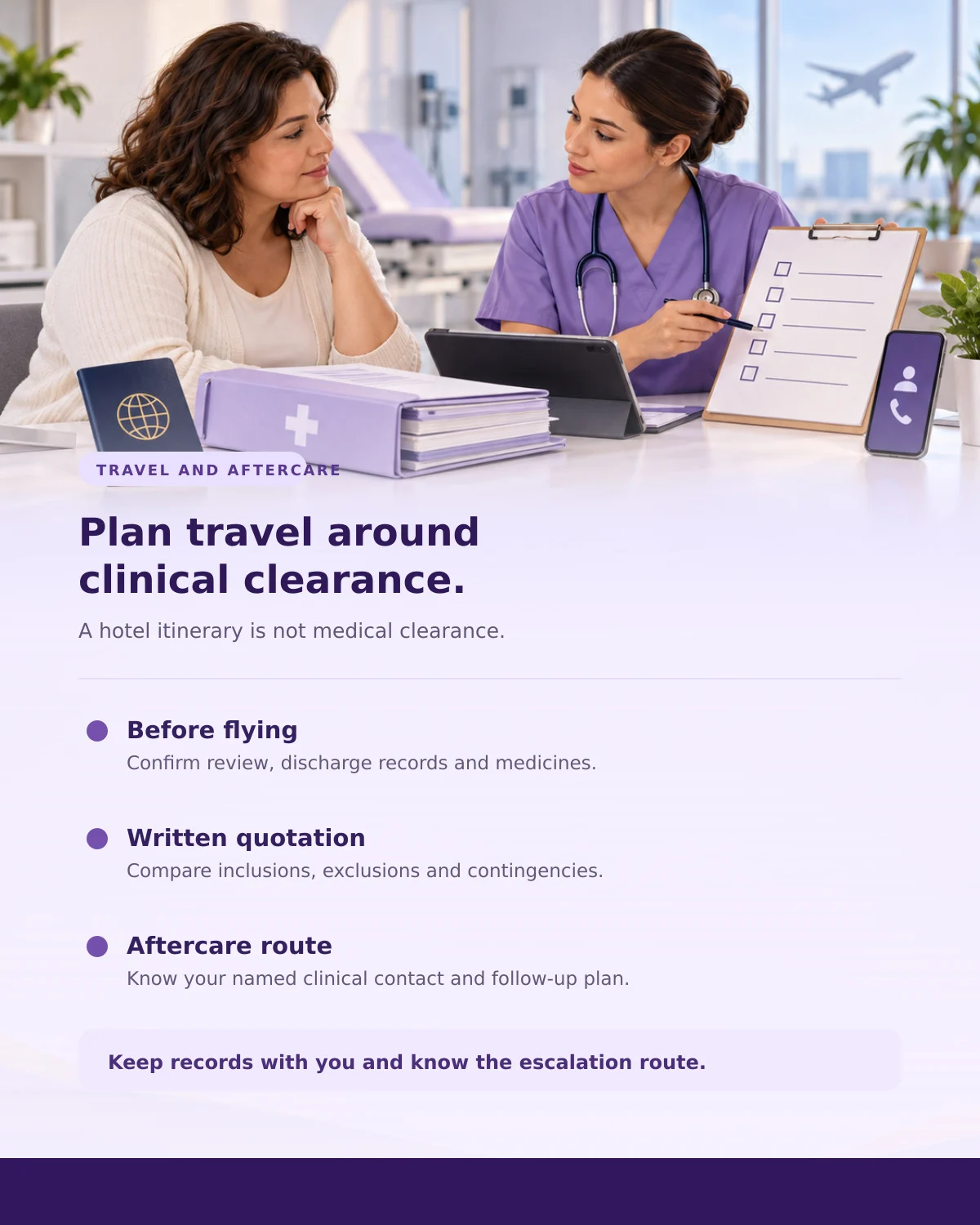
For international patients, travel is part of the clinical plan. The appropriate length of stay depends on the procedure, recovery, early reviews, medication, comfort, the patient’s medical history, flight duration and the surgeon’s assessment. It should never be inferred from the number of hotel nights included in a package.
The CDC’s medical-tourism guidance notes that surgery and air travel can each increase the risk of blood clots, especially when travel involves prolonged sitting. This does not create one universal no-fly period for gastric sleeve patients. It does reinforce the need for an individual travel plan, clear mobilisation advice, a clinician-approved return date and a route for urgent care.
Before booking a non-changeable flight, obtain written answers to:
- Which in-person review or clinical check is required before travel?
- Is the proposed return date medically suitable for my case?
- What medication, discharge summary and contact details should I carry?
- Who will answer clinical questions after I return home?
- What should I do if I am not well enough to travel on the planned date?
- How will follow-up, nutrition monitoring and prescription renewal be arranged locally?
Venoramed’s guide to how long to stay in Turkey after surgery explains why a fixed itinerary should not replace medical clearance. Patients should also read the Medical Tourism in Turkey guide for broader planning questions about records, communication and continuity of care.
How to compare a gastric sleeve quotation
There is no responsible universal price for gastric sleeve surgery in Turkey. A final cost can depend on medical complexity, hospital, surgeon, room and admission requirements, tests, anaesthesia, possible changes to the plan, the extent of follow-up and what is included or excluded from travel arrangements.
Instead of comparing a headline price alone, request a dated written quotation in a language you understand. It should identify the treating hospital and named clinical responsibility, then distinguish clinical items from non-clinical travel and coordination services.
Ask whether the quotation includes or excludes:
- Surgeon, anaesthesia, hospital and theatre fees.
- Pre-operative assessment, tests and any additional specialist review.
- Admission, nursing care, medication and discharge supplies.
- Dietitian input, written dietary guidance, supplements and blood-test planning.
- Translation, transfers, accommodation and companion arrangements, if offered.
- Early review, remote follow-up and the clinical contact route after return home.
- Extra nights, unplanned tests, treatment of complications, cancellation or a clinically required change of plan.
No quotation removes the possibility that clinical circumstances can change. Venoramed’s guide to medical treatment costs in Turkey explains how to compare scope, exclusions and evidence of clinical responsibility rather than relying on a package label.
Questions to ask before deciding
- Why might gastric sleeve be suitable or unsuitable for me?
- Which other treatments or operations are being considered, and why?
- Who will make the final decision after in-person assessment?
- Who is the named surgeon and what is the hospital’s emergency capability?
- How will reflux, previous surgery, diabetes, sleep apnoea, medicines and nutritional risks affect my plan?
- What complications are most relevant to me, and how are they managed?
- What exactly will I eat and drink after surgery, and who will adjust that plan if I struggle?
- Which vitamins, minerals and blood tests will I need, and who will manage them after I return home?
- How much time should I remain in Turkey before flying, and what could change that plan?
- What records will I receive before leaving the hospital?
- What is included and excluded in the written quotation?
- Who provides clinical follow-up after I return, and how do I contact them outside normal hours?
Frequently Asked Questions
Is gastric sleeve the same as gastric bypass?
No. A sleeve gastrectomy changes the size and shape of the stomach without rerouting the small intestine, while gastric bypass changes both the stomach and the route food takes through part of the digestive system. Neither is automatically the better option; the appropriate choice needs individual assessment.
What are the main risks of gastric sleeve surgery?
Risks can include bleeding, infection, anaesthetic complications, leak, blood clots, dehydration, reflux, nutritional deficiencies and possible need for further treatment. This is not a complete personal risk assessment. Ask the named surgeon which risks apply to you and how the hospital manages them.
Will I need vitamins and blood tests after gastric sleeve surgery?
Long-term supplements and nutritional monitoring are commonly part of bariatric care. The exact supplements, dosage and blood-test schedule must be set by the responsible bariatric team and reviewed over time.
How long should I stay in Turkey after gastric sleeve surgery?
There is no universal number of nights. The treating clinician should assess recovery, required reviews, travel duration, medication, complications and individual medical factors before clearing a return journey.
Can a package price guarantee my final cost?
No. A package description should be supported by a written quotation that identifies what is included, excluded and clinically conditional. If assessment or recovery changes the plan, the cost and itinerary may also change.
Can I fly home as soon as the hotel stay ends?
Do not treat the hotel schedule as medical clearance. Confirm the return date with the treating clinical team and make sure you have discharge records, medicines, emergency guidance and a continuity-of-care plan before travelling.
Can a gastric sleeve be revised later?
Some patients need further assessment or treatment after previous bariatric surgery, but revisional care is not routine and should not be chosen from advertising. A specialist team needs to understand the symptoms, prior operation and relevant investigations first.
Explore bariatric-surgery options with Venoramed
Explore Bariatric Surgery treatment information and compare available Bariatric Surgery doctor profiles before requesting consultation or coordination support.
Venoramed is a medical marketplace and coordination platform. It does not provide direct treatment, decide surgical suitability, prescribe post-operative diets or supplements, diagnose complications, or guarantee medical, weight-related or cosmetic outcomes. Treatment, recovery and travel decisions should follow an individual assessment by an appropriately qualified multidisciplinary bariatric team.




Leave a Comment
Share your question or experience. Venoramed reviews comments before publishing.