

One of the most important questions when planning surgery abroad is also one of the most difficult to answer:
How Long to Stay in Turkey After Surgery: Key Factors
The correct answer is not determined by the flight schedule, the number of hotel nights included in a package or the date on which a patient feels well enough to leave their room.
A patient should remain in Turkey long enough to:
- Complete the planned early follow-up appointments
- Allow the treating team to assess initial recovery
- Identify early complications where possible
- Receive clear discharge and aftercare instructions
- Obtain relevant medical records
- Be individually assessed as fit to travel
Patients who are still evaluating treatment abroad may first benefit from reading our practical guide to medical tourism in Turkey, which explains how to research providers, compare treatment information and prepare for medical travel.
For some common cosmetic procedures, general guidance refers to waiting approximately five to ten days before flying. Major chest or abdominal operations may require at least ten days before air travel, and some patients will need considerably longer. The final decision must come from the treating medical team after assessing the individual patient and procedure.
Venoramed is a medical marketplace where international users can explore treatment categories and specialist doctor profiles in Turkey. It is not a clinic or hospital and cannot determine when a patient is medically fit to fly. Travel clearance must be provided by the treating healthcare professional.
The Practical Answer
Patients should not ask only:
“What is the minimum number of nights I can stay?”
A more useful question is:
“How long do I need to remain close to my treating team, complete the required follow-up and recover sufficiently for the journey home?”
The planned stay should cover three separate stages:
- Treatment and hospital discharge
- Early recovery and follow-up in Turkey
- Medical clearance for the return journey
Being discharged from a clinic or hospital does not automatically mean that the patient is ready for an airport transfer, several hours of waiting, a long flight and the journey from the destination airport to home.
Why Staying Long Enough Matters
Surgery places temporary demands on the body. Air travel can add further challenges, including prolonged sitting, carrying luggage, walking through large terminals, reduced cabin pressure and limited access to the treating team.
The CDC states that surgery and air travel independently increase the risk of blood clots. Travelling during the post-operative period can increase that risk further because the patient may remain seated for a long time while still in a more clot-prone state.
Remaining in Turkey for an appropriate period also allows the treating team to:
- Review wounds or treatment sites
- Check swelling and bleeding
- Assess hydration and mobility
- Review pain control and medication
- Remove or inspect dressings when required
- Confirm that the patient can eat and drink appropriately
- Assess whether additional tests are needed
- Modify the aftercare plan
- Decide whether the return journey should be delayed
The NHS treatment-abroad checklist advises patients to remain in the country where they received treatment for a suitable recovery period before travelling home. It also recommends planning financially for the possibility of an extended stay.
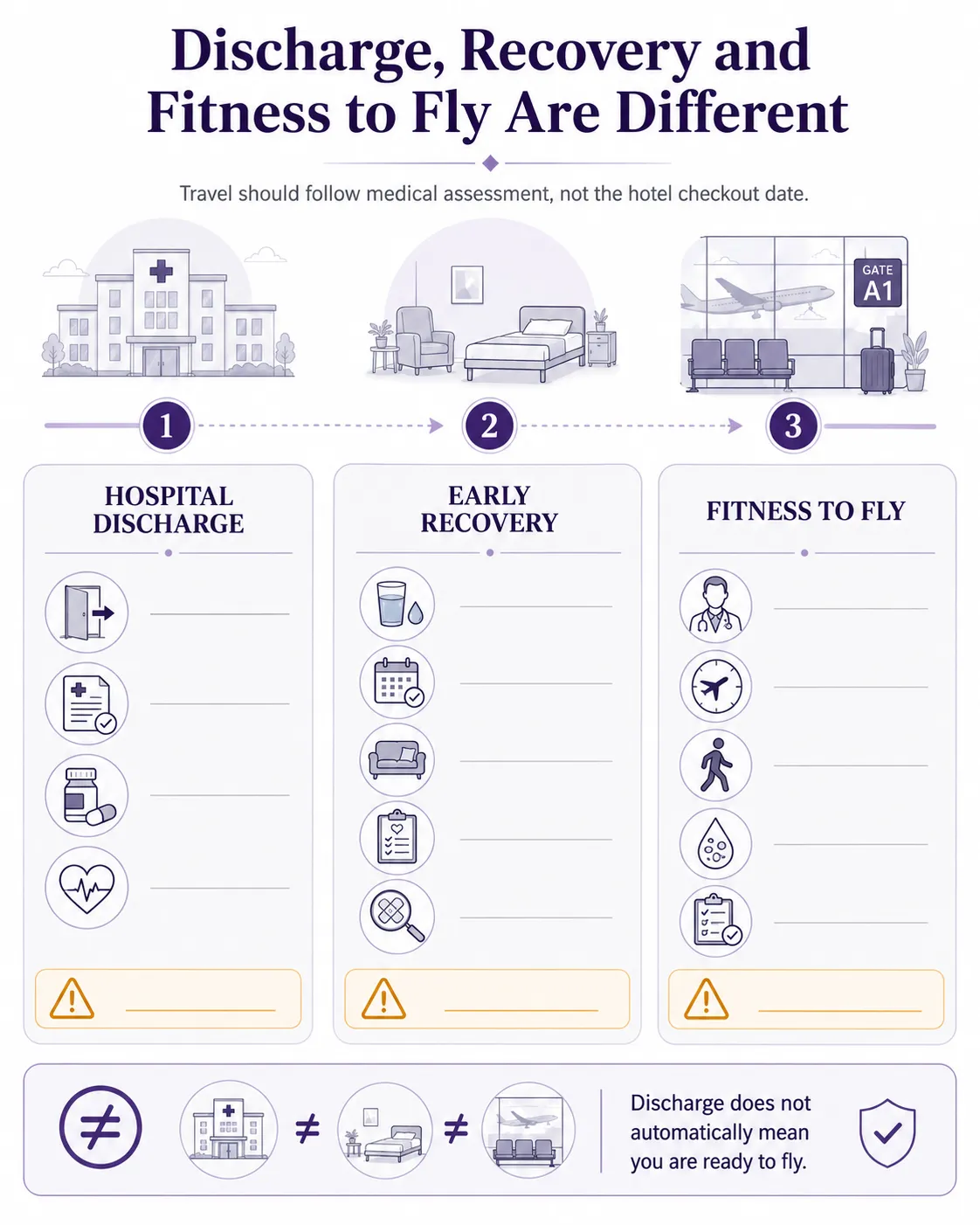
Recovery, Discharge and Fitness to Fly Are Different
These terms should not be treated as interchangeable.
Hospital Discharge
Discharge means that the medical team has decided the patient no longer requires that particular level of hospital or clinic care.
It does not necessarily mean the patient is ready to:
- Travel alone
- Carry luggage
- Walk long distances
- Sit upright for several hours
- Manage medication without assistance
- Deal with flight delays
- Be far from the treating facility
Early Recovery
Early recovery is the period during which pain, swelling, bruising, reduced mobility, fatigue or dietary restrictions may still be significant.
A patient may feel reasonably comfortable in a hotel while still being unsuitable for a long journey.
Fitness to Fly
Fitness to fly involves assessing whether the patient can tolerate the complete journey without an unacceptable medical risk.
The assessment may consider:
- Type of surgery
- Anaesthesia
- Blood-clot risk
- Mobility
- Breathing
- Bleeding
- Pain
- Hydration
- Wound condition
- Medication
- Flight duration
- Need for oxygen or assistance
- Availability of care after arrival
The airline may also have its own requirements, including a medical information form or fit-to-fly certificate.
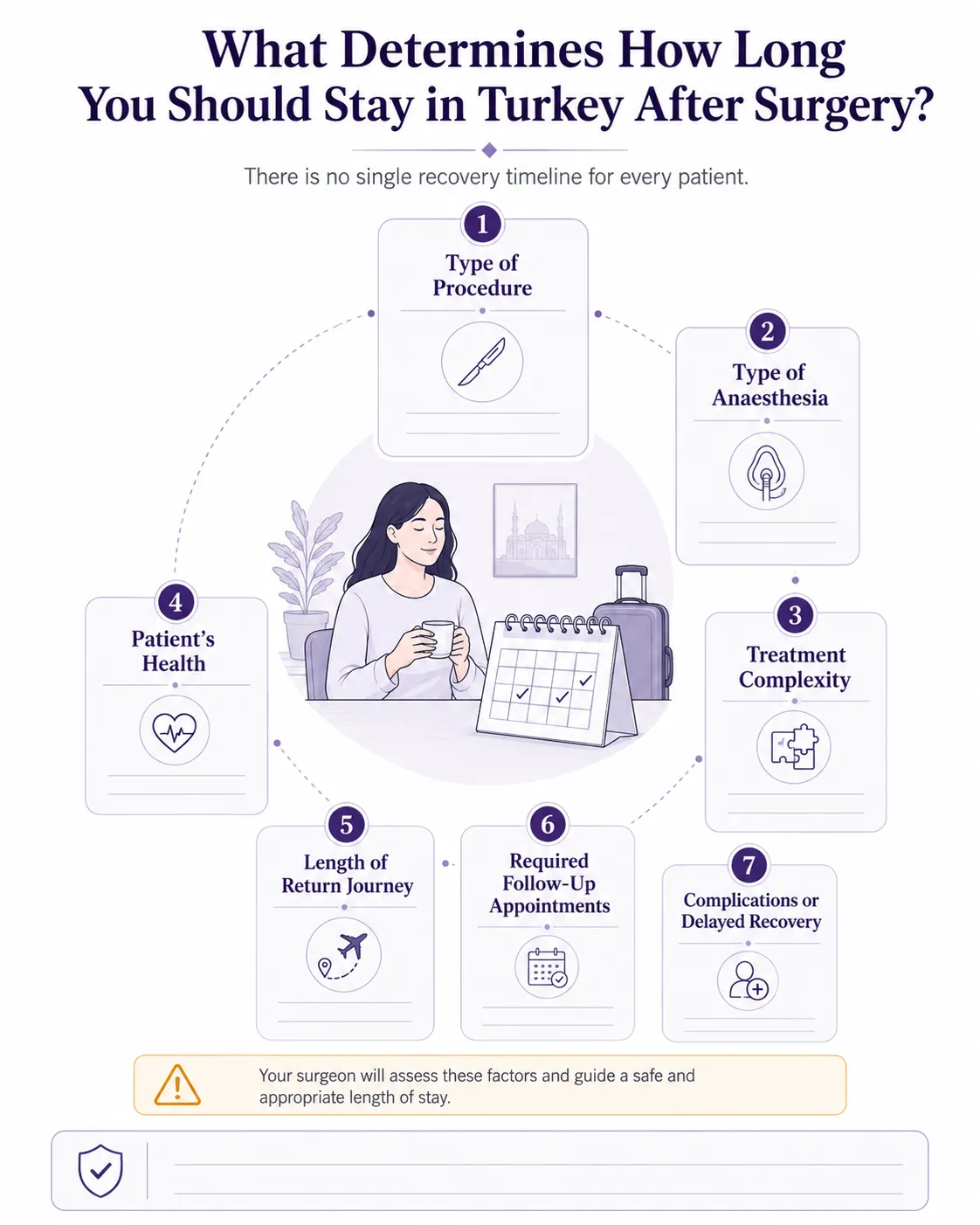
What Determines How Long You Should Stay in Turkey?
There is no single safe duration that applies to every patient.
1. The Type of Procedure
A short outpatient procedure under local anaesthesia is not equivalent to abdominal surgery under general anaesthesia.
The location and extent of surgery can affect:
- Bleeding risk
- Swelling
- Mobility
- Pain
- Breathing
- Ability to eat
- Risk associated with cabin-pressure changes
- Need for follow-up examinations
2. The Type of Anaesthesia
Local anaesthesia, sedation, spinal anaesthesia and general anaesthesia have different recovery considerations.
The patient should ask:
- What form of anaesthesia will be used?
- How long will observation be required?
- Must a responsible adult remain with me?
- When can I walk safely?
- When can I eat and drink?
- When can I travel by car?
- When can I fly?
Recovery from the anaesthetic is only one part of the decision. The surgical procedure itself may require a much longer delay.
3. The Complexity of the Treatment
Two patients receiving treatments with the same general name may require different lengths of stay.
For example, “dental implant treatment” may mean:
- One straightforward implant
- Multiple implants
- Full-arch restoration
- Bone grafting
- Sinus lifting
- Extractions combined with implants
- A multi-stage treatment requiring a return trip
Similarly, rhinoplasty may be primary, revision, functional, reconstructive or combined with another procedure.
The treatment name alone is not enough to calculate the stay.
4. The Patient’s Health
Factors that may affect travel planning include:
- Previous blood clot
- Family history of blood clots
- Known clotting condition
- Obesity
- Cancer or cancer treatment
- Pregnancy or recent pregnancy
- Hormone treatment or oestrogen-containing medication
- Limited mobility
- Heart or lung disease
- Diabetes
- Smoking
- Previous surgical complications
- Multiple procedures performed together
Recent surgery, cancer, obesity, pregnancy, hormone use and a history of blood clots are among the factors associated with increased travel-related clot risk.
Patients should provide a complete medical history rather than assuming that a condition is unrelated to the planned procedure.
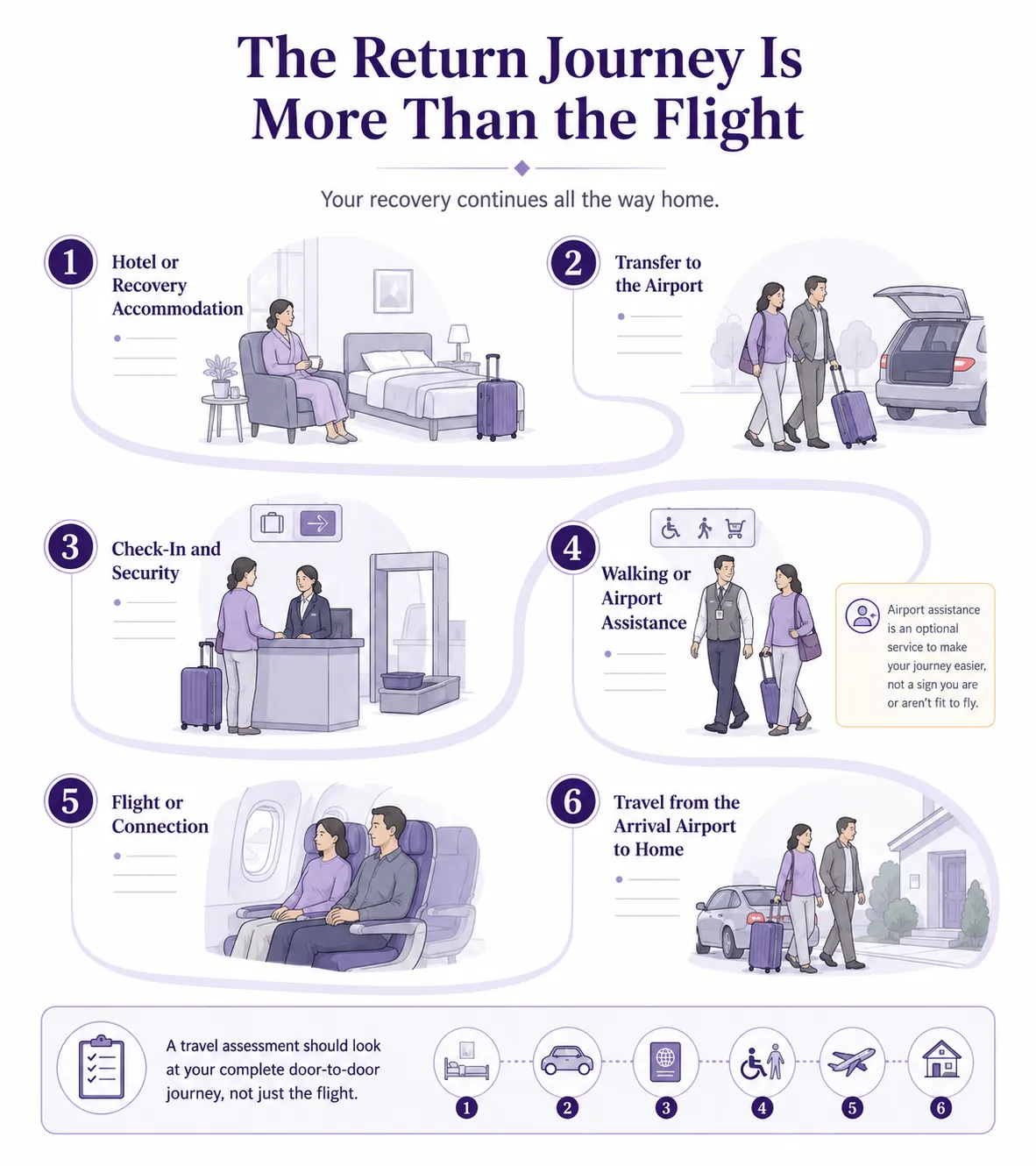
5. The Length of the Journey
The return journey includes more than the time shown on the flight ticket.
It may involve:
- Travel from the hotel to the airport
- Check-in and security queues
- Walking between gates
- Waiting for boarding
- The flight
- Connections
- Passport control
- Baggage collection
- Travel from the airport to home
A direct two-hour flight and a journey involving two long flights and a connection do not place the same practical demands on a recovering patient.
6. The Follow-Up Schedule
The minimum stay should normally include the follow-up examinations considered necessary by the treating doctor.
Depending on the treatment, the team may need to:
- Inspect the surgical site
- Change dressings
- Remove drains
- Remove or check sutures
- Review swelling
- Take an X-ray or scan
- Assess eating and hydration
- Adjust medication
- Confirm that no urgent intervention is required
Patients should receive the follow-up schedule before booking flights.
7. Complications or Delayed Recovery
Even when treatment goes as planned, recovery may be slower than expected.
The return journey may need to be delayed because of:
- Uncontrolled pain
- Persistent vomiting
- Dehydration
- Fever
- Bleeding
- Wound concerns
- Unexpected swelling
- Reduced mobility
- Breathing symptoms
- Abnormal test results
- Need for another examination or procedure
A flexible plan is therefore safer than arranging the shortest possible stay.
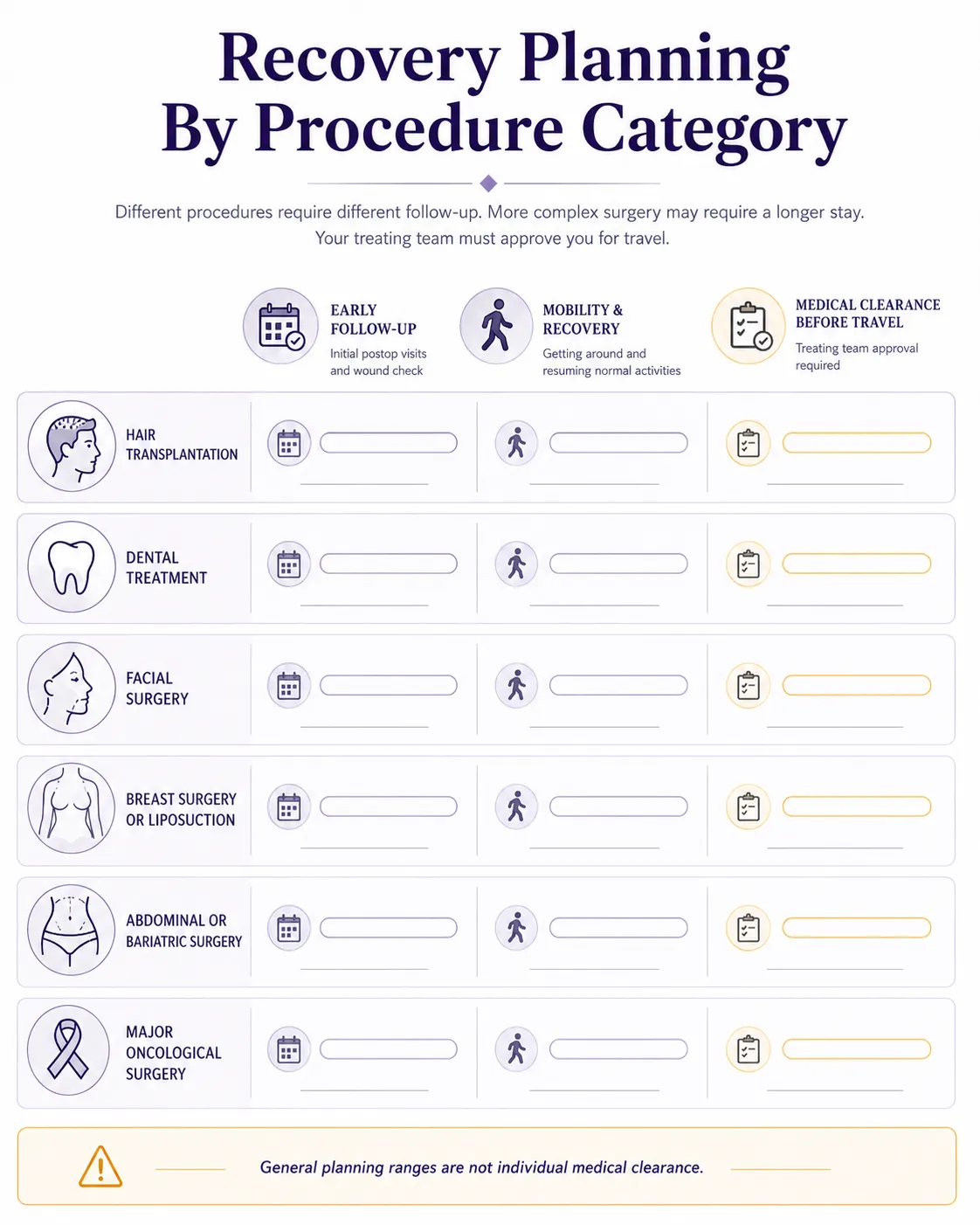
General Planning Ranges by Procedure Category
The following table provides broad planning information, not individual medical clearance.
| Procedure category | General travel-planning consideration |
|---|---|
| Minor outpatient procedures | There is no universal minimum. Remain until the required early review has been completed and the treating professional confirms that travel is appropriate. |
| Hair transplantation | The required stay depends on the technique, extent of treatment, early washing or review protocol, swelling and whether the doctor needs to inspect the recipient and donor areas. |
| Straightforward dental treatment | Some patients may travel relatively soon, but the timing depends on bleeding, swelling, pain, anaesthesia and the planned follow-up. |
| Complex dental implants or bone grafting | Additional observation or follow-up may be needed, especially when several procedures are combined or treatment involves multiple stages. |
| Facial cosmetic procedures, including procedures involving the nose or eyelids | General CDC and NHS guidance refers to approximately 7–10 days before flying, but the treating surgeon may recommend a longer stay. |
| Breast surgery or liposuction | NHS guidance refers to approximately 5–7 days before flying. Individual risk, procedure extent and flight duration may require a longer interval. |
| Tummy tuck | NHS guidance refers to approximately 7–10 days before flying. The patient must still be individually assessed. |
| Chest or abdominal surgery | CDC and UK Civil Aviation Authority guidance advises avoiding air travel for approximately 10 days after chest or abdominal surgery. Some patients require substantially longer. |
| Bariatric surgery | This is abdominal surgery. A minimum figure should not be used without considering hydration, mobility, oral intake, complications and the surgeon’s travel clearance. |
| Major oncological surgery | No generic timeline is appropriate. The required stay depends on the organ involved, extent of surgery, pathology, recovery and possible further treatment. |
The published ranges for cosmetic, facial, chest and abdominal procedures are general guidance and should not be converted into an automatic booking rule.
A Minimum Interval Is Not a Recommended Departure Date
If guidance states that a patient should not fly for a certain number of days, this does not mean that every patient should book a flight for the first hour after that interval ends.
The patient may still need:
- A final examination
- Additional wound care
- Improved mobility
- Better hydration
- Adjustment of medication
- Airline medical approval
- More time because of a long-haul journey
- More time because several procedures were combined
The departure date should follow clinical assessment, not determine it.
Why Flying After Surgery Can Require Additional Caution
Blood-Clot Risk
Long periods of sitting can slow blood flow in the legs. Surgery can further increase the risk of deep vein thrombosis, where a clot forms in a deep vein.
Part of a clot may travel to the lungs and cause a pulmonary embolism, which is a medical emergency.
Warning symptoms can include:
- Swelling, pain or tenderness, usually in one leg
- Red or warm skin
- Sudden difficulty breathing
- Chest pain
- An unusually fast heartbeat
- Coughing up blood
- Light-headedness or fainting
Anyone experiencing symptoms that could indicate a blood clot should obtain urgent medical care and should not proceed with travel while waiting for an online response.
Cabin-Pressure Changes
Commercial aircraft cabins are pressurised to an altitude below ground-level atmospheric pressure.
The CDC and UK Civil Aviation Authority explain that gas trapped after certain chest, abdominal, neurological or eye procedures can expand at altitude. This is one reason procedure-specific advice matters and why abdominal surgery is generally subject to a longer restriction.
Limited Access to Care
An aircraft is not an appropriate environment for managing:
- Significant bleeding
- Wound opening
- Severe pain
- Persistent vomiting
- Breathing difficulty
- Sudden loss of consciousness
- A serious allergic reaction
- A suspected blood clot
The patient should not fly merely because the ticket is non-refundable.
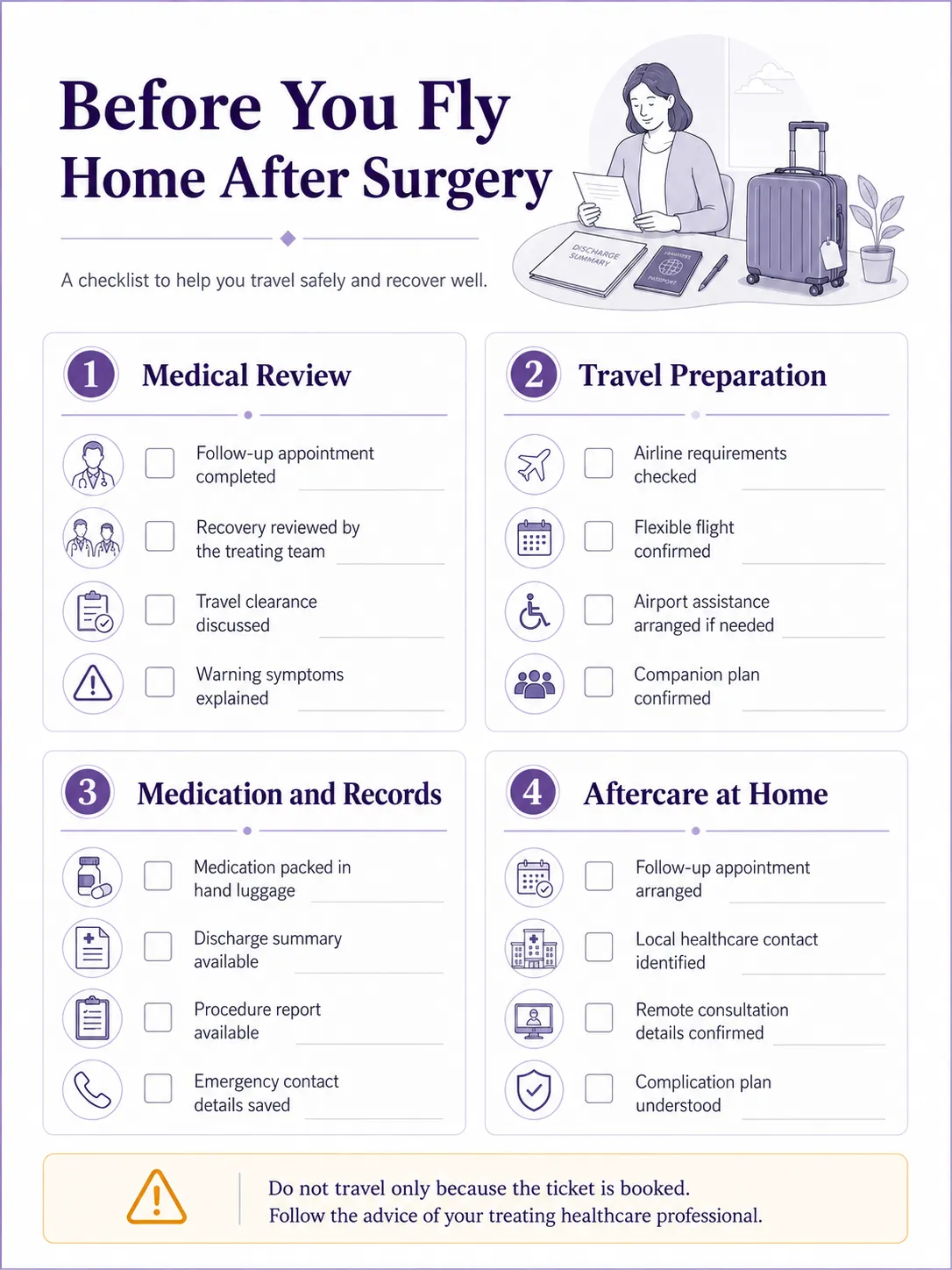
What Should Happen Before You Fly Home?
Before departure, the patient should ideally complete a final review with the treating team.
The review should answer the following questions.
Is Recovery Progressing as Expected?
The doctor may assess:
- Vital signs
- Wound or treatment site
- Swelling
- Bruising
- Bleeding
- Mobility
- Hydration
- Pain control
- Medication tolerance
- Ability to eat and drink
- Need for further tests
Are There Any Reasons to Delay Travel?
The patient should ask directly:
“Is there any medical reason why I should not travel on my planned date?”
The answer should take into account the complete journey, not only the flight duration.
Do I Need a Fit-to-Fly Document?
Some airlines may request medical information after recent surgery, hospital admission or when special assistance is needed.
Patients should contact the airline before travelling and ask:
- Is a medical certificate required?
- Is a MEDIF or medical clearance form required?
- Are there restrictions relating to recent surgery?
- Can medication and medical supplies be carried in hand luggage?
- Is mobility assistance available?
- Are there restrictions on travelling with drains, dressings or medical equipment?
- Can a companion sit beside the patient?
Airline requirements and medical advice are separate. Meeting the airline’s administrative requirements does not replace the treating doctor’s clinical assessment.
Have Follow-Up Arrangements Been Confirmed?
The patient should know:
- When the next follow-up takes place
- Whether it will be online or in person
- Who will respond to medical questions
- What warning signs require urgent treatment
- Whether a local healthcare professional is needed
- How records will be shared
- What happens if another procedure becomes necessary
The NHS advises patients seeking planned treatment abroad to arrange communication between the overseas medical team and healthcare professionals at home, including transfer of records and aftercare arrangements.
How to Plan Your Stay Before Travelling to Turkey
The safest planning begins before the procedure.
Request the Minimum Medical Stay in Writing
Ask the doctor:
- What is the minimum recommended stay for my proposed treatment?
- Which follow-up appointments are mandatory?
- On which day does the final travel assessment normally take place?
- What circumstances could extend my stay?
- Is the recommendation different for a long-haul flight?
- Must I travel with a companion?
- When should I avoid booking the return flight?
A coordinator can communicate the answer, but the medical recommendation should come from the treating professional.
Use Flexible Travel Arrangements
Where possible, choose:
- Changeable flights
- Refundable or extendable accommodation
- A fare that permits date changes
- Accommodation with additional-night availability
- Travel insurance that has been informed about the planned treatment
Ordinary travel insurance may exclude planned medical treatment and associated complications. Patients may require specialist cover and should disclose the purpose of travel to the insurer.
Keep a Recovery Buffer
Do not schedule the return flight immediately after the last expected appointment without allowing for:
- Appointment delays
- Additional imaging or tests
- Slower recovery
- An extra dressing change
- Flight disruption
- Airline medical-clearance processing
A buffer does not guarantee readiness, but it reduces pressure to travel against medical advice.
Stay Close to the Treating Facility
During early recovery, accommodation should ideally provide practical access to the doctor or hospital.
Consider:
- Travel time to the facility
- Traffic
- Lift access
- Stairs
- Accessibility
- Bathroom layout
- Availability of appropriate food
- Room for a companion
- Pharmacy access
- Ability to extend the booking
A luxury hotel far from the treating team may be less practical than suitable accommodation nearby.
Plan for a Companion
A companion may be particularly important after:
- General anaesthesia
- Sedation
- Major surgery
- Treatment affecting mobility
- Procedures requiring medication that causes drowsiness
- Operations where lifting or bending is restricted
The companion may help with:
- Medication schedules
- Food and fluids
- Communication
- Transport
- Luggage
- Monitoring warning symptoms
- Contacting the treatment team
The patient should not assume the clinic or hotel will provide continuous personal support.
Preparing for the Return Journey
Preparation should begin before the patient reaches the airport.
Keep Medical Documents Accessible
Carry relevant documents in hand luggage, such as:
- Discharge summary
- Procedure or operation report
- Medication list
- Implant or medical-device details
- Allergy information
- Fit-to-fly certificate, if required
- Contact information for the treating team
- Insurance details
- Follow-up instructions
Documents should ideally be available in a language understood by healthcare professionals in the patient’s home country.
Keep Medication in Hand Luggage
Medication should remain:
- In original or clearly labelled packaging
- Accessible during the journey
- Accompanied by documentation where required
- Stored according to the manufacturer’s instructions
The patient should check airline and border requirements for medication and medical equipment before travelling.
Arrange Airport Assistance
Patients who cannot walk long distances, stand in queues or carry bags should request assistance in advance.
Airport assistance does not mean the patient is medically fit to fly. It is a practical service provided after travel has been medically approved.
Follow Individual Blood-Clot Advice
After the treating professional has cleared the patient for travel, general measures may include:
- Walking periodically when permitted
- Moving the ankles and calf muscles while seated
- Choosing an aisle seat where possible
- Avoiding prolonged immobility
- Following individual hydration advice
Compression stockings or preventive medication should only be used when recommended by a qualified healthcare professional who understands the patient’s medical history. The CDC specifically advises speaking with a doctor before using compression stockings or medication and does not recommend starting aspirin independently for travel-related clot prevention.
When Should the Flight Be Delayed?
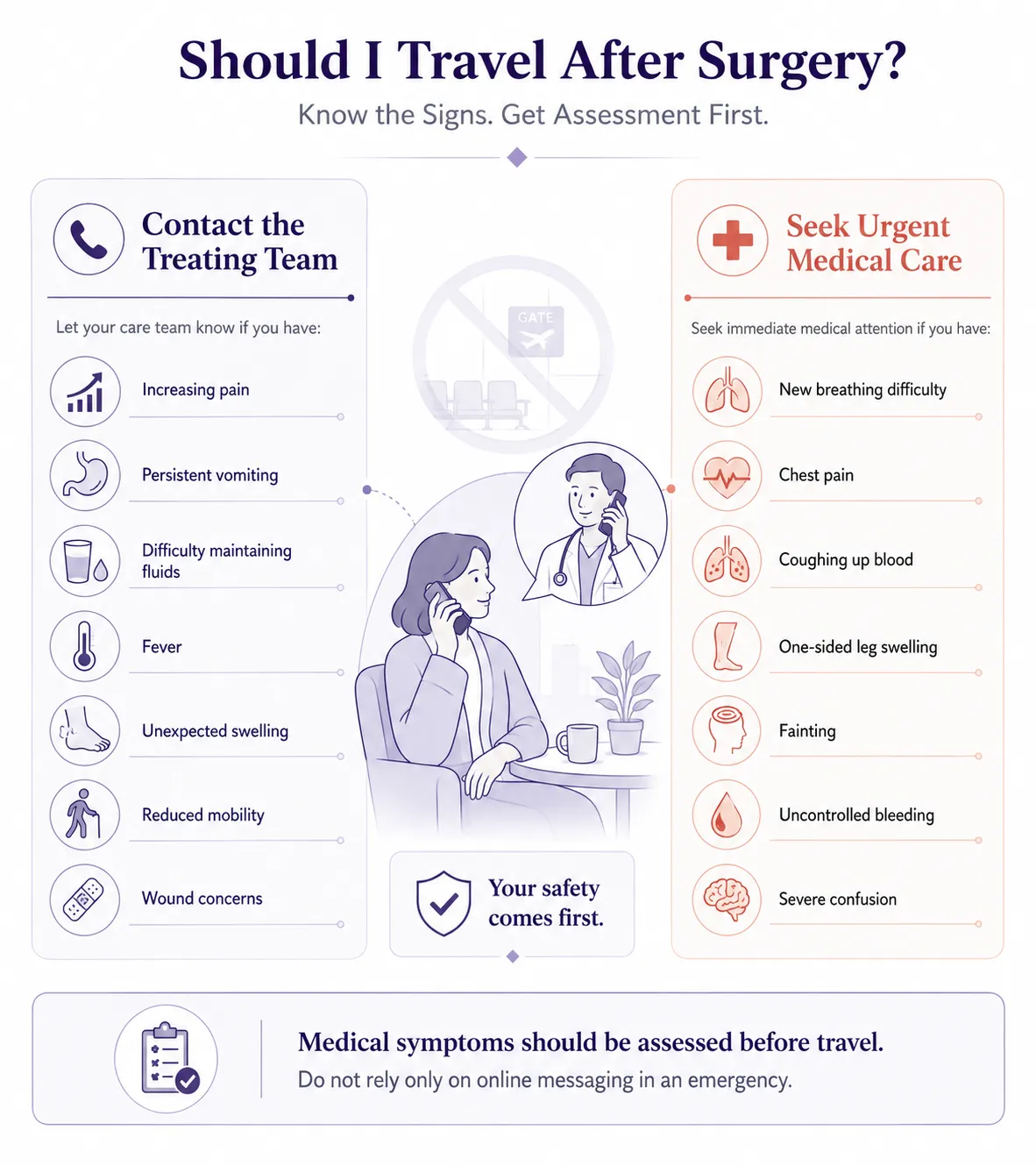
The patient should contact the treating team and obtain local medical assessment if recovery is not progressing as expected.
Travel may need to be postponed if there is:
- New or worsening breathing difficulty
- Chest pain
- Coughing up blood
- One-sided leg swelling or pain
- Fainting or severe dizziness
- Uncontrolled bleeding
- Significant wound separation
- Fever or suspected infection
- Persistent vomiting
- Inability to maintain fluids
- Severe or increasing pain
- Unexpected confusion
- Major reduction in mobility
- Any symptom the treating team has identified as a warning sign
Urgent symptoms should be assessed through appropriate local medical services rather than managed solely through messaging or video calls.
Common Planning Mistakes
Booking the Shortest Package
A package may include a fixed number of hotel nights for commercial convenience. This is not necessarily the correct medical stay for every patient.
Booking a Non-Changeable Return Flight
A non-refundable ticket can create pressure to travel even when the doctor recommends waiting.
Confusing Feeling Better with Being Fit to Fly
Pain may improve before blood-clot risk, wound concerns or other medical issues have resolved.
Planning Tourism Immediately After Surgery
Sightseeing, long walks, swimming, sun exposure and extended car journeys may interfere with recovery or conflict with aftercare instructions.
Travelling Without a Follow-Up Appointment
The patient should know when the treating team will check recovery before departure.
Assuming a Short Flight Has No Risk
The total journey may still involve hours of sitting, walking and waiting.
Combining Several Procedures to Save Time
Combining treatments may extend surgery, recovery and the required stay. The decision should be medically justified rather than driven by a package price.
Depending Only on a Coordinator
Travel arrangements may be discussed with administrative staff, but the final stay and flight recommendations should come from the treating healthcare professional.
Questions to Ask Before Booking Surgery
Patients can use the following checklist:
- What is the minimum recommended stay for my specific procedure?
- Who has calculated that recommendation?
- How many follow-up appointments are required?
- On which day will the doctor assess me for travel?
- What factors could delay my flight?
- Does the recommendation change for a long-haul journey?
- What type of anaesthesia will be used?
- Will I need a companion?
- What symptoms should stop me from travelling?
- Does the airline require a medical form?
- Can the clinic issue a fit-to-fly letter if appropriate?
- What happens if I need extra hotel nights?
- Who pays for additional treatment or accommodation?
- What aftercare will be available after I return home?
- Which medical records will I receive?
The answers should be recorded in writing where possible.
Recovery and travel recommendations should come from the healthcare professional responsible for the treatment. Before making a booking, use our patient safety checklist for choosing a doctor and clinic in Turkey to verify the treating professional, healthcare facility, written treatment plan and aftercare arrangements.
How Venoramed Fits into Travel Planning
Venoramed allows users to explore treatment categories and compare available doctor-profile information, including specialty, location, languages, education, experience and treatment focus.
Patients may use Venoramed to:
- Identify doctors associated with the relevant treatment category.
- Review available professional information.
- Request further details or a consultation.
- Ask about the expected treatment and recovery process.
- Confirm the recommended minimum stay directly with the treating doctor.
- Compare practical information before making a decision.
A displayed treatment duration, package length or starting price should not be treated as individual medical advice.
Venoramed does not determine:
- Whether a patient is suitable for surgery
- How long a patient must remain in Turkey
- Whether a patient is fit to fly
- Whether a complication has resolved
- Whether the airline will accept the passenger
- Whether insurance will cover an extended stay
These decisions must be addressed by the relevant medical, airline and insurance professionals.
Frequently Asked Questions
How many days should I stay in Turkey after surgery?
The required stay depends on the procedure, anaesthesia, individual health, follow-up schedule and flight duration. Common general guidance for some cosmetic procedures ranges from approximately five to ten days, while chest or abdominal surgery may require at least ten days before flying. Individual medical clearance is still essential.
Can I fly as soon as I am discharged from hospital?
Not necessarily. Hospital discharge and fitness to fly are separate decisions. The patient may still have limited mobility, pain, swelling, bleeding risk or a need for follow-up examinations.
How long should I stay after rhinoplasty in Turkey?
General guidance cited by the CDC recommends waiting approximately seven to ten days after cosmetic procedures involving the nose, face or eyelids before flying. The surgeon may recommend longer based on bleeding, swelling, breathing, splints, packing, revision surgery or the length of the journey.
How long should I stay after liposuction or breast surgery?
NHS general guidance recommends avoiding flying for approximately five to seven days after procedures such as breast surgery and liposuction. More extensive treatment, combined procedures, reduced mobility or a long flight may require a longer stay.
How long should I stay after a tummy tuck?
NHS guidance refers to approximately seven to ten days before flying after a tummy tuck. Individual clearance is still required, particularly because mobility and blood-clot risk can vary.
How long should I stay after bariatric surgery?
Bariatric procedures are abdominal operations. CDC and CAA guidance advises avoiding air travel for approximately ten days after abdominal surgery, but bariatric patients may need longer depending on hydration, oral intake, mobility and recovery.
Can I fly after a hair transplant?
There is no single universal interval that applies to every patient. The doctor should consider swelling, bleeding, medication, the extent of treatment and the clinic’s early washing and follow-up protocol.
Can I fly after dental implants?
The answer depends on the number of implants, anaesthesia, swelling, bleeding and whether bone grafting, sinus lifting or other procedures were performed. Ask the treating dentist for an individual recommendation and complete the planned early review.
Do I need a fit-to-fly certificate?
Possibly. Requirements vary by airline, recent medical history and the type of assistance needed. Contact the airline before departure and ask whether a medical form or certificate is required.
What if my recovery takes longer than expected?
Do not fly solely because accommodation or tickets have already been paid for. Contact the treating team, obtain a medical assessment and arrange an extension when advised.
Should I buy a flexible flight?
A flexible ticket is usually more practical for medical travel because the departure date may need to change after the final examination. Insurance coverage and fare conditions should be checked before booking.
Final Checklist Before Leaving Turkey
Before travelling home, confirm that:
- The required follow-up appointments have been completed.
- The treating team has reviewed the current recovery.
- You have been told whether you are fit to travel.
- Any airline medical requirements have been completed.
- Pain is controlled according to the treatment plan.
- You can maintain appropriate food and fluid intake.
- You can move safely enough for the planned journey.
- You understand warning symptoms.
- You have emergency contact details.
- Medication is available for the full journey.
- Medical records are in your hand luggage.
- Follow-up care at home has been arranged.
- A companion or airport assistance is available where needed.
- Your flight and accommodation can be changed if recovery is delayed.
The safest answer to “How long should you stay in Turkey after surgery?” is not the shortest number of nights advertised online.
Patients should remain long enough to recover, complete the required early follow-up and receive individual medical clearance for the complete journey home.
Medical disclaimer: This article provides general information and does not constitute medical advice, diagnosis, travel clearance or a recommendation to undergo treatment. The appropriate duration of stay and timing of air travel must be determined by the treating healthcare professional based on the individual patient and procedure.
Platform disclaimer: Venoramed is a medical marketplace and is not a clinic, hospital, airline or insurance provider. Information displayed on the platform supports initial research and does not determine treatment suitability, recovery time or fitness to fly.



Leave a Comment
Share your question or experience. Venoramed reviews comments before publishing.