
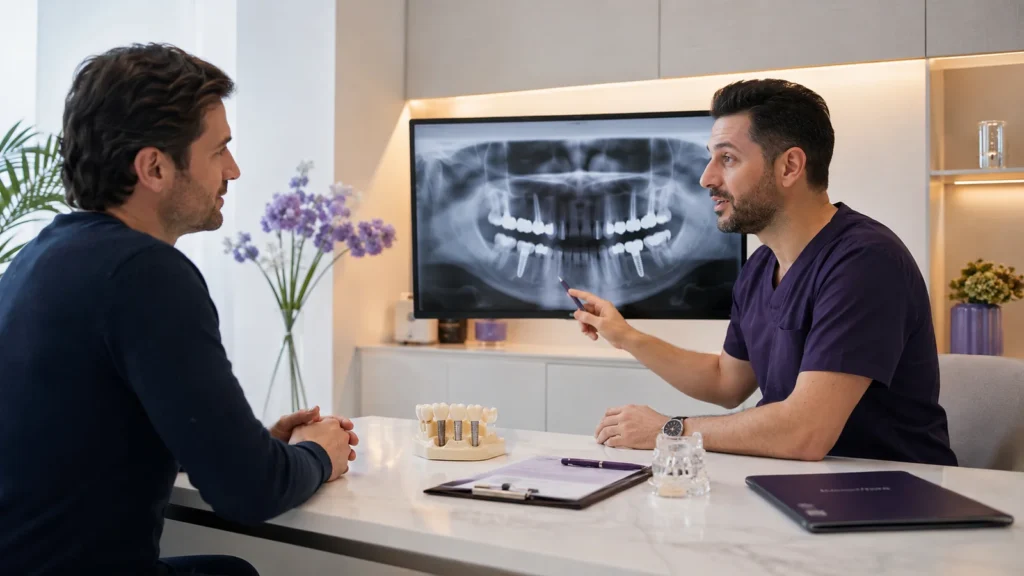
Dental implants in Turkey are frequently presented online as a single procedure that can be completed through a short, all-inclusive trip.
In reality, implant treatment may involve several clinical and restorative stages, different dental professionals, diagnostic imaging, healing periods and more than one visit.
A quotation for “one implant” may refer only to the implant fixture placed in the jaw. Another quotation may include the implant, abutment, temporary tooth, final crown, imaging, medication, accommodation and transfers. These are not equivalent offers.
Before comparing prices, international patients need to understand:
- What is being replaced
- Whether remaining teeth can be preserved
- How many implants are proposed
- Which prosthetic teeth will be attached
- Whether bone grafting is required
- Who performs each stage
- How long healing may take
- How many journeys may be required
- What aftercare is included
- What happens if a complication develops
Dental implants are artificial replacements for tooth roots. Depending on the treatment plan, they may support a single crown, bridge or full-arch restoration. Specialist NHS guidance describes implant treatment as a staged process involving assessment, possible grafting, surgical placement and restorative treatment. NHS dental implant guidance
Patients beginning their research may first review Venoramed’s practical guide to medical tourism in Turkey. This article focuses specifically on dental implants in Turkey, including costs, treatment stages, risks, travel planning and long-term aftercare.
Venoramed is a medical marketplace. It is not a dental clinic, does not diagnose patients and cannot confirm whether an implant is suitable. The final treatment plan must come from an appropriately qualified dental professional after reviewing the patient’s oral health, medical history and diagnostic records.
What Is a Dental Implant?
A dental implant is a component placed into the jawbone to support a replacement tooth or dental prosthesis.
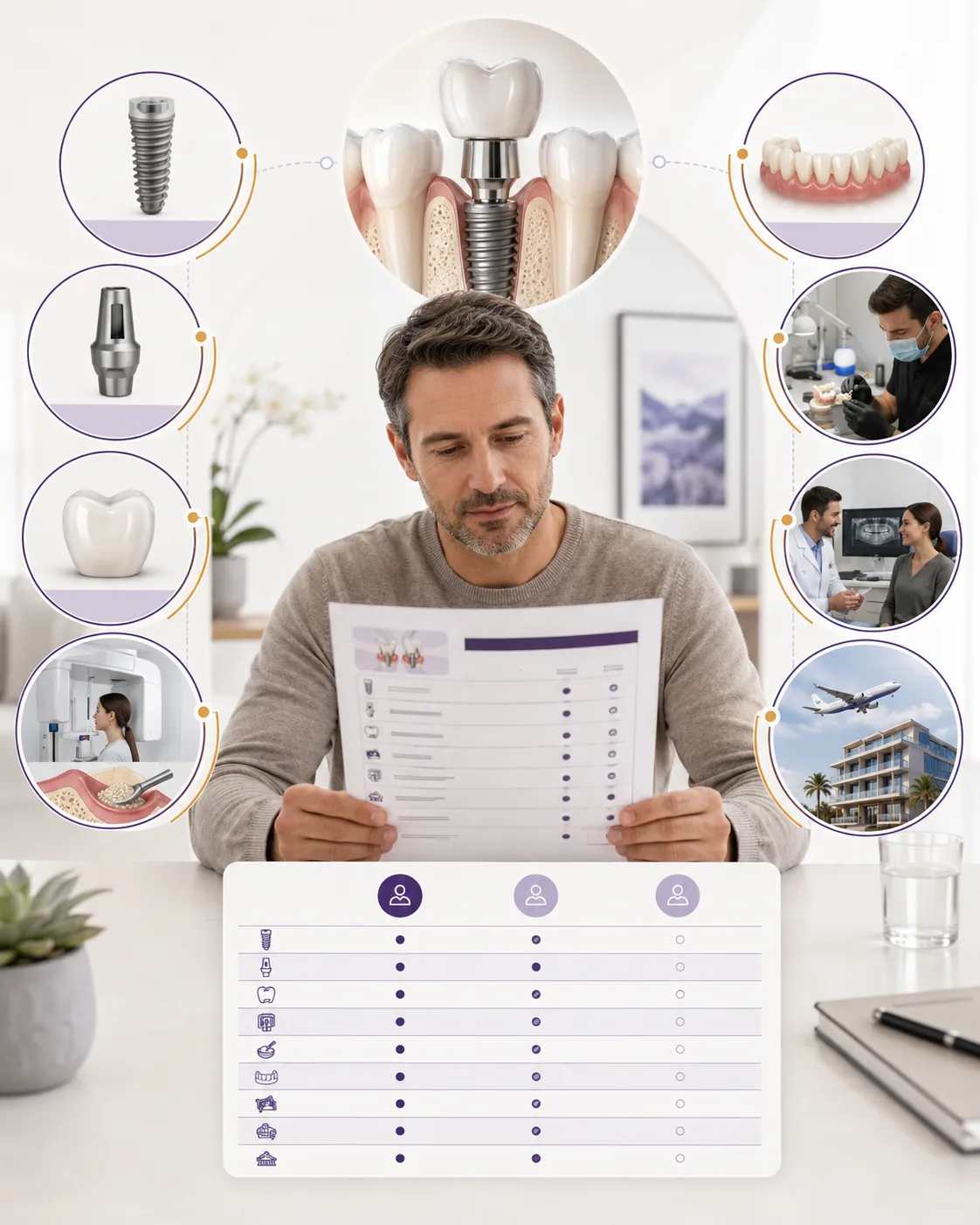
A complete implant restoration may contain several separate components:
- Implant fixture: the component placed in the jawbone
- Abutment: the connection between the implant and replacement tooth
- Crown: a replacement for one visible tooth
- Bridge: several connected replacement teeth
- Denture or full-arch prosthesis: a larger restoration supported or retained by implants
The implant fixture and the visible replacement tooth are not the same item. This distinction matters when comparing quotations. A low advertised price may cover only the surgical component rather than the completed restoration.
Dental Implant Treatment Should Begin with Diagnosis
An implant should not be selected only because a tooth is missing or because a package appears affordable.
The dental team may first need to assess:
- Whether the original tooth can be preserved
- Gum and periodontal health
- Bone volume and quality
- Bite and jaw relationship
- Position of nearby nerves and sinuses
- Number and position of missing teeth
- Condition of remaining teeth
- Previous implants
- Oral hygiene
- Smoking or nicotine use
- Bruxism or tooth grinding
- Medical conditions
- Current medicines
- Expectations for appearance and function
A systematic review comparing compromised natural teeth with implants concluded that implant survival did not exceed the survival of appropriately treated and maintained compromised teeth. This supports careful consideration before extraction and implant placement. Review of natural teeth and dental implants
Patients should ask why extraction and implant placement are being recommended and what tooth-preserving alternatives have been considered.
Who May Need Additional Medical or Dental Assessment?
Implant treatment may require additional planning for patients with:
- Active gum disease
- Poor oral hygiene
- Uncontrolled diabetes
- Significant bone loss
- Previous implant failure
- Heavy smoking or nicotine use
- Bruxism
- Bleeding disorders
- Medicines affecting bleeding
- Medicines or conditions affecting bone
- Previous radiotherapy to the head or neck
- Immune-system conditions
- Complex restorative needs
This does not automatically mean that treatment is impossible. It means that the provider may need more records, medical consultation, stabilisation of oral disease or a modified treatment plan.
Research has associated poorly controlled diabetes with impaired osseointegration and increased risk of peri-implant disease and failure, while well-controlled patients may have outcomes closer to those without diabetes. Systematic review of diabetes and implant outcomes
Smoking has also been associated with increased peri-implantitis and adverse implant outcomes in systematic reviews. Systematic review of smoking and peri-implantitis
Patients should provide complete medical and medication information rather than assuming that dental surgery is unrelated to general health. Venoramed’s medical records for an online consultation explains how to prepare records, medicines, imaging and previous treatment reports for an online review.
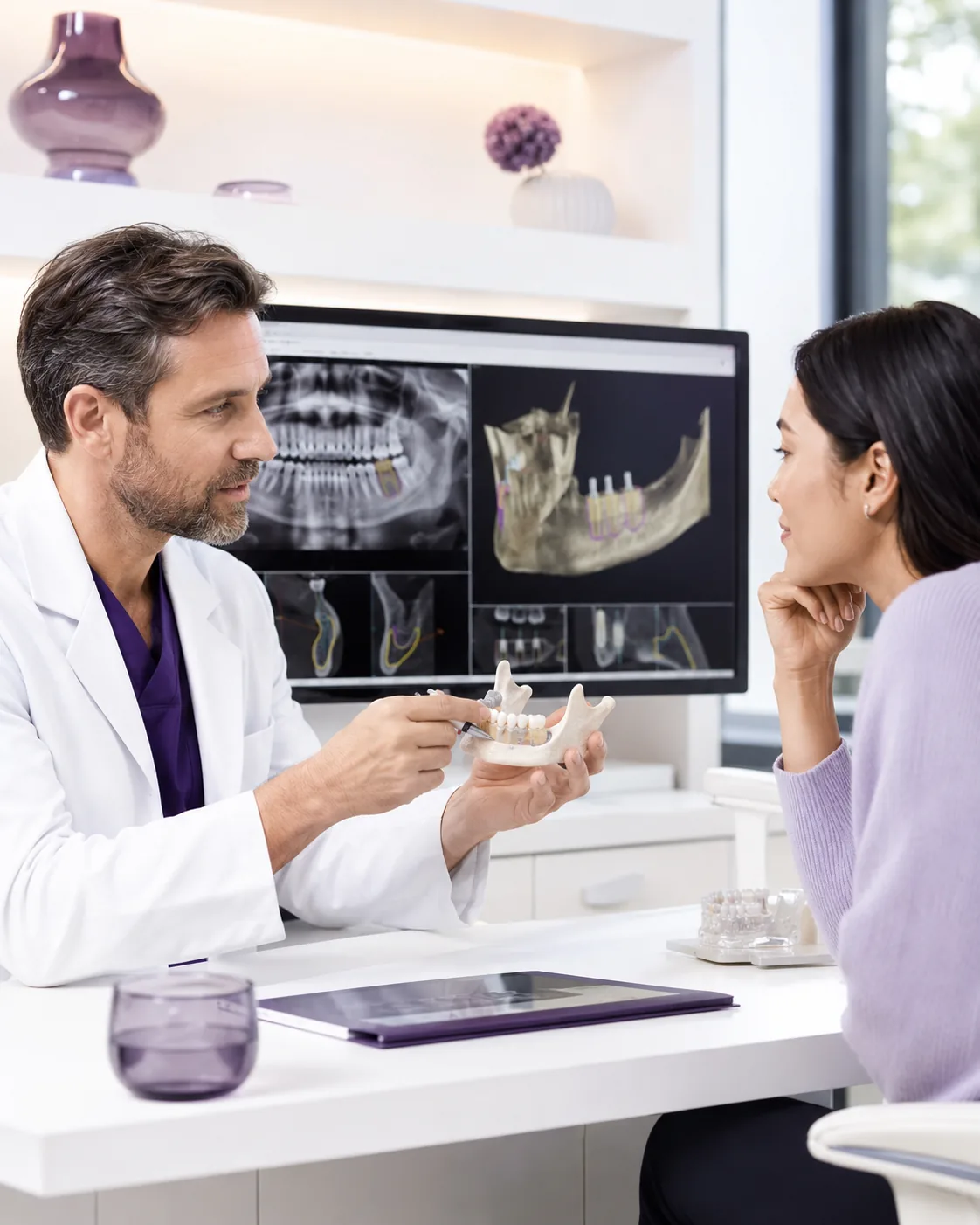
What Records Are Needed for an Initial Implant Consultation?
The dentist may request:
- Description of the main dental concern
- Medical history
- Medication list
- Allergy list
- Smoking history
- Previous dental treatment
- Previous implant records
- Panoramic dental X-ray
- CBCT scan where available
- Intraoral X-rays
- Clinical photographs
- Gum or periodontal records
- Details of current pain, swelling or infection
- Information about missing or loose teeth
- Previous bone graft or sinus-lift reports
- Existing crown, bridge or denture information
A photograph of the smile cannot show the full condition of the jawbone, roots, infection, bite or surrounding structures. An online assessment can support preliminary planning, but an in-person examination and updated imaging may still be required before treatment is confirmed.
The Main Stages of Dental Implant Treatment
Implant treatment is often described as one procedure, but it normally includes several distinct stages. Specialist NHS guidance describes assessment, grafting where required, implant placement and restorative treatment, with several appointments potentially required. Dental implant treatment stages
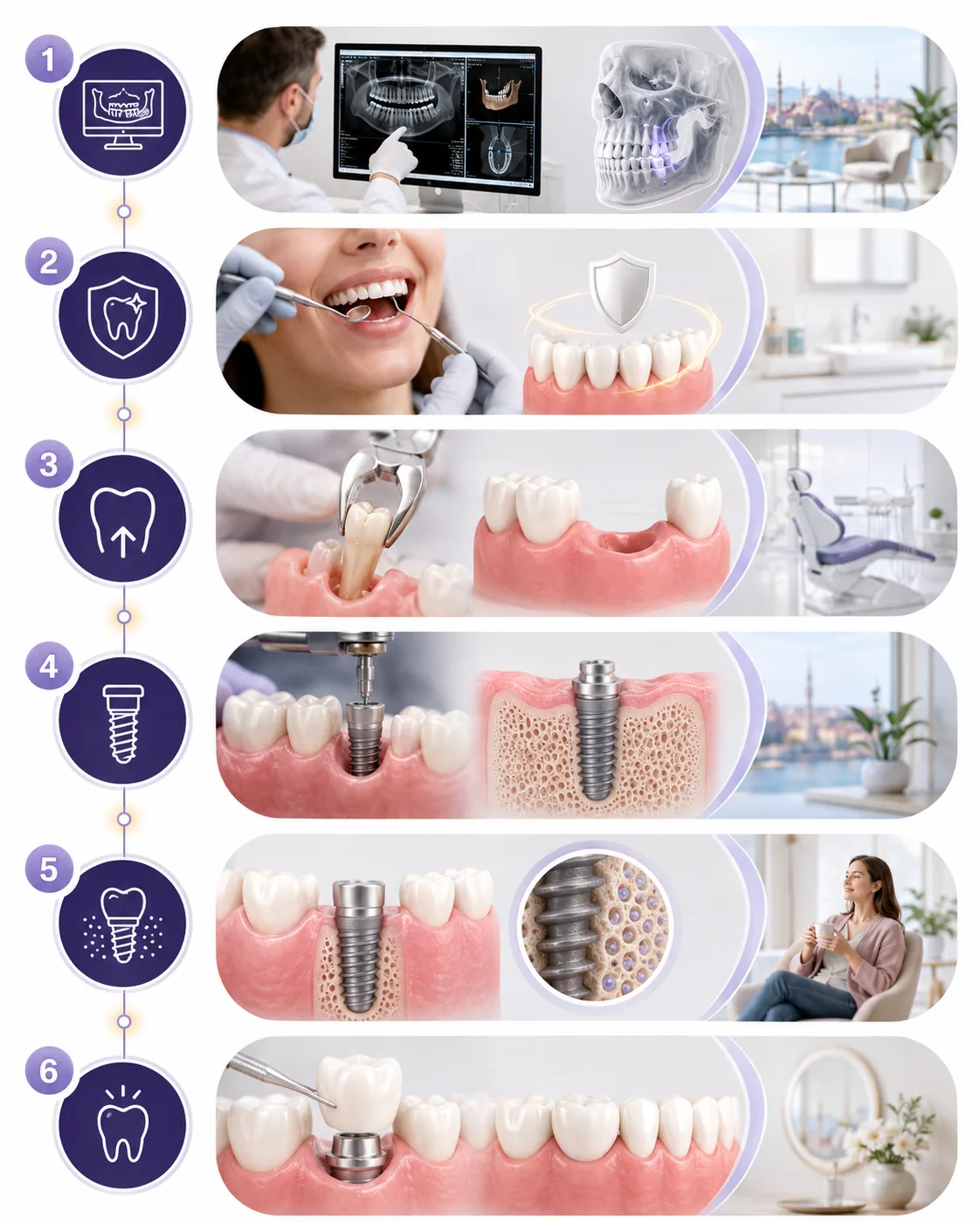
Stage 1: Dental Assessment and Treatment Planning
The initial assessment may involve:
- Medical and dental history
- Examination of teeth and gums
- Periodontal assessment
- Bite analysis
- Dental impressions or digital scans
- Panoramic X-ray
- CBCT imaging
- Discussion of alternatives
- Temporary-tooth planning
- Written treatment plan
- Itemised quotation
The plan should explain which teeth will be removed or retained, the number and location of implants, grafting requirements, temporary and final restorations, approximate timeline, number of visits, treating professionals, principal risks and maintenance requirements.
Stage 2: Stabilising Oral Health
Before implant placement, the patient may need treatment for active infection, gum disease, tooth decay, unstable teeth, poor oral hygiene, bite problems or failed existing dental work.
Implants are not protected from plaque-related inflammation. NHS restorative guidance warns that inadequate cleaning can lead to bleeding and swollen gums, infection around the implant and possible implant loss. NHS restorative implant guidance
Stage 3: Tooth Extraction
A damaged tooth may be removed before or during implant treatment. Implant placement may occur at the extraction appointment, after early soft-tissue healing, after complete healing or after infection management. The choice depends on bone, infection, gum condition and the overall plan.
“Immediate implant” does not necessarily mean that the final permanent tooth is fitted immediately. Patients should distinguish immediate extraction, immediate implant placement, immediate temporary teeth, immediate loading and final permanent restoration.
Stage 4: Bone Grafting or Sinus-Lift Treatment
An implant requires adequate supporting bone. When bone volume is insufficient, the dentist may recommend guided bone regeneration, socket grafting, block grafting, a sinus lift or another augmentation technique.
Not every patient requires grafting. Some minor grafts may be completed during implant placement, while more extensive grafting may require a separate healing period of several months. NHS information on bone grafting for dental implants
The patient should ask why grafting is required, what material will be used, whether it occurs at the same appointment, how long it should heal, what additional risks apply and whether it is included in the quotation.
Stage 5: Implant Placement
Implant placement is the surgical stage. The dental team prepares the implant site in the jawbone, places the implant and provides postoperative instructions. Local anaesthesia is common, while sedation or another anaesthetic approach may be considered depending on the procedure and facility.
Implants may use a one-stage or two-stage approach. In a two-stage procedure, the implant may be covered by the gum during healing and uncovered later through another minor procedure.
Patients should confirm who performs surgery, the type of anaesthesia, the implant system, the number of implants, whether grafting is planned, whether another procedure is required and which emergency support is available.
Stage 6: Healing and Osseointegration
After placement, the implant is given time to heal and integrate with the surrounding bone. The exact duration varies according to the site, bone, procedure and patient factors.
NHS specialist guidance describes a healing period of several months before implants support the final replacement teeth, with longer timelines when grafting is required. NHS implant healing guidance
During this period, the patient may have no temporary tooth, a removable temporary denture, a temporary bridge or a fixed provisional restoration. Leaving Turkey with temporary teeth does not necessarily mean treatment is complete.
Stage 7: Restorative Treatment
Once the implant is ready to support a restoration, the restorative phase may include a digital scan or impression, bite records, abutment selection, laboratory work, trial fitting, appearance and speech assessment, bite adjustment and fitting of the final crown, bridge or full-arch prosthesis.
Several appointments may be required to ensure the restoration fits and functions correctly. NHS guidance on having a dental implant
The dentist placing the implant may not be the same professional designing and fitting the final teeth. Patients should know who is responsible for surgical planning, implant placement, gum treatment, prosthetic design, laboratory communication, final fitting and long-term maintenance.
How Long Does Dental Implant Treatment Take?
There is no single universal timeline. Treatment duration may depend on the number of implants, extractions, infection, bone grafting, sinus lift, healing response, immediate or delayed loading, temporary restoration, final prosthesis, laboratory stages and need for further adjustment.
Specialist NHS services describe implant treatment as a staged process that may take approximately six to twelve months, while complex restorative pathways may take longer. NHS dental implant treatment timeline
This does not mean every patient remains in Turkey for the entire healing period. It often means that more than one trip is needed.
How Many Trips to Turkey May Be Required?
Possible travel patterns include:
One Visit
A single visit may be proposed for selected cases involving implant placement with temporary teeth, a limited stage of treatment or treatment that will be completed later at home. One visit does not always mean the entire restoration is complete.
Two Visits
A common staged plan may use the first visit for examination, imaging, extractions, grafting, implant placement and a temporary restoration. After healing at home, the second visit may include final scans, restorative appointments, final teeth and bite adjustments.
Three or More Visits
Additional visits may be required for extensive grafting, a sinus lift, implant uncovering, complex full-mouth rehabilitation, prosthetic adjustments, complications or remaking a restoration.
The written plan should state which stages are expected during each visit. Patients should review Venoramed’s how long to stay in Turkey after surgery before booking non-changeable flights.

What Determines Dental Implant Costs in Turkey?
Dental implant costs in Turkey cannot be compared responsibly using one headline figure. The total cost may be affected by:
- Number of implants
- Number of replacement teeth
- Implant system
- Abutment type
- Crown or bridge material
- Temporary teeth
- Extractions
- Bone grafting
- Sinus lift
- Imaging
- Sedation or anaesthesia
- Periodontal treatment
- Laboratory work
- Number of visits
- Accommodation and transfers
- Follow-up
- Revision and complication policies
A quotation for four implants supporting a full arch cannot be compared directly with a quotation for six implants, a different prosthetic design or a different level of grafting.
The Implant Brand Is Only One Part of Treatment
The implant system matters because it can affect component availability, prosthetic compatibility, documentation, maintenance and replacement parts. However, brand alone does not determine the outcome.
Treatment planning, implant position, bone and gum condition, prosthetic design, bite forces, cleaning, smoking and professional maintenance also matter.
Ask for the manufacturer, implant model, dimensions, lot information, abutment details, implant passport or record, availability of replacement components and written warranty terms where offered.
What Should an Itemised Implant Quotation Include?
| Quotation item | What should be clarified |
| Consultation | Online, in-person and follow-up consultations |
| Imaging | Panoramic X-ray, CBCT and other records |
| Extractions | Number and complexity |
| Implant fixtures | Brand, model and number |
| Abutments | Standard or customised |
| Bone graft | Material, site and extent |
| Sinus lift | Included or additional |
| Temporary teeth | Removable or fixed |
| Final restoration | Crown, bridge or full-arch prosthesis |
| Restorative material | Zirconia, ceramic, metal-ceramic or another material |
| Anaesthesia | Local anaesthesia, sedation or another method |
| Medication | During and after treatment |
| Laboratory work | Temporary and final prosthetic stages |
| Follow-up | Number and location of reviews |
| Hotel and transfers | Exact services included |
| Additional visits | Whether future appointments are included |
| Complication policy | Included and excluded treatment |
| Remake or revision | Terms and time limits |
Venoramed’s medical treatment costs in Turkey explains how to compare starting prices, preliminary estimates and final itemised quotations.
What Does “All-Inclusive Dental Implant Package” Mean?
“All-inclusive” is not a standard clinical definition. One package may include consultation, imaging, implant, abutment, temporary teeth, final crown, medication, hotel and transfers. Another package with the same label may exclude extractions, bone grafting, sinus lift, temporary teeth, custom abutments, sedation, laboratory work, follow-up at home, complications or return visits.
Ask for a written list of inclusions and exclusions rather than relying on the package name.
Main Risks and Complications
Dental implants can function successfully for many years, but survival does not mean that every implant remains free from biological or technical complications.
A systematic review estimated high implant survival over ten years, while long-term studies also document complications affecting surrounding tissues, prosthetic materials, screws, retention and restorations. Systematic review of long-term dental implant survival
Possible early complications include pain, swelling, bruising, bleeding, infection, wound opening, temporary altered sensation, graft problems, failure of early integration and damage to nearby structures.
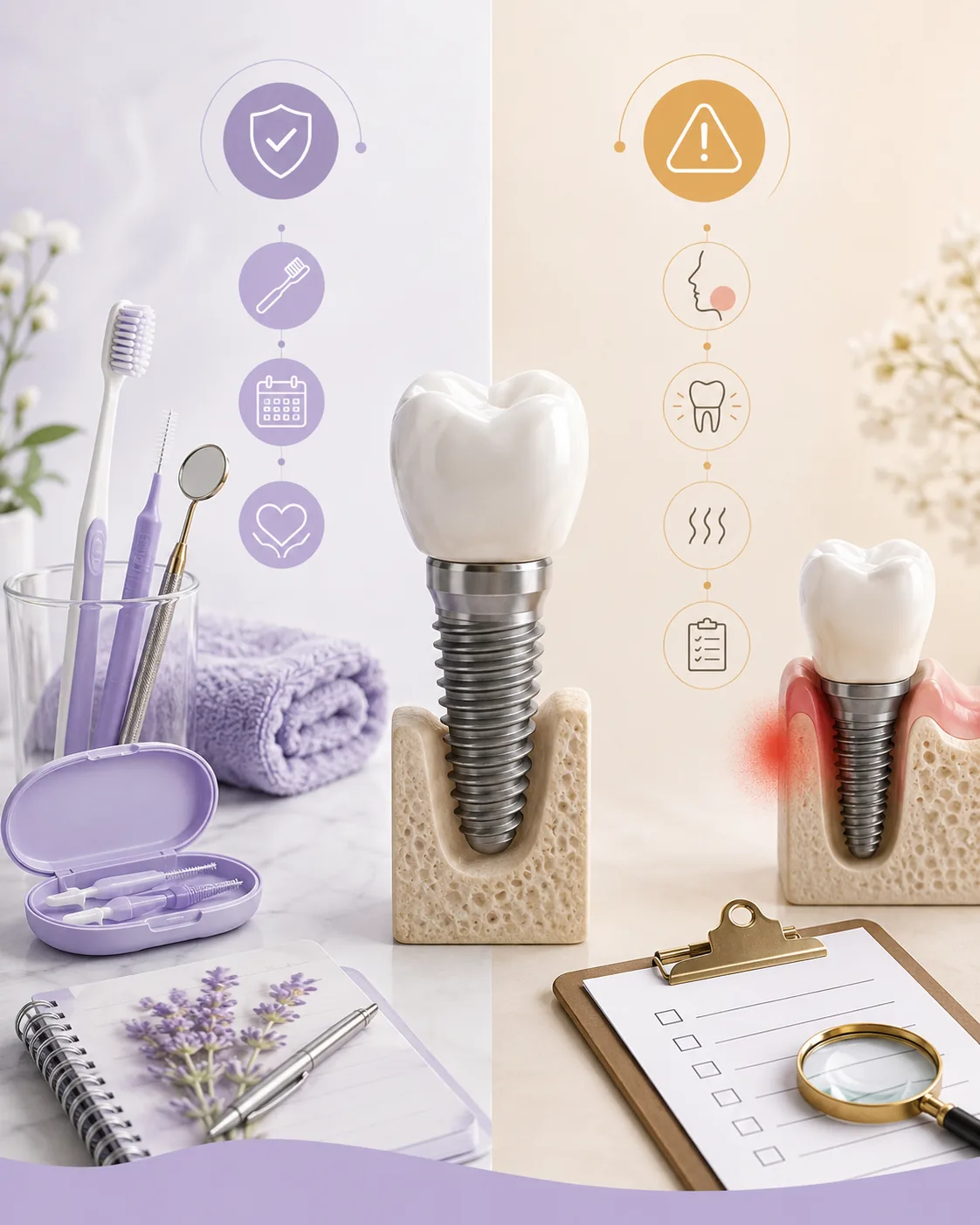
Later biological complications may include peri-implant mucositis, peri-implantitis, bone loss, gum recession, infection, implant mobility and implant loss.
Technical or prosthetic complications may include screw loosening, chipping, fracture, loss of retention, abutment problems, bite problems, wear of temporary or final teeth and the need to repair or replace the prosthesis.
What Is Peri-Implantitis?
Peri-implantitis is an inflammatory condition affecting the tissues around an implant and involving loss of supporting bone. It is not the same as temporary soreness immediately after surgery.
Risk may be influenced by plaque accumulation, previous periodontal disease, smoking, poor maintenance, prosthetic design, implant position, medical factors and delayed diagnosis.
Regular assessment and effective cleaning are important because implant-supported teeth can still develop disease around their supporting tissues. Review of peri-implant diseases
Aftercare Immediately After Implant Placement
The dentist should provide individual instructions. Expected temporary effects may include soreness, swelling, minor bleeding or bruising.
NHS implant aftercare guidance advises patients to follow the treating team’s instructions about diet, alcohol, smoking, dentures, medication and oral care after placement. NHS aftercare guidance for dental implants
The plan may cover pain management, medication, mouth cleaning, mouth rinses, soft foods, smoking and alcohol restrictions, denture use, stitches, follow-up and signs requiring urgent review.
Warning Signs Requiring Dental Assessment
Contact the treating provider or seek appropriate local care for increasing rather than improving pain, persistent bleeding, rapidly increasing swelling, fever, pus or abnormal discharge, worsening bad taste, wound opening, implant or temporary-tooth mobility, persistent numbness, difficulty swallowing or breathing, a broken temporary restoration or inability to eat and drink adequately.
For severe, rapidly worsening or potentially life-threatening symptoms, use local emergency services rather than waiting for a remote reply. Venoramed’s complications after treatment abroad explains aftercare, insurance and emergency planning for treatment abroad.
Long-Term Dental Implant Aftercare
Implants require ongoing care. Long-term maintenance may include daily cleaning, interdental brushes or another recommended method, professional cleaning, gum assessment, bite review, radiographs when clinically required, restoration checks, repair or replacement of worn components, smoking cessation, bruxism management and monitoring of relevant medical conditions.
Implant-supported crowns and bridges may wear, chip or require replacement even when the implant fixture remains integrated. NHS information about long-term implant maintenance
Before treatment, ask who will maintain the implants after returning home.
Can a Local Dentist Provide Follow-Up?
Possibly, but this should be arranged rather than assumed. A local dentist may require the full treatment plan, implant brand and model, implant dimensions, abutment information, surgical report, graft records, X-rays, prosthetic design, laboratory information and discharge instructions.
Some replacement components or instruments may be specific to the implant system. Ask a local dentist before travel whether they can provide routine maintenance, access the required components, manage the prosthetic restoration and help in an emergency.
Choosing a Dentist or Dental Clinic in Turkey
Patients should assess both the individual dental professionals and the healthcare facility. Confirm the full names and roles of each treating dentist, who performs surgery and grafting, who designs and fits the restoration, the facility name and address, diagnostic equipment, laboratory arrangements, emergency support, written aftercare and record-transfer process.
The Turkish Ministry of Health publishes lists of healthcare providers holding international health-tourism authorisation certificates. Verification should use the exact legal name of the facility. Authorised international health-tourism providers
Authorisation does not guarantee a result, but it should be part of provider verification. Use Venoramed’s patient safety checklist for choosing a doctor and clinic in Turkey before paying a deposit, and explore the dental treatments in Turkey for relevant treatment categories.
Questions to Ask Before Booking Dental Implants
1. Can any existing teeth be preserved?
2. Who reviewed my imaging?
3. Do I need a CBCT?
4. How many implants are proposed?
5. How many teeth will they support?
6. Why was this implant number selected?
7. Do I need extractions?
8. Do I need bone grafting or a sinus lift?
9. Who performs the surgery?
10. Who provides the restorative treatment?
11. Which implant system will be used?
12. Will I receive an implant record?
13. What temporary teeth will I use?
14. Are temporary teeth fixed or removable?
15. How many visits are expected?
16. How long is the healing period?
17. What may change after examination?
18. Which items are excluded from the quotation?
19. Who provides aftercare in Turkey?
20. Who can provide maintenance at home?
21. What happens if an implant does not integrate?
22. What does the complication policy cover?
23. What does the prosthetic warranty cover?
24. Who pays for additional travel?
25. Which records will I receive?
Red Flags
- No diagnostic records are requested
- Treatment is guaranteed from photographs alone
- All remaining teeth are recommended for extraction without clear explanation
- The number of implants changes without clinical reasoning
- The dentist performing surgery is not identified
- The facility is not identified
- The implant system is withheld
- The final restoration is not described
- Bone grafting is added without explanation
- Permanent teeth are promised immediately for every patient
- Healing time is ignored
- No follow-up plan is provided
- No implant records will be supplied
- The package price is available only for immediate payment
- Risks and alternatives are not discussed
- Complication and remake policies are verbal only
Final Dental Implant Checklist
- Existing teeth have been assessed
- Alternatives have been discussed
- Gum health has been evaluated
- Imaging is adequate
- Implant number and position are explained
- Grafting requirements are written
- Implant system is identified
- Temporary restoration is described
- Final restoration is described
- Number of trips is stated
- Healing periods are stated
- The dentist performing each stage is identified
- The facility is verified
- The quotation is itemised
- Exclusions are listed
- Aftercare is written
- Complication terms are written
- Implant records will be provided
- Follow-up at home has been considered
- Travel plans are flexible
Frequently Asked Questions
How much do dental implants cost in Turkey?
There is no reliable universal price. Cost depends on the number of implants, type of restoration, implant system, grafting, imaging, anaesthesia, temporary teeth, laboratory work and number of visits.
Can dental implants be completed in one trip?
Some stages may be completed during one trip, but many patients require healing and later restorative appointments. The provider should explain whether the teeth fitted during the first visit are temporary or final.
How many implants do I need?
The answer depends on missing teeth, bone, bite and the proposed restoration. More implants do not automatically mean a better plan.
Do all patients need bone grafting?
No. Grafting depends on the quantity and position of available bone and the proposed implant plan.
How long do dental implants last?
Research shows high long-term survival, but implants and restorations can still develop biological or technical complications. Cleaning, maintenance, smoking, bite forces and medical factors affect long-term care.
Is the crown included with the implant?
Not always. The implant fixture, abutment and crown may be priced separately. The quotation should list each component.
What is immediate loading?
It generally refers to attaching a temporary or other restoration soon after implant placement. It does not necessarily mean the final permanent restoration is complete.
Will I receive temporary teeth?
This depends on the treatment plan. Ask whether temporary teeth are fixed or removable, how long they will be used and whether they are included.
Can smokers have dental implants?
Smoking does not automatically exclude every patient, but evidence associates smoking with greater risk of peri-implant disease and adverse outcomes. The dentist should assess individual risk.
Can Venoramed confirm whether I am suitable for implants?
No. Venoramed can help users explore dental-treatment categories and available doctor profiles, but suitability must be assessed by a qualified dental professional.
Final Thoughts
Dental implants in Turkey should not be evaluated as a single product. The complete treatment may include diagnosis, preservation or extraction of existing teeth, gum treatment, imaging, bone grafting, implant surgery, healing, temporary teeth, restorative treatment, maintenance and possible additional visits.
A useful quotation explains each stage clearly. Before booking, patients should understand what is being placed, what will be attached to it, who performs each part of treatment, how many visits may be needed and who will provide long-term care after they return home.
The lowest headline price is not enough information to make that decision.
Medical disclaimer: This article provides general information and does not constitute dental advice, diagnosis or confirmation that implant treatment is suitable. An appropriately qualified dental professional must assess the patient and relevant diagnostic records.
Travel disclaimer: Treatment and travel timelines vary. Patients should obtain individual guidance before booking flights or accommodation.
Platform disclaimer: Venoramed is a medical marketplace and is not a dental clinic or diagnostic service. It does not determine implant suitability, treatment plans or final prices.


1 Comment
Share your question or experience. Venoramed reviews comments before publishing.
[…] guide to dental implants in Turkey explains why an implant fixture, an abutment, and the visible crown are separate parts of a […]