
An online consultation can help an international patient organise an initial discussion with a doctor in Turkey before booking flights or committing to treatment.
However, the value of that consultation depends heavily on the quality of the information provided.
A short message such as ‘I want dental implants’, ‘How many hair grafts do I need?’ or ‘Can I have surgery next month?’ rarely gives a healthcare professional enough information to assess the case responsibly.
A more useful consultation begins with a structured medical summary supported by relevant records, test results, imaging and photographs.
The objective is not to send every medical document you have ever received. It is to provide the records that help the reviewing professional understand:
- Your current health concern
- Your medical history and previous treatment
- Current medicines and known allergies
- Relevant test results and medical imaging
- The questions you want the consultation to address
- Which information may still be missing
CDC guidance for medical travellers recommends carrying copies of relevant medical records, including laboratory and other test results, and making the treating team aware of allergies. It also recommends obtaining records in English after care abroad so they can be understood by future healthcare professionals.
Patients who are still researching the overall process may first read Venoramed’s practical guide to medical tourism in Turkey. This article focuses specifically on preparing medical records for an online consultation in Turkey.
Venoramed is a medical marketplace. It is not a clinic or hospital, does not diagnose patients and cannot determine whether a person is suitable for a treatment. Any clinical opinion must come from the relevant healthcare professional after reviewing the available information.
What Can an Online Medical Consultation Do?
Depending on the treatment and records supplied, an online consultation may help a healthcare professional:
- Understand the patient’s main concern and treatment goal
- Review previous diagnoses, procedures and current medicines
- Identify important medical risk factors or missing information
- Explain possible treatment categories and alternatives
- Decide whether an in-person examination may be appropriate
- Provide a preliminary treatment plan or estimated quotation
- Explain which tests may be required before treatment
- Discuss an approximate travel, treatment and recovery schedule
It can also help the patient assess whether the provider’s explanations, communication and proposed process are clear enough to continue.
What Can an Online Consultation Not Reliably Confirm?
An online consultation should not automatically be treated as a final diagnosis, final treatment plan or final medical clearance.
A healthcare professional may still need:
- A physical examination or functional assessment
- Updated laboratory tests or medical imaging
- Dental examination and bite assessment
- Anaesthetic or cardiology assessment
- Pathology review
- Measurement of vital signs
- Assessment by another specialty
- An in-person discussion of risks and consent
NHS guidance on preparing for surgery explains that pre-operative testing depends on the operation and the type of anaesthesia. Blood tests, urine tests or other investigations may be required, and patients should provide information about prescribed medicines, vitamins and herbal supplements.
A responsible provider should explain which parts of the proposed plan are preliminary and what could change after examination.
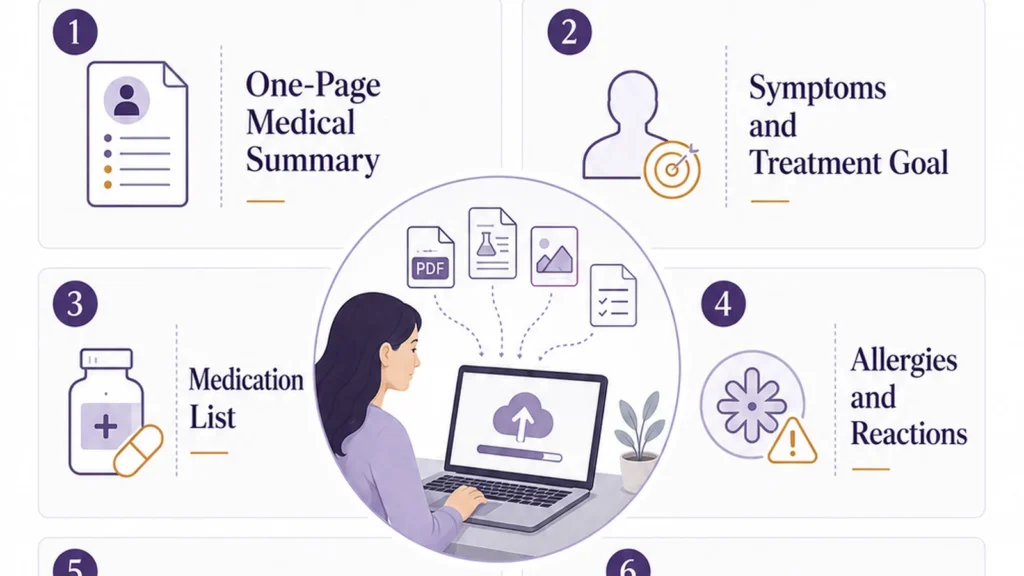
Start with a One-Page Medical Summary
Before uploading individual files, prepare a short medical summary. It allows the reviewing professional to understand the case before opening multiple reports and images.
Include:
- Full name, date of birth and country of residence
- Preferred consultation language
- Main health concern and treatment being considered
- When the problem began and whether it is changing
- Current symptoms and their effect on daily life
- Previous diagnoses, treatments and operations
- Important medical conditions
- Current medicines, supplements and allergies
- Smoking or nicotine use
- Pregnancy status where relevant
- Important questions for the consultation
Example of a Clear Summary
Main concern: Missing upper teeth and difficulty chewing.
Relevant history: Two teeth were extracted in 2024. A previous dentist advised that bone grafting might be required.
Current symptoms: No current pain or swelling.
Medical conditions: Type 2 diabetes, currently monitored.
Documents attached: Panoramic X-ray, dental report, recent blood test and medication list.
Questions: Am I potentially suitable for implants? Is further imaging required? Would treatment require more than one visit?
This structure does not ask the doctor to confirm treatment from limited information. It provides an organised starting point.
1. Describe Your Symptoms and Treatment Goal
Explain the reason for the consultation in plain language. Include the location of the problem, when it began, whether it is changing, what makes it better or worse, previous assessments and what you hope to discuss.
NHS guidance on preparing questions for a medical appointment recommends writing down symptoms, when they started and what makes them better or worse. Preparing the most important questions in advance can also make the discussion more useful.
Do not hide symptoms because you believe they may increase the price or affect eligibility. Incomplete information can make a preliminary plan less useful.
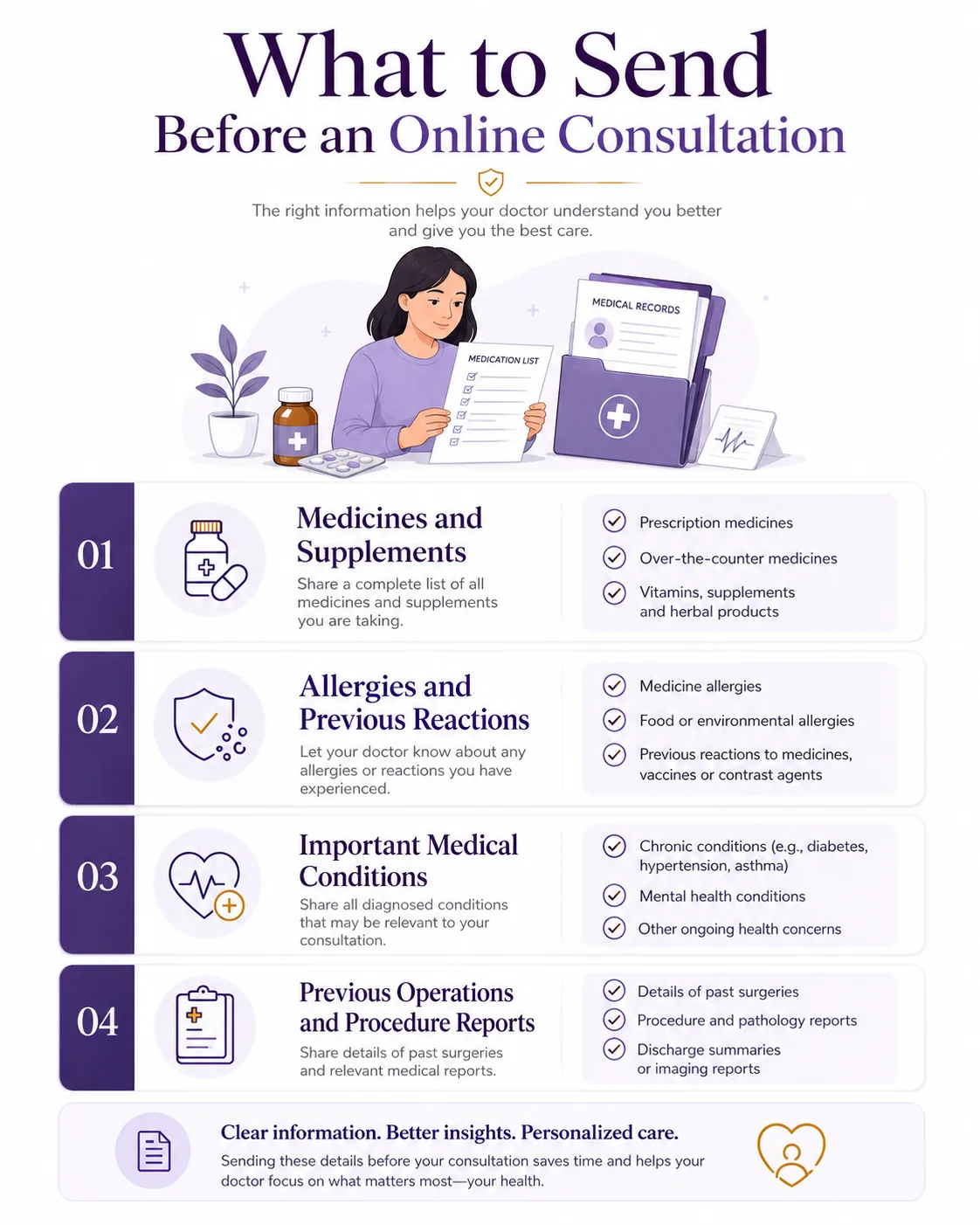
2. Provide a Complete Medication List
List all products you currently use, including prescription medicines, over-the-counter medicines, painkillers, injections, vitamins, mineral supplements, herbal products, weight-loss products, hair-loss medicines and topical treatments.
For each product, provide:
- Generic or brand name
- Dose
- Frequency
- Reason for use
- How long you have taken it
Do not write only ‘blood-pressure pill’ or ‘vitamins’. A doctor may need the exact product and dose. Clear photographs of medicine packaging can help when names are difficult to type.
Do not stop a prescribed medicine based only on general internet advice. Any change should be discussed with the relevant healthcare professional.
3. List Allergies and Previous Reactions
Include known allergies or adverse reactions involving medicines, antibiotics, anaesthetic agents, latex, adhesives, contrast material, foods, dental materials or skin products.
Describe what happened, such as rash, swelling, breathing difficulty, severe nausea, loss of consciousness or an unknown childhood reaction. Writing only ‘allergic to antibiotics’ is not precise enough when the medicine name is available.
4. Include Important Medical Conditions
The reviewing doctor should know about current and previous conditions that may affect treatment, anaesthesia, healing, infection risk, medication or travel.
- Heart disease, high blood pressure or previous blood clots
- Diabetes, thyroid disease or other metabolic conditions
- Lung disease, asthma or sleep apnoea
- Kidney or liver disease
- Blood-clotting disorders or anaemia
- Autoimmune, neurological or infectious conditions
- Cancer and previous cancer treatment
- Mental-health conditions or eating disorders where relevant
- Previous complications from anaesthesia
Include the approximate date of diagnosis and whether the condition is currently controlled. The purpose is not to exclude patients automatically; it is to identify what additional assessment may be needed.
5. Send Previous Operation and Procedure Reports
For previous surgery or treatment in the same area, provide the operation report, discharge summary, procedure date, implant or device information, pathology report, complication history, revision history and current symptoms.
These records are particularly important for revision rhinoplasty, revisional bariatric surgery, repeat hair transplantation, dental implant replacement, previous body surgery, cancer surgery and reconstructive procedures.
A photograph alone cannot explain exactly what was done during a previous operation. When an operation report is unavailable, provide the most accurate written summary possible and state clearly that the original report is missing.
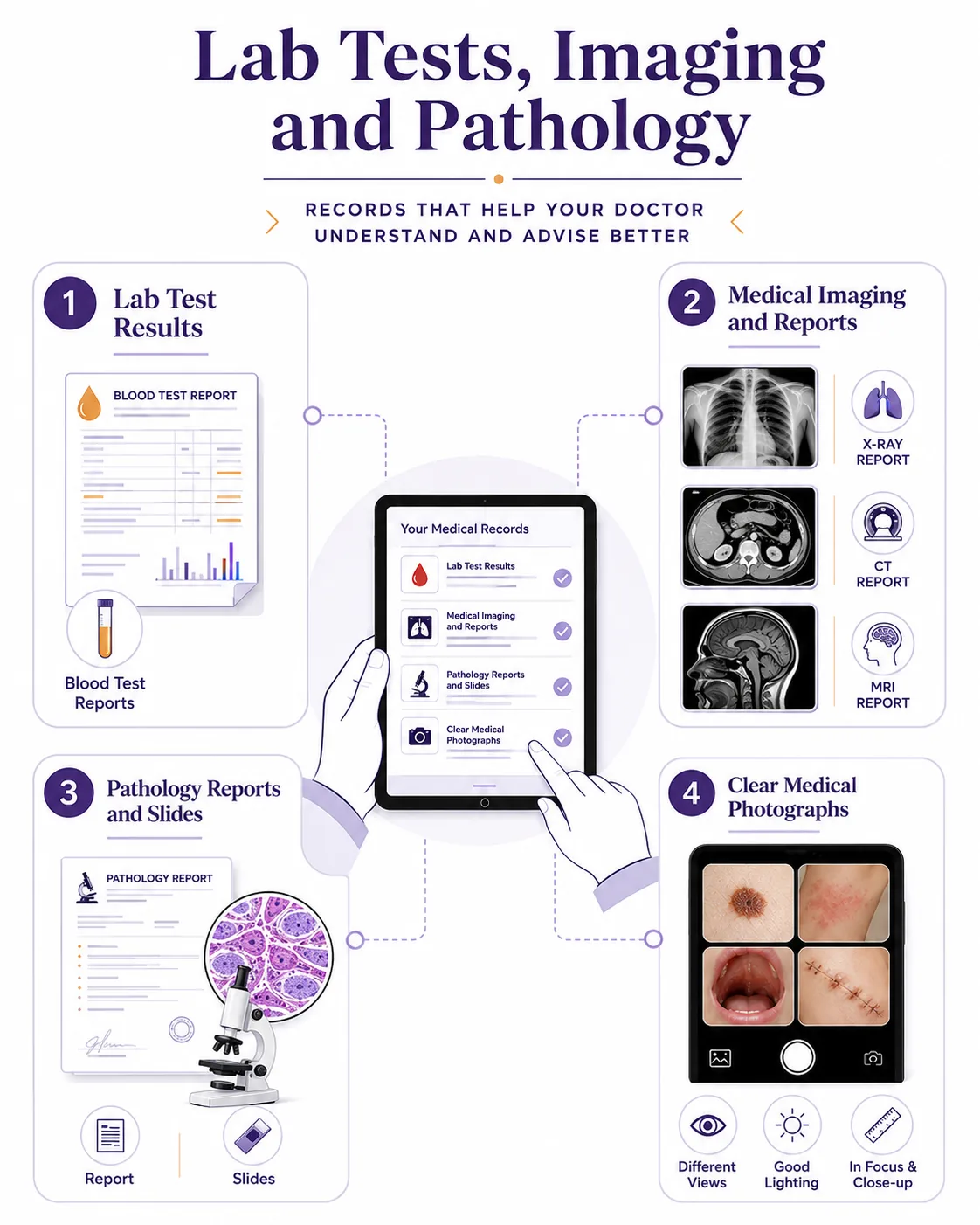
6. Include Relevant Laboratory Test Results
Useful laboratory records depend on the treatment and medical history. They may include a complete blood count, blood glucose or HbA1c, kidney and liver function, coagulation tests, thyroid tests, iron or vitamin levels, infection screening and nutritional monitoring after bariatric surgery.
Send the complete report rather than typing one result into a message. A useful laboratory report normally shows the patient name, test date, test name, result, unit, reference range and laboratory name.
Older results may provide useful history, but the provider may still require updated testing before treatment.
7. Provide Medical Imaging and the Written Report
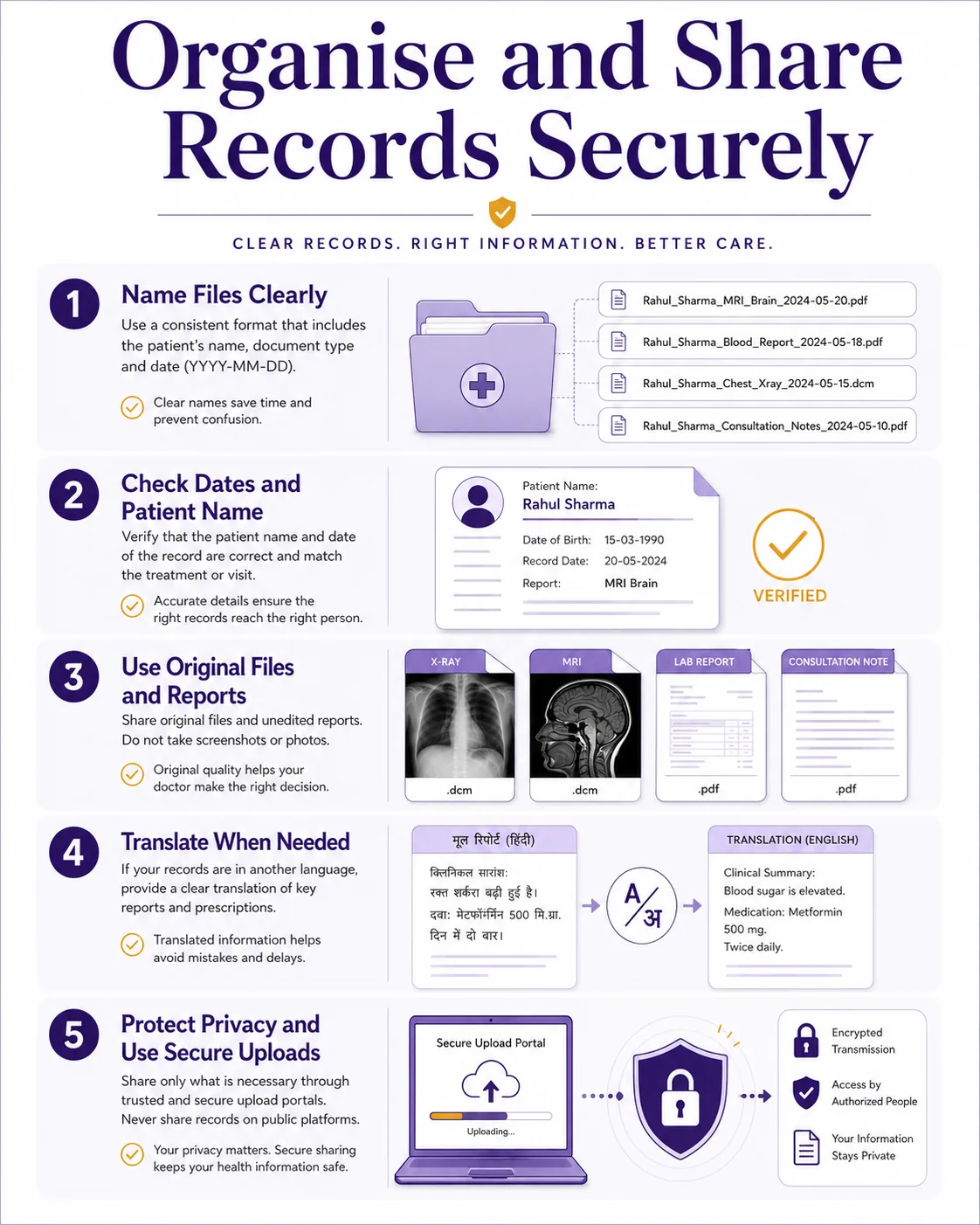
For treatments involving radiology, send the original imaging files where possible together with the radiologist’s written report. Relevant imaging may include X-ray, panoramic dental X-ray, CBCT, CT, MRI, ultrasound, mammography, PET-CT and previous surgical imaging.
Medical imaging is commonly stored using the DICOM standard. A phone screenshot may not preserve the detail, identifying data or examination information available in the original study.
When requesting imaging, ask for original digital images, the radiology report, the examination date and information about contrast use. Previous comparison imaging may also be useful.
RadiologyInfo guidance on obtaining and sharing medical images explains that patients can ask providers how images can be obtained and transferred electronically. Confirm the receiving provider’s accepted format before uploading a compressed DICOM folder.
8. Include Pathology Reports, Slides or Blocks When Relevant
For cancer, tumour, biopsy or complex tissue diagnoses, the written pathology report may be essential. Depending on the consultation, the reviewing team may request pathology reports, immunohistochemistry results, molecular tests, glass slides, paraffin blocks or digital pathology images.
National Cancer Institute guidance on pathology reports explains that a second pathology opinion may require the original slides and/or paraffin block from the hospital or pathologist that examined the tissue.
Do not send physical pathology material without instructions. The receiving department should explain packaging, courier requirements, customs, return arrangements and whether digital review is accepted.
9. Prepare Clear Medical Photographs
Photographs can support an initial review for visible anatomy, but they should be treated as clinical information rather than promotional images.
Use natural or neutral lighting, a plain background, clear focus, full-resolution images, a neutral position and no filters, beauty mode or retouching. Take only the views requested by the provider.
- Facial procedures: front, profiles, three-quarter views and other requested angles
- Hair treatment: front hairline, temples, top, crown and donor area
- Body procedures: standard views with the face excluded when unnecessary
- Dental appearance: clear smile and close-up views in addition to radiographs
- Wound review: good lighting, scale where requested and no image enhancement
Photographs cannot replace physical examination, imaging or laboratory testing when those are required.
10. Request Copies of Dental Records
For an online dental consultation, useful records may include panoramic X-rays, CBCT, intraoral X-rays, dental and periodontal charts, previous treatment plans, implant records, crown or bridge information, clinical photographs, extraction history and bone-graft records.
American Dental Association guidance on copying and transferring dental records notes that complete dental records may include radiographs and photographs.
For implant or full-mouth treatment, a panoramic image alone may not answer every question. The dentist may need three-dimensional imaging or an in-person assessment of the gums, bite and available bone.
Patients researching treatment may explore Venoramed’s dental treatments in Turkey.
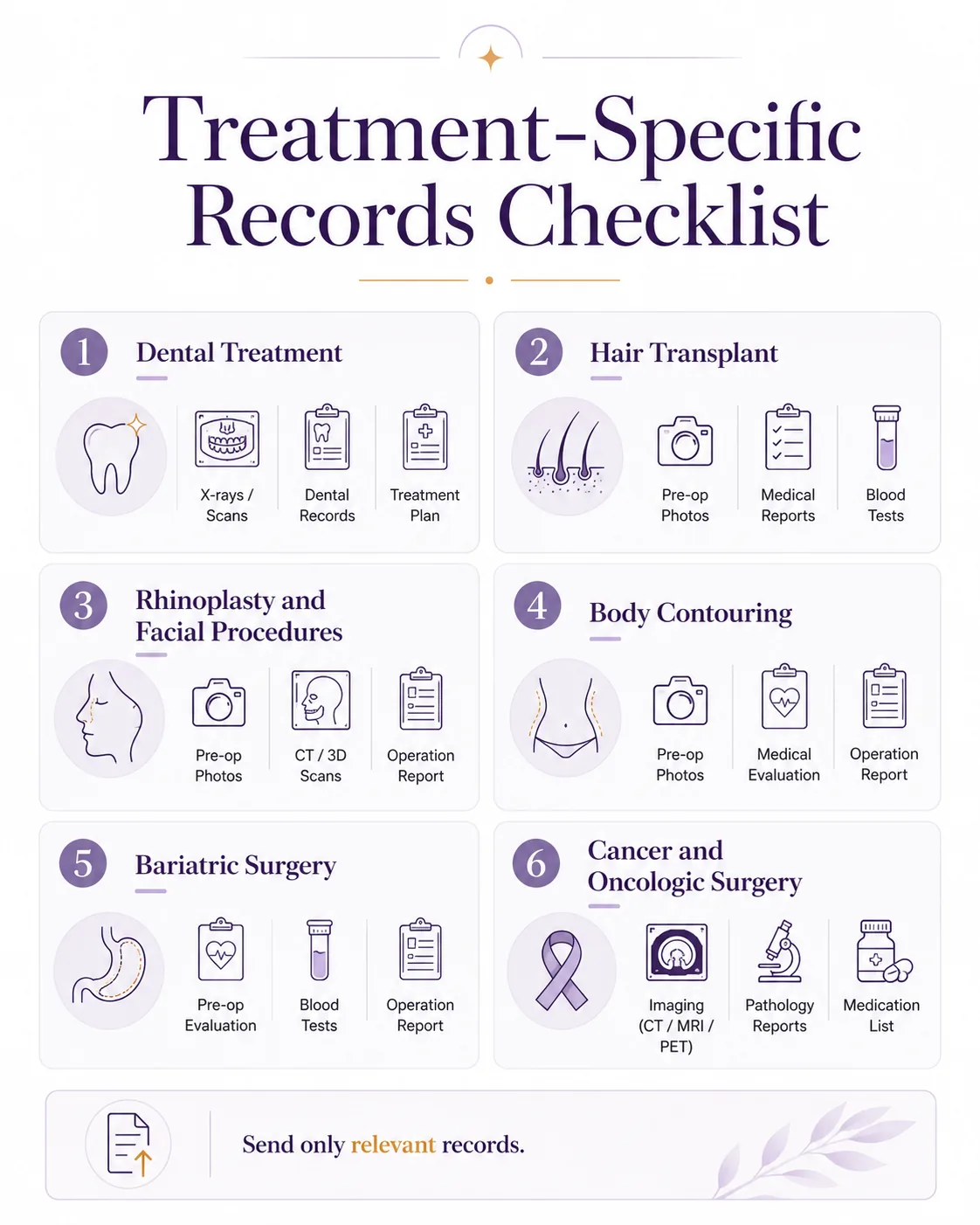
Treatment-Specific Medical Records Checklist
Different treatments require different documents. Sending irrelevant files can slow review, while missing essential information can produce an incomplete preliminary plan.
Dental Treatment Consultation
- Main dental complaint and current symptoms
- Panoramic X-ray and CBCT if available
- Dental chart and previous treatment plan
- Implant or bone-graft records
- Clear dental photographs
- Medication, allergy and smoking history
Hair Transplant Consultation
- Hair-loss timeline and family history
- Current hair-loss medicines
- Previous transplant report and graft number if known
- Clear photographs of hairline, top, crown and donor area
- History of scalp disease
- Medical conditions, medicines and smoking history
A photograph-based graft estimate should be treated as preliminary. Donor density, hair calibre, scalp condition and long-term planning may require closer assessment. Patients may explore the hair transplant treatments in Turkey.
Rhinoplasty and Facial Procedure Consultation
- Cosmetic and functional concerns
- Breathing symptoms and nasal injury history
- Previous operation report
- Standardised facial photographs
- CT or ENT reports where relevant
- Medication, allergy and smoking history
A cosmetic photograph cannot show every internal functional problem. Patients may review the facial refinement treatments in Turkey and use Venoramed’s patient safety checklist for choosing a doctor and clinic in Turkey when evaluating a proposed doctor and facility.
Body-Contouring Consultation
- Current height and weight
- Weight changes and pregnancy history where relevant
- Previous body or abdominal surgery
- History of hernia or blood clots
- Medicines, supplements and smoking history
- Clear photographs in the requested views
Patients may explore the body-contouring treatments in Turkey.
Bariatric-Surgery Consultation
- Current height, weight and weight history
- Previous weight-loss attempts
- Diabetes, blood pressure, reflux and sleep-apnoea history
- Previous abdominal or bariatric surgery
- Endoscopy and laboratory results
- Nutritional deficiencies, medicines and relevant mental-health history
Bariatric surgery requires more than an operation. Nutritional, medical, psychological and anaesthetic assessments may be required. Patients may explore the bariatric surgery in Turkey.
Cancer and Oncologic-Surgery Consultation
- Diagnosis and pathology report
- Biopsy date and slides or block if requested
- Imaging and radiology reports
- Stage information
- Previous surgery, chemotherapy or radiotherapy summaries
- Current symptoms, medicines and laboratory results
A second-opinion team may need to review pathology, scans and treatment history together rather than one document in isolation. Patients may explore the oncologic surgery in Turkey.
Quick Reference Table
| Record type | What to include | Preferred form |
| Medical summary | Symptoms, history, medicines, allergies and questions | One-page PDF or document |
| Laboratory tests | Complete report with date, units and reference ranges | Original PDF |
| Medical imaging | Original study plus radiology report | DICOM/accepted digital format + PDF |
| Operation records | Operation note, discharge summary and implant details | Original PDF |
| Pathology | Report; slides or block only when requested | PDF + instructed physical/digital material |
| Photographs | Requested views, unedited and well lit | Full-resolution JPG or PNG |
| Translation | Original plus complete matching translation | Separate clearly named files |
How to Name and Organise Medical Files
Avoid folders filled with names such as IMG001, Scan, Report Final, New Document or WhatsApp Image. Descriptive names reduce the chance that an important record is overlooked.
Recommended Naming Format
Use: YYYY-MM-DD-document-type-body-area
- 2026-05-14-blood-test.pdf
- 2026-04-22-rhinoplasty-operation-report.pdf
- 2026-06-03-dental-panoramic-xray.jpg
- 2026-06-03-dental-cbct.zip
- 2025-11-18-pathology-report.pdf
- 2026-07-01-medication-list.pdf
Place related records into clear folders such as medical-summary, medication-and-allergies, laboratory-results, imaging, operation-reports, photographs and pathology.
Check That Every File Belongs to the Correct Patient
Before uploading, confirm the patient name, date of birth, test date, facility, body area, page count, image orientation and whether any page is missing. Open every file to confirm that it works.
Mixed patient records can create serious confusion. Family members consulting the same provider should use separate folders and separate submission forms.
Should Medical Records Be Translated?
Ask the receiving provider which languages it accepts. English translations can be useful for international communication, but translation requirements depend on the document, the provider and whether a certified translation is needed.
CDC medical-tourism guidance recommends obtaining records in English after treatment abroad so they can be shared with future healthcare professionals.
Do not replace the original document with only a translation. Where possible, provide the original report, a complete translation, matching file names and translator information where relevant.
Avoid relying on automated translation as the only version of a complex pathology, operative or radiology report unless the receiving provider confirms it is acceptable.
Protecting Privacy When Sharing Medical Records
Medical records, photographs and identity documents contain sensitive personal information.
WHO guidance on digital health and data protection emphasises the need to protect the privacy, confidentiality, integrity and availability of health data. Telemedicine can increase privacy concerns because information may be transmitted and stored digitally across borders.
Before uploading records, ask:
- Who will receive the files?
- Is the recipient the doctor, clinic, hospital or facilitator?
- How are the files transferred and stored?
- Who can access the records and for how long?
- Can records be deleted on request?
- Will photographs be used for marketing?
- Will information be shared with another provider?
- Where is the data stored?
Do not send intimate medical photographs to an unverified personal account. Before sharing sensitive records, use Venoramed’s patient safety checklist for choosing a doctor and clinic in Turkey to verify the professional, facility and communication channel.
Documents That Should Not Be Shared Without a Clear Reason
A provider may need identity information for hospital registration or travel arrangements, but patients should not automatically send every personal document during the first conversation.
- Bank cards, banking passwords or one-time verification codes
- Unrelated financial statements
- Unrelated family medical records
- Unnecessary intimate photographs
- Complete passport scans before the recipient is verified
- National identity documents without a stated purpose
- Unredacted records belonging to another person
Ask why a document is required and how it will be protected.
Common Mistakes During an Online Consultation
Sending only photographs
Photos may help, but they rarely provide a complete medical history.
Hiding previous surgery
Previous treatment can significantly affect the next procedure.
Omitting medicines and supplements
Over-the-counter and herbal products may still be clinically relevant.
Sending cropped results
A single value without the date, unit and reference range may be difficult to interpret.
Sending screenshots instead of original imaging
A phone screenshot may not preserve the detail available in the original study.
Using filters or retouched photographs
Edited images can misrepresent skin, facial features, hair density or body contours.
Combining several patients’ records
Each patient should have a separate file set.
Sending records without dates
The provider needs to know whether a result is current or historical.
Expecting a final guarantee
An online review can support a preliminary opinion but cannot remove clinical uncertainty.
A payment request should be connected to an identified service, provider and written policy. Venoramed’s guide to medical treatment costs in Turkey explains the difference between a starting price, preliminary quotation and final treatment cost.
What Should You Receive After the Consultation?
Depending on the service, ask for a clear written summary containing:
- Name and professional role of the reviewing healthcare professional
- Proposed treatment and whether the plan is preliminary
- Information, tests or assessments still required
- Alternative options and important limitations
- Main risks discussed
- Expected treatment stages
- Approximate length of stay and follow-up plan
- Preliminary or itemised quotation
- Included and excluded services
- Circumstances that may change the plan or cost
Patients planning travel should also review Venoramed’s how long to stay in Turkey after surgery before booking a fixed return date.
Questions to Ask During the Online Consultation
- Have you reviewed all the files I submitted?
- Which records are missing?
- Is the proposed plan preliminary or final?
- What can only be assessed in person?
- Do I need updated imaging or blood tests?
- Will another specialist need to review my case?
- Where would treatment take place?
- Who would perform each part of the treatment?
- What medical factors may affect suitability?
- What could change the procedure or price?
- How many visits may be required?
- What follow-up is included?
- Which records will I receive after treatment?
- How will my information be stored?
- Who should I contact if my condition changes before travel?
Final Medical Records Checklist
- One-page medical summary
- Main symptoms and treatment goal
- Relevant diagnoses and previous treatment history
- Previous operation reports
- Complete medication and supplement list
- Allergies and previous reactions
- Important medical conditions
- Relevant laboratory reports
- Original imaging files and radiology reports
- Pathology reports and material only when requested
- Clear, unedited medical photographs
- Dental records where relevant
- Height, weight, smoking history and pregnancy status where relevant
- Original documents plus translations
- Clear file names and dates
- Verified and secure upload destination
Frequently Asked Questions
Do I need to send my entire medical history?
Not always. Send records relevant to the current treatment and any condition that could affect diagnosis, anaesthesia, medication, healing or travel. The provider may request additional records.
Can a doctor confirm surgery from photographs alone?
Photographs may support an initial discussion, but many decisions require medical history, examination, imaging, testing or assessment by another specialty.
Should I send screenshots of scans?
Original imaging files and the written radiology report are usually more useful than phone screenshots. Ask which format is accepted.
How recent should my blood tests be?
That depends on the procedure, medical condition and provider. Historical tests may be useful, but updated testing may still be required.
Should I translate my records into English?
Ask the receiving provider. Providing the original and a clear translation can reduce misunderstanding.
Can I send records through messaging apps?
Confirm the recipient’s identity, how files will be stored, who can access them and whether a secure upload option is available.
Do I need to send my passport during the first consultation?
Not necessarily. Ask why identity documentation is needed and verify the recipient before sending it.
What if an old operation report is unavailable?
Tell the provider it is unavailable and provide the approximate date, facility, procedure and other records you have. Do not guess technical details.
Are pathology slides the same as a pathology report?
No. The report contains the written interpretation; slides or tissue blocks contain material that another pathologist may need to review.
Does a preliminary plan guarantee the final price?
No. The plan and quotation may change after examination, updated imaging, testing or further specialist review.
Final Thoughts
Good medical records do not guarantee that a patient will be suitable for treatment. They make the initial conversation clearer.
A structured medical summary, complete medication list, relevant test results, original imaging, previous procedure reports and clear photographs can help the reviewing professional identify missing information and explain the next steps more responsibly.
An online consultation is part of the research and assessment process, not a substitute for every in-person examination or diagnostic test.
A practical approach is to:
1. Verify the professional and healthcare facility.
2. Organise only the relevant records.
3. Use a secure transfer method.
4. Ask what remains uncertain.
5. Request the proposed plan in writing.
6. Avoid non-changeable travel until assessment and recovery requirements are clear.
Medical disclaimer: This article provides general information and does not constitute medical advice, diagnosis or confirmation that a treatment is suitable. Medical records must be reviewed by an appropriately qualified healthcare professional.
Privacy disclaimer: Patients should verify the recipient and understand how personal and medical information will be collected, stored, accessed and shared before uploading sensitive records.
Platform disclaimer: Venoramed is a medical marketplace and is not a clinic, hospital or diagnostic service. Venoramed does not provide medical diagnoses or guarantee that a doctor will recommend a particular treatment.



2 Comments
Share your question or experience. Venoramed reviews comments before publishing.
[…] information rather than assuming that dental surgery is unrelated to general health. Venoramed’s medical records for an online consultation explains how to prepare records, medicines, imaging and previous treatment reports for an online […]
[…] medical-records checklist for an online consultation can help patients organise information before they share it through an appropriate, secure route. […]