
Introduction
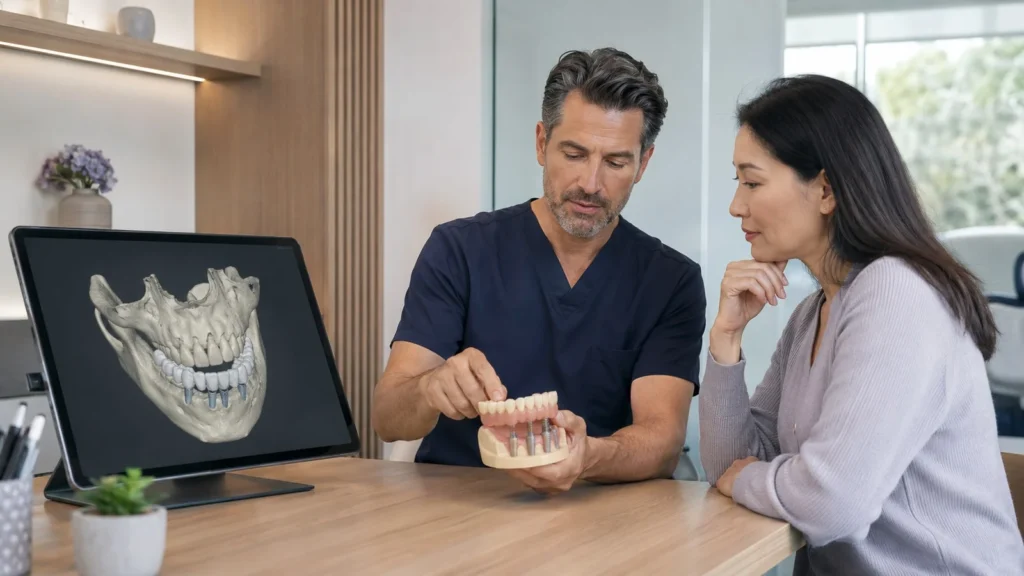
Searching for “All-on-4 vs All-on-6” is common when someone has lost most or all teeth in one jaw, or has been told that a full-arch implant restoration may be considered. The two labels sound simple, but they do not describe a ready-made product. They usually refer to the number of dental implants planned to support a fixed full-arch restoration: four in an All-on-4 plan and six in an All-on-6 plan.
That number alone cannot tell you which option is appropriate, whether any remaining teeth should be preserved, whether bone grafting may be needed, whether temporary teeth can be fitted soon after surgery, or how many visits may be required. A responsible plan should be based on diagnostic imaging, oral and gum health, bone availability, bite, jaw anatomy, the final prosthetic design, medical history and long-term maintenance needs.
The useful question is not “Which option is better for everyone?” It is: “Why is this specific number, position and design of implants being proposed for my mouth?” A qualified dental professional should answer that question after reviewing the relevant records and examining you in person.
Venoramed is a medical marketplace and coordination platform. It does not provide direct dental treatment or replace an individual consultation with a qualified healthcare professional.
What do All-on-4 and All-on-6 mean?
All-on-4 and All-on-6 are commonly used terms for fixed full-arch implant treatment. In a typical plan, implants are placed in one jaw and then used to support a larger prosthesis that replaces several or all teeth in that arch.
| Question | All-on-4 | All-on-6 |
| Number of implants | Four implants may support a full-arch restoration. | Six implants may support a full-arch restoration. |
| Implant distribution | The plan may use posterior implants at an angle to make use of available bone. | The plan may use a different distribution based on available bone and prosthetic needs. |
| What the label does not reveal | Bone condition, implant stability, prosthetic material, temporary teeth, final teeth, maintenance plan or individual suitability. | Bone condition, implant stability, prosthetic material, temporary teeth, final teeth, maintenance plan or individual suitability. |
| Main decision point | Whether the proposed design is appropriate for the individual jaw, bite and final restoration. | Whether the proposed design is appropriate for the individual jaw, bite and final restoration. |
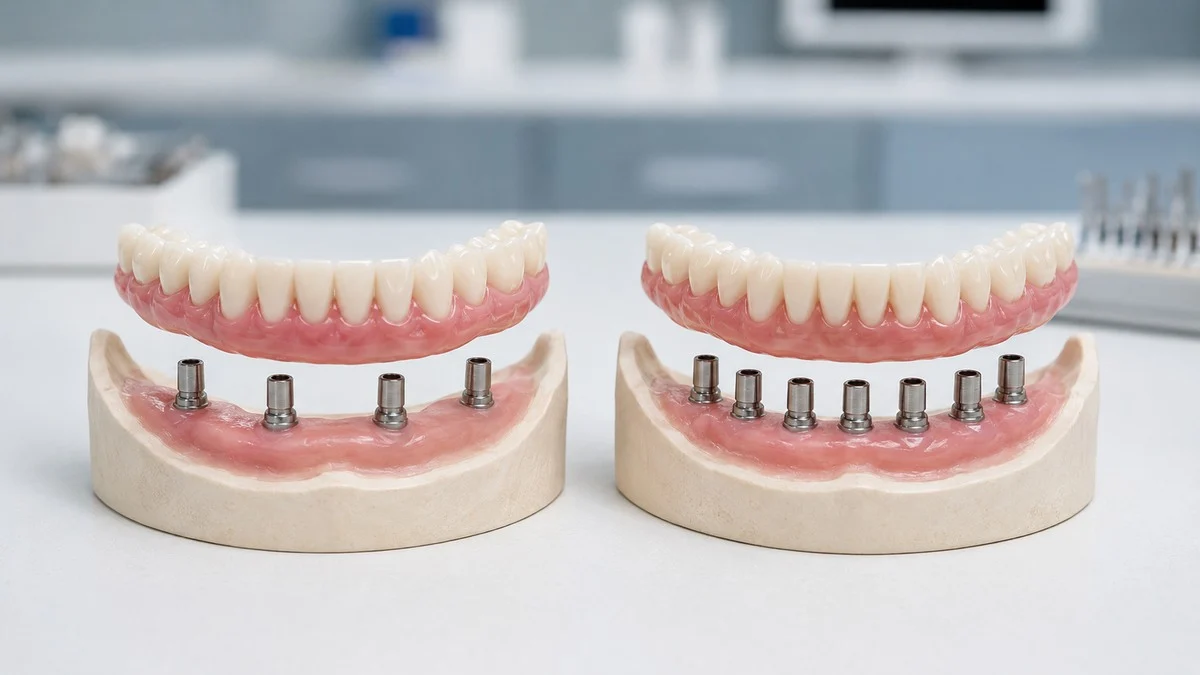
The terms should not be treated as competing “packages” with one universally superior option. A patient may have different needs in the upper and lower jaw, different bone conditions on each side, or remaining teeth that should be assessed individually before extraction is considered.
All-on-4 vs All-on-6: implant number is not a quality score
More implants do not automatically mean a better plan, and fewer implants do not automatically mean a lower-quality plan. The clinical question is how the implants, bone and final prosthesis will work together over time.
A full-arch restoration has to account for much more than implant count. The team may need to consider the amount and quality of bone, the shape of the jaw, the position of nerves or sinuses, the bite, the condition of the opposing teeth, expected chewing forces, lip support, smile line, speech, cleaning access and the material planned for the final teeth.
For example, a proposal for six implants may involve a different surgical and prosthetic strategy from a proposal for four. That does not mean one is automatically safer or more durable for every patient. In some cases, trying to place more implants or spread them differently may require additional procedures. In other cases, a particular implant distribution may make clinical sense because of the planned restoration and available bone.
A written plan should explain:
- Which jaw is being treated.
- Whether remaining teeth can be preserved.
- Why the proposed number and position of implants were selected.
- Whether the plan includes angled implants, bone grafting or another surgical step.
- What type of prosthesis is planned above the implants.
- How the team will assess bite, cleaning access and long-term maintenance.
For a broader explanation of implant components, stages, risks and aftercare, review Venoramed’s guide to dental implants in Turkey.
Start with diagnosis, bone condition and imaging
A full-arch treatment plan should not begin with a social-media image or a fixed quotation. It should begin with diagnosis.
The dental team may need to assess gum and periodontal health, existing tooth structure, infection, tooth mobility, bone volume, bone quality, bite, medical history, smoking or nicotine use, clenching or grinding, medications and expectations. Depending on the situation, scans, radiographs, photographs, impressions or digital records may be used to plan treatment safely.
Bone condition is especially important, but it does not create a simple rule such as “less bone means All-on-4” or “more bone means All-on-6.” Implant position, prosthetic design and anatomical limitations all matter. A responsible clinician should explain what the imaging shows, which areas may be challenging and whether the plan could change after an in-person examination.
Before agreeing to treatment, ask:
- Which diagnostic records have been reviewed?
- Are all remaining teeth planned for extraction, and why?
- Have tooth-preserving alternatives been considered where appropriate?
- Is bone grafting, sinus-related treatment or another additional procedure anticipated?
- Could the final plan change after examination?
- Who will explain any change before irreversible treatment begins?
Prosthetic design matters as much as surgical planning
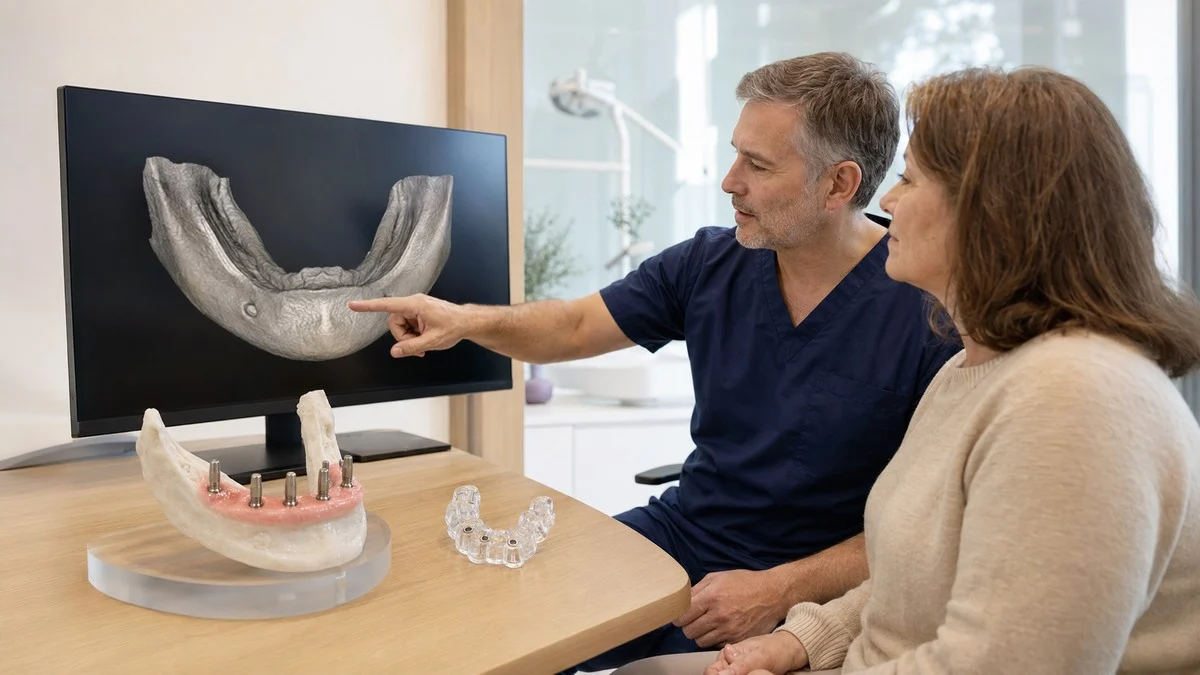
The visible teeth attached to implants are part of a prosthetic plan, not simply an add-on after surgery. The final design may affect appearance, speech, bite, cleaning access, repair options and maintenance over time.
Ask whether the proposed restoration is intended to be one full arch or divided into sections, what material is being considered, how it will be retained, how it can be maintained and what happens if a component needs repair. A treatment plan should also clarify the difference between the implant fixture, the connecting components and the visible prosthetic teeth.
It is useful to understand what the quotation includes. For example, a full-arch proposal may or may not include extractions, temporary teeth, final teeth, imaging, sedation, grafting, laboratory work, follow-up visits, repairs or travel-related arrangements. Two plans with the same number of implants may not represent the same clinical pathway.
A digital smile preview or a temporary mock-up can help communication, but it does not replace a clinical assessment of bone, bite, gum condition and long-term function.
Immediate loading does not always mean final teeth
“Immediate loading” is a term often used in full-arch implant marketing. Patients may understand it as “permanent teeth on the same day,” but that is not always what the phrase means.
In many full-arch plans, a patient may receive a fixed interim or temporary prosthesis soon after implant surgery. Whether that is appropriate depends on factors such as implant stability, bone condition, the need for grafting, the surgical plan and the treating clinician’s assessment. The final prosthesis may be made later, after healing and further evaluation.
Temporary teeth are not simply a cosmetic placeholder. They may be part of a healing and adjustment phase in which the team assesses comfort, appearance, speech, bite and hygiene. The provider should explain clearly whether the teeth fitted during the first visit are temporary or final.
Ask these questions in writing:
- Will I receive teeth shortly after surgery?
- Are they fixed or removable?
- Are they temporary, immediate interim teeth or the final prosthesis?
- What changes may be made before the final restoration is fitted?
- What clinical factors could mean immediate loading is not appropriate in my case?
- Is the temporary restoration included in the quotation?
Who performs the surgical and restorative stages?
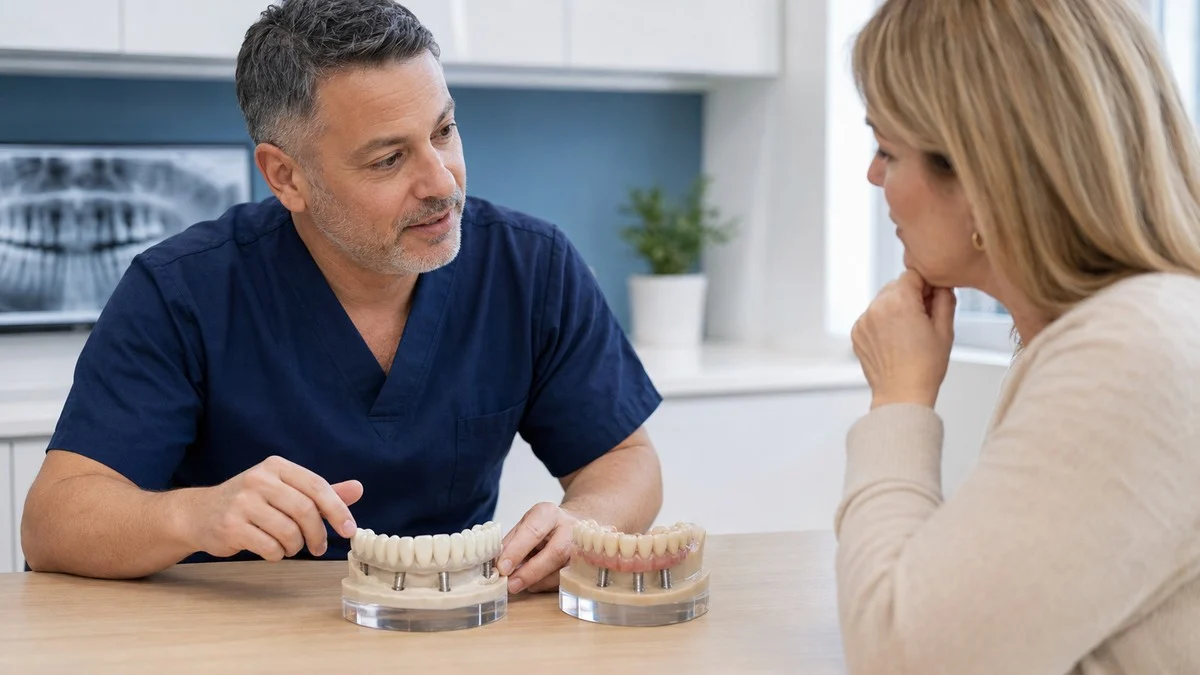
A full-arch implant plan can involve more than one professional role. Depending on the provider and case, one clinician may coordinate all stages or different professionals may handle the surgical and restorative parts of treatment.
The important point is transparency. Before travelling, you should know:
- Who is responsible for the diagnosis and final treatment decision.
- Who will place the implants.
- Who will plan and fit the temporary teeth.
- Who will design, fit and adjust the final prosthesis.
- Who will assess the bite after the teeth are fitted.
- Who will be responsible if a complication, fracture, loose component or fit issue develops.
A coordinator can help with communication and logistics, but the clinical responsibility and named treating professionals should be clear. Venoramed’s guide on choosing a doctor and clinic in Turkey safely can help you compare provider information, written plans and aftercare arrangements before making a decision.
Treatment timeline and multiple visits
A shorter trip is not automatically a better treatment plan. Full-arch implant care may involve an initial assessment, extractions where clinically indicated, implant placement, a temporary restoration, healing, bite adjustments and a later final prosthesis. Some patients may require more than one visit, while others may have a different sequence depending on the treatment plan.
Before booking flights, ask the treating team to provide a written timeline that includes:
- The planned arrival and examination date.
- The expected surgical stage.
- Whether temporary teeth will be provided.
- The number of local review appointments before travel home.
- The anticipated timing of a final prosthesis, if it is not fitted during the first trip.
- What happens if healing, implant stability or another clinical factor changes the schedule.
- Whether you need flexible travel arrangements.
- Which records and instructions you will receive for follow-up at home.
For general travel and recovery planning, read Venoramed’s guide on how long to stay in Turkey after surgery. Your individual travel clearance and minimum stay should always come from the treating healthcare professional.
Patients who need a broader combination of implant, restorative and bite-related care can also review full mouth restoration in Turkey.
Maintenance is part of the treatment, not an afterthought
A fixed full-arch implant restoration requires daily hygiene and long-term professional follow-up. The prosthesis should be designed with cleaning access in mind, and the patient should know how to clean around it correctly. Maintenance can include monitoring the gums and tissues around implants, checking the bite, assessing the prosthesis and addressing technical issues when they arise.
Ask the provider to explain:
- How you will clean around and beneath the restoration.
- Which home-care tools may be recommended for your specific design.
- How often you should attend professional follow-up, based on your individual risk profile.
- What records, scans or radiographs you will receive.
- What happens if a tooth section chips, a screw loosens or the prosthesis feels high.
- Whether a local dentist can reasonably provide follow-up, and what information they would need.
- Who you should contact if there is pain, swelling, fever, a loose prosthesis or another urgent concern.
Long-term maintenance should also be discussed before treatment begins. A design that looks attractive but cannot be cleaned or reviewed appropriately can create avoidable problems later.
How to compare All-on-4 and All-on-6 treatment plans responsibly
Do not compare plans using only the number of implants, the price or a promise of “same-day teeth.” Ask each provider the same questions and compare the answers on a like-for-like basis.
A useful comparison should include:
| Area | What to clarify |
| Diagnosis | The condition of teeth, gums, bone and bite; whether extraction is necessary; and alternatives considered. |
| Implant plan | The number, positions and reason for the proposed implant distribution. |
| Surgery | Whether grafting, sinus treatment, extractions or other procedures may be needed. |
| Temporary teeth | Whether they are fixed or removable, temporary or final, and what is included. |
| Final prosthesis | Material, retention method, bite assessment, repair pathway and maintenance design. |
| Team | Named professionals and responsibility for surgical and restorative stages. |
| Travel | Number of visits, expected local reviews, flexible booking needs and contingency planning. |
| Aftercare | Written instructions, emergency contact route, records and local follow-up options. |
| Quotation | What is included, excluded and potentially subject to change after examination. |
Be cautious if a provider recommends a fixed plan before reviewing adequate records, cannot name the treating dentist, cannot explain temporary versus final teeth, or pressures you to pay before your questions are answered.
Questions to ask before saying yes
Bring these questions to a consultation:
- Why are four or six implants being proposed for my specific jaw?
- What does the imaging show about my bone, anatomy and remaining teeth?
- Can any teeth be preserved safely?
- Could the plan require grafting or another procedure after examination?
- Which implants will support the prosthesis, and how will their positions be planned?
- Will I receive temporary teeth, and when would final teeth be fitted?
- Who performs the surgery, the temporary prosthesis, the final restoration and bite adjustments?
- How will the restoration be cleaned and maintained?
- What happens if a component fails or I need help after returning home?
- How many visits may be required, and what could alter the timetable?
- What is included and excluded in the quotation?
- Which clinical records will I receive for my future dentist?
Conclusion
All-on-4 and All-on-6 are not universal “better versus worse” choices. They are treatment approaches that need to be matched to the individual patient’s bone, anatomy, bite, oral health, prosthetic needs, medical history and ability to maintain the final restoration.
Before agreeing to a full-arch implant plan, make sure you understand why the proposed number and distribution of implants were chosen, whether the teeth you receive first are temporary or final, who is responsible for each clinical stage, how future visits will work and what maintenance will involve. The final decision should follow an individual assessment by an appropriately qualified dental professional.
Explore options with Venoramed
Explore Dental Treatments on Venoramed and compare available dental doctor profiles before requesting consultation or coordination support. Venoramed is a medical marketplace and coordination platform. It does not provide direct medical treatment or replace an individual consultation with a qualified healthcare professional.
Frequently Asked Questions
What is the main difference between All-on-4 and All-on-6?
The terms usually refer to the number of implants planned to support a fixed full-arch restoration in one jaw: four in an All-on-4 plan and six in an All-on-6 plan. The correct choice depends on the individual treatment plan, not the label alone.
Is All-on-6 always better than All-on-4?
No. More implants do not automatically make a plan better for every person. Bone condition, implant distribution, prosthetic design, bite, hygiene access and clinical judgement all matter.
Does All-on-4 mean I will receive permanent teeth immediately?
Not necessarily. Some plans include a fixed interim restoration soon after surgery, but that may not be the final prosthesis. Ask whether the teeth fitted during the first visit are temporary or final.
Can full-arch implant treatment be completed in one trip?
Some stages may be completed during one visit, but the number of trips depends on the plan, healing, temporary versus final teeth, grafting needs, implant stability and follow-up requirements. Ask for a written timeline before arranging travel.
Do I need a bone graft for All-on-4 or All-on-6?
Only a qualified clinician can determine this after reviewing your imaging and oral health. Bone condition is one part of planning, but it does not create an automatic rule for either approach.
Who should perform the treatment?
The provider should clearly identify who will make the final treatment decision, place the implants, fit temporary teeth, deliver the final prosthesis, adjust the bite and provide follow-up support.
How should I compare two full-arch implant quotations?
Compare the diagnosis, implant distribution, surgical procedures, temporary and final prostheses, named clinicians, number of visits, aftercare, maintenance plan and inclusions or exclusions. Do not compare only the headline price or number of implants.



Leave a Comment
Share your question or experience. Venoramed reviews comments before publishing.