

Life after bariatric surgery is not a short recovery checklist. A gastric sleeve, gastric bypass or another bariatric procedure can change how a person eats, drinks, absorbs nutrients, takes medicines and accesses follow-up care for years. The operation is one part of treatment; the long-term plan is the other.
The exact plan depends on the procedure, medical history, blood results, symptoms, medicines, nutritional status and the instructions of the team responsible for the surgery. A generic social-media diet, supplement list or “day-by-day” timetable cannot safely replace it.
This guide explains the areas patients should understand and discuss with their bariatric team: diet progression, hydration, food tolerance, prescribed supplements, blood tests, medication review, emotional adjustment, travel and when to seek help. It is general information, not a personal diet, prescription or diagnosis.
For broader planning, explore Bariatric Surgery treatment information and compare published Bariatric Surgery doctor profiles before requesting consultation support.
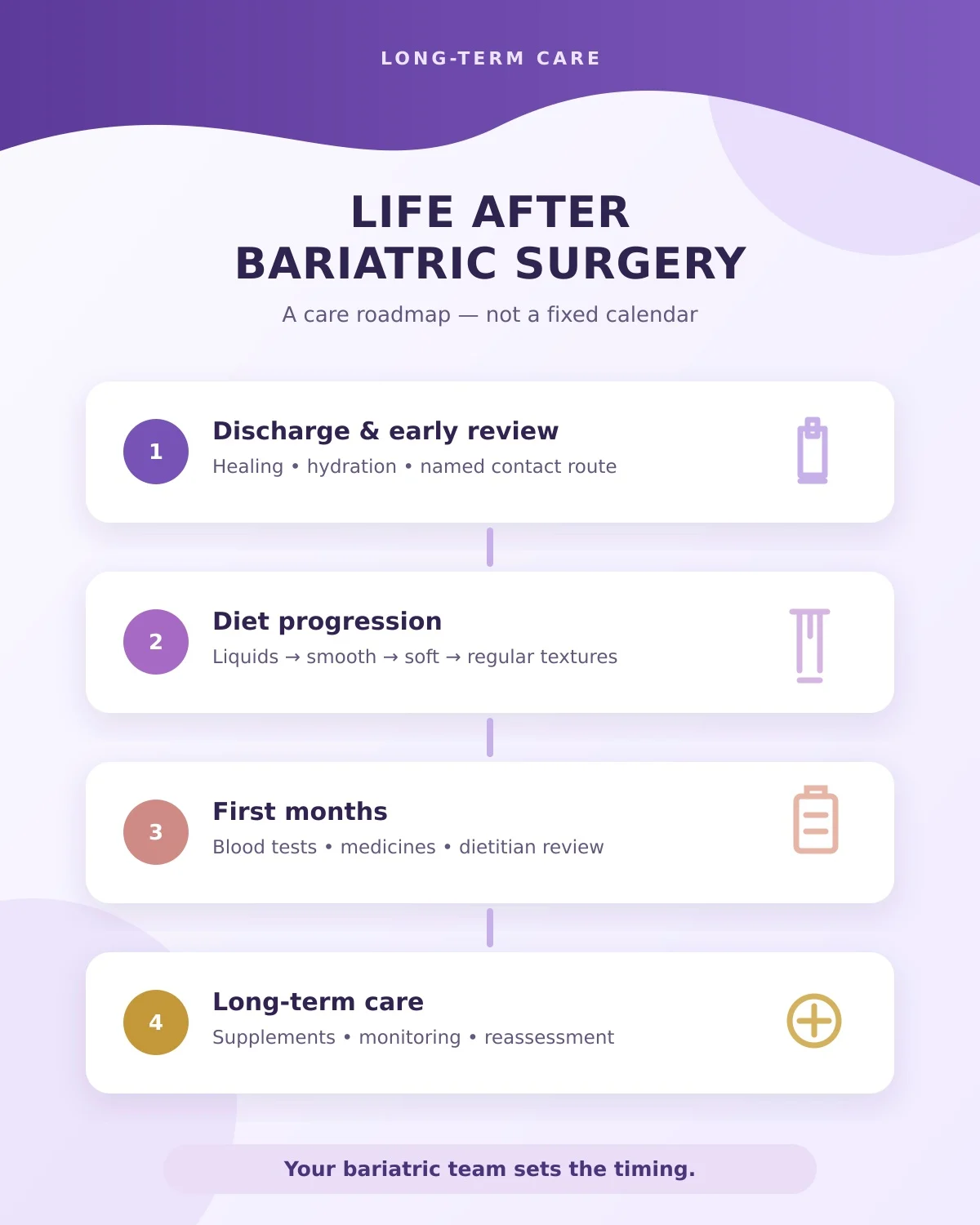
Bariatric surgery changes the care plan, not only the stomach
It is tempting to think of recovery as ending when the incisions heal or the patient returns home. In practice, ongoing care begins before discharge. The team should explain how the operation affects eating, drinking, nutritional supplementation, medicines, blood monitoring and the treatment of existing conditions such as diabetes, high blood pressure or reflux.
The details differ between procedures. Gastric bypass changes the food route through part of the small intestine, while a sleeve gastrectomy removes a large part of the stomach without intestinal rerouting. Both procedures can create nutritional risks and both require planned follow-up. The NIDDK overview of weight-loss surgery describes why the type of operation matters to diet, nutrient absorption and long-term care.
| Care period | What may be happening | What should come from the treating team |
| Discharge and early review | Healing, pain management, hydration and the first nutritional stage are being monitored. | Exact drinks, food texture, medicines, wound care, contact route and the timing of review. |
| Diet progression | The patient may move through liquids, smooth or puréed foods, soft foods and then more usual textures. | When to move forward, portion guidance, protein and fluid targets, and how to respond to intolerance. |
| First months | Weight, blood pressure, blood glucose, tolerance, mood and medicine needs may change. | Blood-test schedule, medication adjustments, dietitian review and activity progression. |
| Long-term care | Supplements, nutritional monitoring, existing health conditions and future symptoms still need attention. | The named clinician, routine review pathway, records, pregnancy planning where relevant and escalation plan. |
This is a planning framework, not a calendar. One person may need to remain at a stage longer than another because of symptoms, hydration, healing, a medical condition or the type of procedure performed.
Diet stages should be guided by healing and tolerance
Many bariatric programmes begin with liquids and then progress gradually to smooth or puréed foods, soft foods and regular textures. NIDDK describes this general pattern, but the timing and specific foods are set by the clinical team. A person should not move to a new stage early simply because someone else online did so.
Each stage has a purpose. Early fluids may help protect healing while supporting hydration. Softer foods can help the patient learn a new eating pattern, including slower eating, smaller amounts and careful chewing. The later return to more regular textures is not a return to the same habits that existed before surgery; it is a transition to a sustainable pattern that the patient can tolerate and maintain.
The written plan should clarify:
- Which drinks and foods are appropriate at the current stage.
- How to recognise fullness, discomfort, regurgitation or poor tolerance.
- How fluids, protein-rich foods and meals should be spaced across the day.
- Whether any food, drink, alcohol, nicotine product or supplement should be avoided.
- Which symptoms mean that the patient should pause the plan and contact the clinical team.
Do not force food, rush portions or treat repeated vomiting as a normal part of adapting to surgery. Persistent vomiting, swallowing difficulty, frequent regurgitation or an inability to keep fluids down need clinical review. They can affect hydration and nutrition and should not be managed by copying an online meal plan.
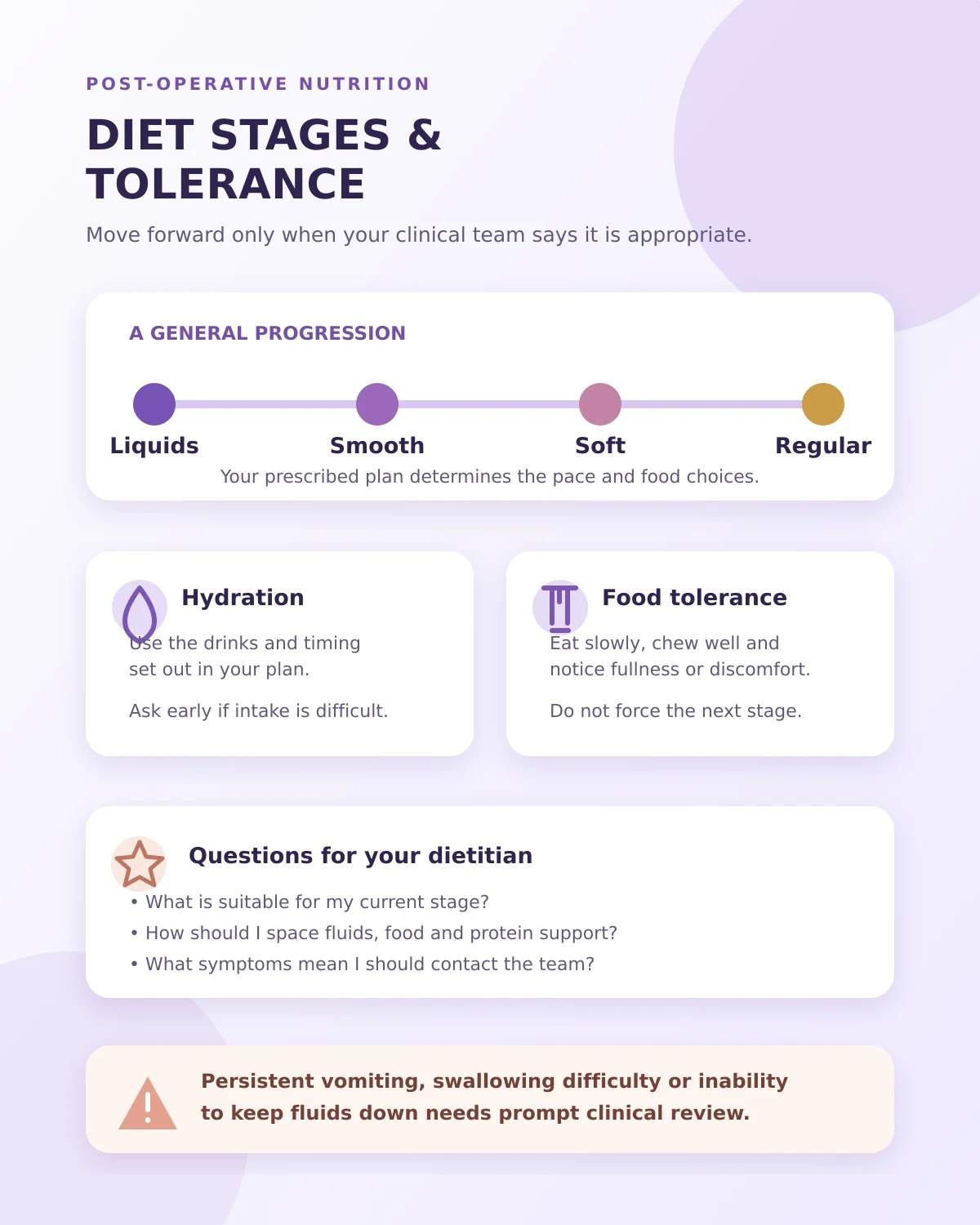
Hydration, protein and food tolerance need individual targets
Patients often want one universal target for water, protein or portion size. Those targets are individual and can change during recovery. The patient’s procedure, body size, kidney function, blood results, food tolerance, activity, medicines and stage of diet all matter.
Rather than giving yourself a generic rule, ask the dietitian or bariatric team to put the plan in writing. It should cover the drinks that are suitable, how to spread fluid intake, the role of protein-rich food or supplements, and what to do if nausea, constipation, diarrhoea, dumping-type symptoms, reflux or food intolerance develops.
If eating becomes difficult, the practical question is not just “What food should I try next?” It is also “Could this be a symptom that needs assessment?” A person who is not meeting their fluid or nutritional plan should contact the named clinical route before the problem becomes prolonged.
Vitamins and minerals are part of treatment, not optional shopping
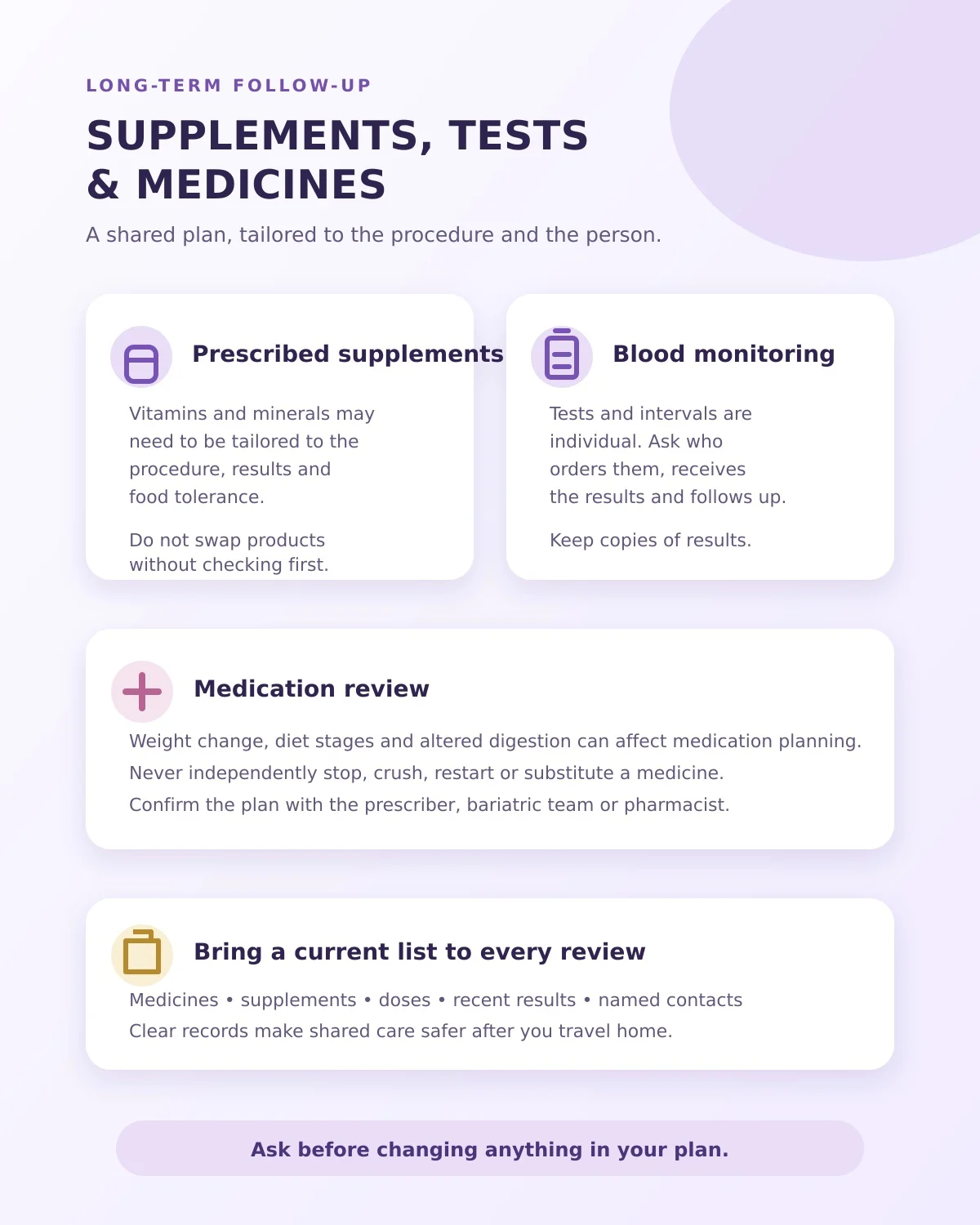
Bariatric surgery can increase the risk of nutrient deficiencies. The BOMSS nutritional guidance states that adults after bariatric surgery need lifelong nutritional supplementation and regular monitoring. The precise regimen is not the same for every procedure or every patient.
The care plan may include a multivitamin and mineral product and, depending on the procedure and results, separate support for nutrients such as iron, vitamin B12, folate, calcium or vitamin D. The treating team may change the plan after blood tests, a new symptom, menstrual changes, pregnancy planning, poor intake or another clinical factor.
This is why an over-the-counter product, a social-media “bariatric vitamin” recommendation or a supplement used by another patient is not automatically suitable. Product composition can differ, and adding one nutrient at a high dose can affect another. Keep an up-to-date list of every prescription medicine, vitamin, mineral, protein product and herbal supplement for review.
The useful questions are:
- What is prescribed for my procedure and current blood results?
- Which products should I avoid changing without checking first?
- How will my team test whether the plan is working?
- Who reviews deficiencies or symptoms once I am home?
- What should I do if a supplement causes nausea, constipation or poor tolerance?
Blood tests and long-term monitoring should have an owner
Blood monitoring is not an administrative extra. It helps the team identify nutritional deficiencies, changes in existing conditions and whether supplements or medicines need adjustment. BOMSS lists routine monitoring after sleeve gastrectomy and Roux-en-Y gastric bypass, including tests that may relate to blood count, iron, vitamin B12, folate, vitamin D, calcium and selected trace elements. The relevant tests and intervals must be chosen for the individual patient.
Ask for a written follow-up pathway before travelling. It should state who is responsible for early reviews, how and when blood tests will be arranged, who receives the results, and what happens if the patient needs local care after returning home. A stable patient may eventually share care with a local clinician, but that handover should be explicit rather than assumed.
Keep a personal records folder with:
- The operation name, date and discharge summary.
- The surgeon’s and bariatric service’s contact details.
- Current medicines and supplements, including dose and formulation.
- Recent blood-test results and the next planned tests.
- Dietitian advice and any known food or medication intolerance.
- A clear emergency and out-of-hours contact route.
For international patients, Venoramed’s guide to medical records for an online consultation can help organise records so that a clinician at home understands the operation and the planned follow-up.
For a broader pre-travel safety check, Venoramed’s doctor and clinic safety checklist can help patients clarify who has clinical responsibility for surgery, medication review, aftercare and urgent escalation.
Medication review is ongoing after surgery
Weight change, an early liquid or soft-food stage, altered digestion and changing health conditions can all affect medication planning. Some people need a change in dose, formulation, timing or monitoring; other medicines should not be changed without the prescriber’s direction.
The BOMSS medication guidance highlights why discharge medication review, pharmacist input and closer monitoring can matter after bariatric surgery. This may be particularly relevant for diabetes medicines, blood-pressure treatment, anticoagulants, thyroid treatment, psychiatric medicines, contraception, pain medicines and slow-release or enteric-coated products.
Do not independently stop, crush, restart or substitute a medicine because a generic list says it is “safe after surgery.” Ask who is responsible for each medicine during the early diet stages and after return home. If more than one clinician is involved, make sure the roles are clear and the current plan is documented.
Movement, mood and body changes also need attention
Activity can support recovery and long-term health, but the type, intensity and timing should follow the treating team’s advice. A return to walking, work, lifting, exercise or swimming is not identical for every person and should not be copied from a package itinerary or a social-media timeline.
Emotional adjustment matters too. Rapid changes in eating, body image, relationships, social routines and health conditions can be significant. Feeling worried about food, frustrated by a plateau or uncertain about a changing body is not a reason to disengage from follow-up. Tell the clinical team if mood, eating behaviour, alcohol use, support at home or day-to-day functioning becomes difficult. A bariatric programme should explain what psychological, dietetic and medical support is available.
Hair shedding, fatigue, weakness, new numbness, bowel changes or other symptoms also deserve assessment rather than assumptions. Some can have several possible causes; a clinical review and appropriate tests are safer than adding multiple supplements without advice.
When to contact the clinical team or seek urgent local care
The team should explain which symptoms may be expected after the specific procedure and which require review. Contact the named clinical route promptly for concerns such as persistent inability to drink, repeated vomiting, swallowing difficulty, worsening food intolerance, signs of dehydration, increasing pain, fever, unexpected wound concerns or symptoms that do not match the discharge plan.
Do not wait for a reply from a coordinator, chat account or social-media group if symptoms are severe, rapidly worsening or potentially life-threatening. Seek urgent local medical care for emergency symptoms such as chest pain, difficulty breathing, fainting, uncontrolled bleeding, severe allergic symptoms or severe pain with serious deterioration.
For a wider international-patient contingency plan, see Venoramed’s guide to complications after treatment abroad. It explains why records, named responsibility and an escalation route matter before travel.
Travel home should fit the follow-up plan
An included hotel stay is not the same as clinical clearance to travel. Before booking a non-changeable return journey, patients should know whether they need an early review, first blood test, wound check, dietitian appointment or medication review before leaving.
The return plan should include a procedure summary, medicines and supplements in their original packaging where appropriate, written diet and hydration instructions, contact details and a clear plan for local follow-up. Venoramed’s guide to how long to stay in Turkey after surgery explains why a fixed itinerary should not replace the treating team’s assessment.
When comparing proposals, ask what is included in post-operative care, dietitian support, tests, extra nights and follow-up. The guide to medical treatment costs and written quotations in Turkey can help patients compare the scope rather than a headline package price.
Weight change, pregnancy plans and new symptoms deserve reassessment
Life after bariatric surgery does not follow one straight line. Weight may change at different rates, a plateau can happen and some people regain weight over time. None of these experiences is a reason to blame the patient or to buy an unregulated “reset” programme. They are reasons to review nutrition, medicines, symptoms, mental health, life circumstances and the original operation with the appropriate clinicians.
Pregnancy planning also needs specialist, individual advice. A person considering pregnancy, experiencing a new pregnancy or using contraception should tell the bariatric team and the relevant local clinician so that nutritional monitoring and medication advice can be coordinated.
When significant symptoms, anatomical problems or weight regain occur, a new specialist assessment may explore whether {revisional bariatric surgery} should be considered.
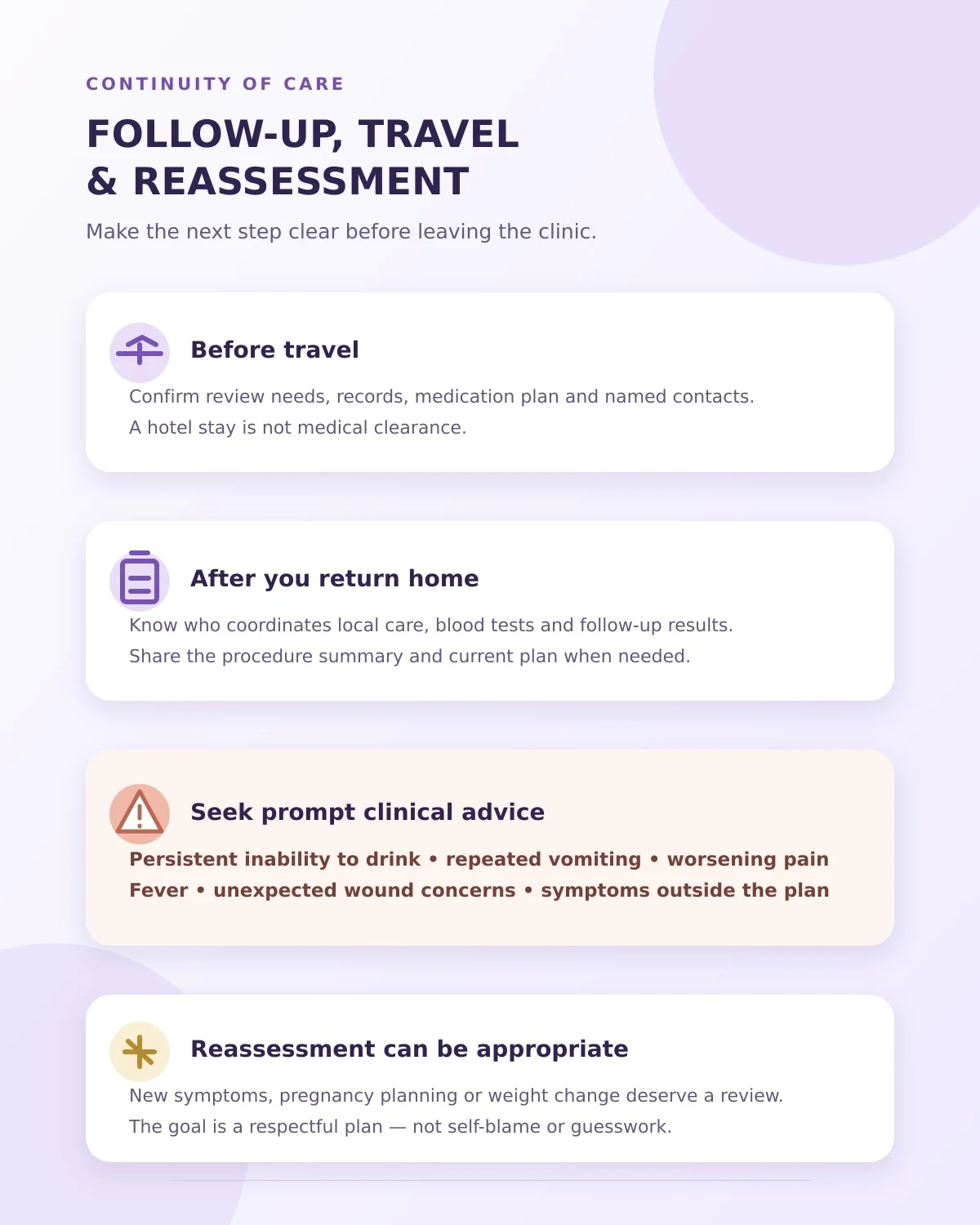
Questions to ask before leaving the clinic or travelling home
- What is my current diet stage, and what must happen before I progress?
- Which drinks, foods and supplements are appropriate for me now?
- What are my individual hydration and protein goals?
- Who reviews my medicines, and which ones must not be changed without approval?
- Which blood tests are planned, when, and who receives the results?
- Who provides dietitian and clinical follow-up after I return home?
- What symptoms require routine contact, urgent assessment or emergency care?
- What records will I receive, and what should I share with my clinician at home?
- Do I need an in-person review before travelling?
- What is included and excluded in my written follow-up plan and quotation?
Frequently Asked Questions
What can I eat after bariatric surgery?
Follow the stage-by-stage plan from the treating bariatric team. Many patients move from liquids to smoother, softer and then more regular textures, but the timing and food choices vary. Do not copy another person’s schedule or move forward if you are having symptoms.
Do I need vitamins after both a sleeve and a bypass?
Long-term supplements and blood monitoring are commonly part of care after both procedures. Gastric bypass can create additional absorption considerations, but sleeve surgery is not “vitamin free.” The exact products, doses and tests should follow the individual clinical plan.
How often will I need blood tests?
There is no universal timetable. The schedule depends on the procedure, recovery, existing conditions, symptoms and previous results. Ask for the planned tests, who will review them and how you will be contacted if something needs attention.
Can I stop diabetes or blood-pressure medicine after surgery?
Do not change a prescription independently. Health conditions and medicine needs can change after bariatric surgery, sometimes quickly. The bariatric team, prescribing clinician and pharmacist should confirm any adjustment and its monitoring plan.
What if I keep vomiting or cannot drink enough?
Contact the treating clinical team promptly. Persistent vomiting, swallowing difficulty, regurgitation or an inability to keep fluids down should not be managed with an online meal plan. Seek urgent local medical care if symptoms are severe or rapidly worsening.
Can all follow-up happen in my home country?
It may be possible for some elements of care to be shared locally, but this needs a documented plan. Before travel, make sure the local clinician has the procedure summary, current medicines and supplements, recent results, planned tests and a route to contact the treating bariatric service.
Is weight regain proof that surgery has failed?
No. Weight change has many possible clinical, nutritional, behavioural and life-related factors. A plateau or regain should prompt a respectful reassessment and support plan rather than self-blame or unverified treatment claims.
Explore bariatric-surgery options with Venoramed
Explore Bariatric Surgery treatment information and compare available Bariatric Surgery doctor profiles before requesting consultation or coordination support.
Venoramed is a medical marketplace and coordination platform. It does not provide direct treatment, prescribe a diet or supplements, diagnose complications or guarantee outcomes. Any surgery, aftercare, recovery and travel decision should follow an individual assessment by an appropriately qualified bariatric team.




Leave a Comment
Share your question or experience. Venoramed reviews comments before publishing.