

Choosing between gastric sleeve and gastric bypass is not a matter of picking the procedure with the strongest marketing label. Both are established forms of metabolic and bariatric surgery, and both can be considered for some people with obesity and weight-related health conditions. They are not, however, interchangeable operations. They change the digestive system in different ways, have different implications for reflux, nutrition and medication review, and need a long-term follow-up plan.
This guide explains the main differences patients may discuss with a bariatric team: anatomy, reflux and heartburn, metabolic conditions such as type 2 diabetes, nutrition, medications, risks, recovery and travel planning. It does not decide which procedure is right for any individual. That decision should follow an assessment of the person’s medical history, symptoms, previous treatment, tests, eating pattern, medications, nutritional status and ability to access follow-up care.
For the wider treatment area, explore Venoramed’s Bariatric Surgery treatment information and compare published Bariatric Surgery doctor profiles before requesting consultation support.
Venoramed is a medical marketplace and coordination platform. It does not perform bariatric surgery, select a procedure, prescribe medication or supplements, provide emergency care, or guarantee weight-related, medical or cosmetic outcomes. Surgical and travel decisions should be made with the treating clinical team after an individual assessment.
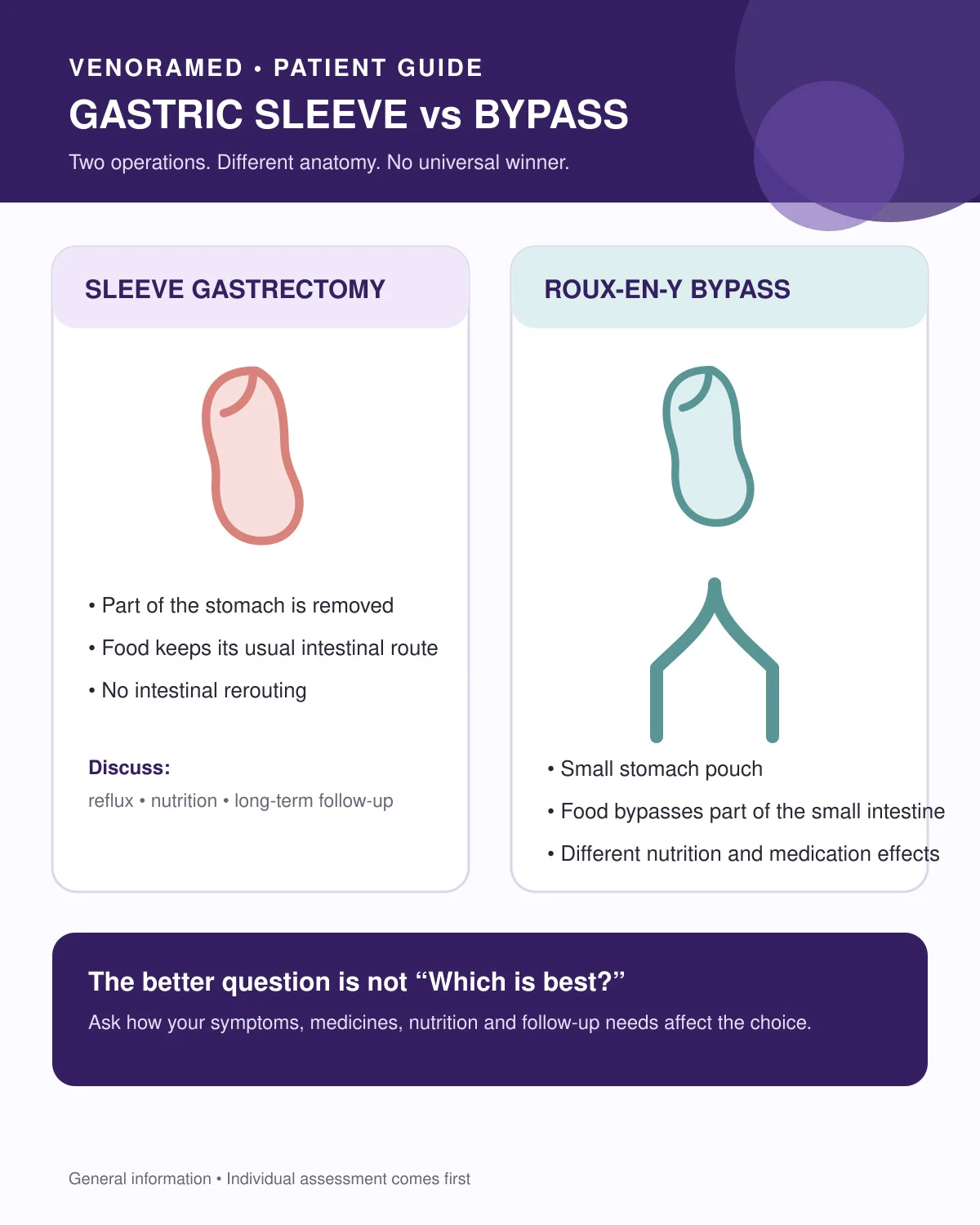
Start with what each procedure changes
The clearest difference is anatomical.
In a sleeve gastrectomy, commonly called a gastric sleeve, the surgeon removes a large portion of the stomach and leaves a narrow, tube-shaped stomach. Food continues through the small intestine in its usual route; the intestine is not rerouted. The procedure permanently removes stomach tissue, so it is generally not described as reversible.
In a Roux-en-Y gastric bypass, commonly called gastric bypass, the surgeon creates a small stomach pouch and connects it to a lower section of the small intestine. Food therefore bypasses most of the stomach and the first part of the small intestine. This can affect fullness, gut-hormone signalling and the absorption of calories and some nutrients. Reversal or revision is not a routine option; any further operation requires a new specialist assessment.
The NIDDK overview of weight-loss surgery and the ASMBS procedure guide describe these anatomical differences in more detail. The names of the operations may be short, but the implications are long term.
| Question | Gastric sleeve | Roux-en-Y gastric bypass | What needs individual discussion |
| Basic change | Part of the stomach is removed; the intestine is not rerouted. | A small stomach pouch is created and food is routed past part of the stomach and small intestine. | Anatomy, previous abdominal surgery and the exact proposed technique. |
| Reflux and heartburn | Can cause or worsen reflux in some people. | Often considered where reflux is an important issue, but it is not automatically right for every person. | Existing reflux symptoms, swallowing difficulty, hiatal hernia, investigations and treatment history. |
| Nutrition | Still requires lifelong supplements and blood monitoring. | The rerouted intestine can create additional nutritional and absorption considerations. | Existing deficiencies, dietitian support, blood-test plan and access to prescriptions. |
| Medication review | Smaller stomach and early diet stages may affect formulation and tolerance. | The altered route can make absorption and formulation questions more significant for some medicines. | Diabetes treatment, anticoagulants, psychiatric medicines, contraception, pain medicines and other individual drugs. |
| Complexity and trade-offs | Does not involve intestinal rerouting, but is still major surgery with risks. | Has a more complex intestinal reconstruction and different potential complications. | The person’s health, anaesthetic risk, hospital capability and the team’s aftercare plan. |
| Follow-up | Long-term clinical, nutritional and behavioural follow-up remains essential. | The same commitment is essential, with close attention to nutritional and medication needs. | Who provides follow-up after return home and how concerns are escalated. |
This table is not an eligibility tool. It is a way to organise a more useful conversation with the clinician responsible for recommending and performing the procedure.
Reflux, heartburn and swallowing symptoms deserve careful assessment
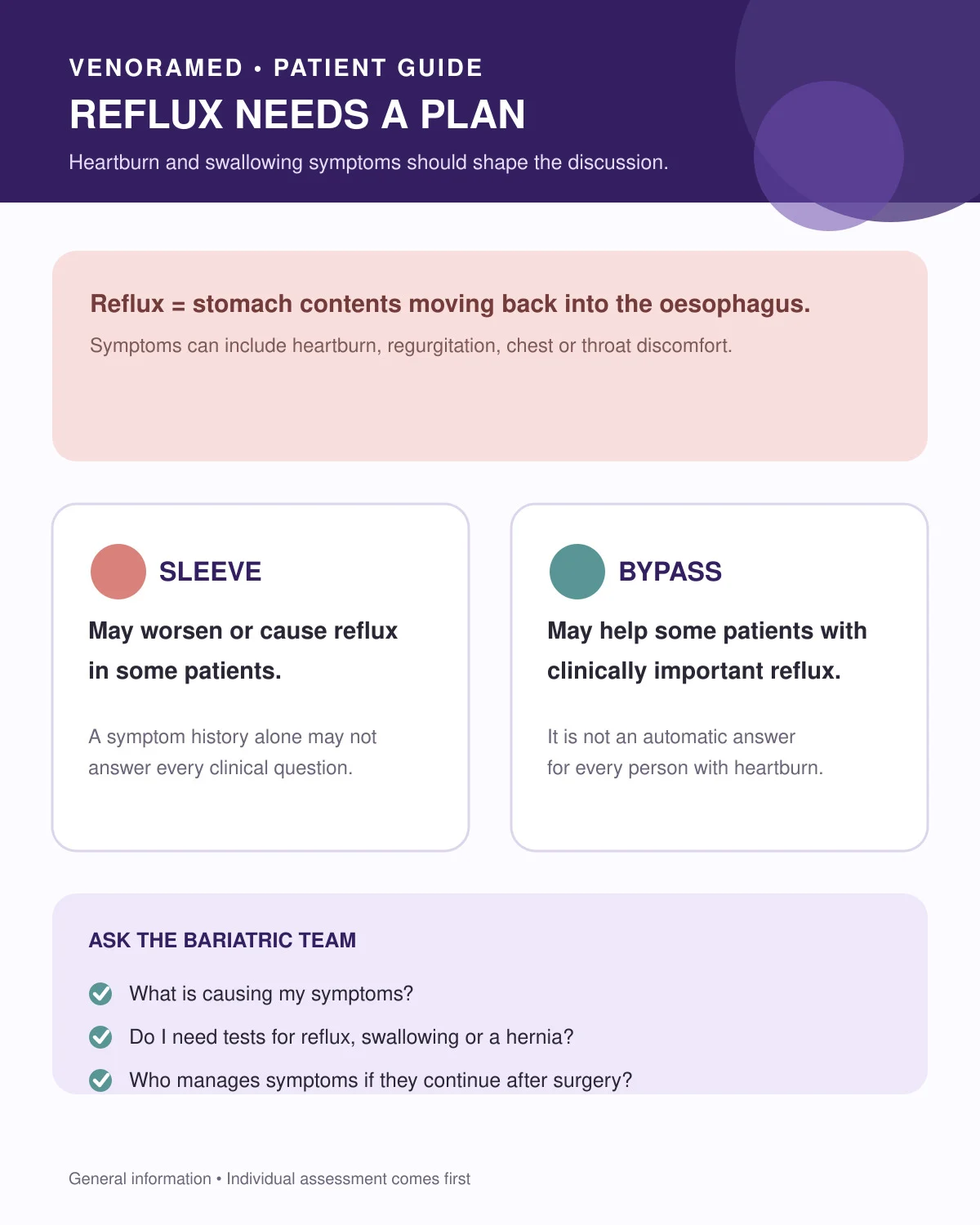
Reflux means stomach contents moving back into the oesophagus, which can cause heartburn, regurgitation, chest discomfort, cough or throat symptoms. Not every symptom that feels like reflux has the same cause, and not every person needs the same tests. A patient with reflux, swallowing difficulty, an existing hiatal hernia, persistent vomiting or a previous stomach operation should make sure those details are evaluated rather than choosing a procedure based on a generic comparison chart.
The ASMBS procedure guide notes that sleeve gastrectomy may worsen or create new reflux and heartburn, while gastric bypass often improves reflux symptoms in appropriate patients. A 10-year randomised comparison, the SLEEVEPASS trial, also reported more oesophagitis after sleeve gastrectomy than after Roux-en-Y gastric bypass. Those findings do not mean that bypass is automatically the best procedure for every person with heartburn. They show why reflux should be a central part of the assessment rather than an afterthought.
Useful questions include:
- What is thought to be causing my reflux or swallowing symptoms?
- Do I need medication review, endoscopy, imaging or another assessment before a procedure is chosen?
- Could the proposed operation worsen these symptoms?
- If symptoms persist after surgery, who will investigate and manage them?
- Does the hospital have a clear pathway for urgent symptoms or complications?
Do not treat relief of reflux as a guaranteed result of any operation. Ask what is known about your own symptoms, which uncertainties remain and how the team will respond if the outcome is different from the plan.
Weight, diabetes and expectations: use averages carefully
Both procedures can affect appetite, food intake, metabolism and weight-related health conditions. Gastric bypass also changes the food route through the small intestine, so its metabolic and absorption effects differ from those of a sleeve. In population studies, gastric bypass may produce greater average weight loss than sleeve surgery, while the procedures also have different risks and follow-up needs. An average from a study cannot predict a specific person’s result, health change or long-term weight trajectory.
Type 2 diabetes, high blood pressure, sleep apnoea, fatty liver disease and other conditions may be part of the conversation, but they do not turn either procedure into a guaranteed cure. Medication requirements can change quickly after surgery. That is one reason diabetes care, blood-pressure treatment and other chronic medicines need a named clinician and clear monitoring plan rather than a self-managed reduction in medication.
Ask the bariatric team to explain the clinical goal in your case. Is the priority glycaemic control, reflux management, weight-related mobility, treatment of another condition, a safer future pregnancy plan, or a combination of factors? The answer can affect the procedure discussion, but it should not be inferred from BMI, a social-media result or a package price alone.
Nutrition after either procedure is part of treatment, not an optional extra
Neither operation removes the need for nutrition planning. After gastric sleeve or gastric bypass, patients commonly progress through staged food and drink guidance under their treating team’s instructions. The timing, textures, protein goals, fluids, supplements and response to symptoms are individual. A generic menu or supplement list online cannot replace the plan created for the patient’s procedure, blood results and medical history.
The BOMSS nutritional guidance states that adults after bariatric surgery need lifelong nutritional supplementation and regular blood monitoring. It lists monitoring and supplementation needs for both sleeve gastrectomy and Roux-en-Y gastric bypass. The NIDDK and ASMBS also describe a risk of vitamin and iron deficiency after sleeve surgery, with gastric bypass carrying higher potential for some vitamin and iron shortages because of its anatomical changes.
That does not make sleeve “nutrition free” or bypass “too difficult” as a universal rule. It means a patient needs a realistic plan for:
- Pre-operative screening for nutritional deficiencies.
- Staged eating and drinking instructions after discharge.
- Protein, fluid and food-tolerance review.
- Prescribed vitamins and minerals, with no self-selected dose substitutions.
- Scheduled blood tests, interpretation and treatment of deficiencies.
- Dietitian follow-up and a clear route for vomiting, poor intake, dehydration, weakness or other concerns.
Whichever procedure is selected, patients should plan for life after bariatric surgery, including nutrition, supplements and long-term monitoring.
Whichever procedure is selected, patients should plan for {life after bariatric surgery}, including nutrition, supplements and long-term monitoring. life after bariatric surgery
Medication absorption and formulation should be reviewed before and after surgery
Medication is not a small administrative detail. The early post-operative diet can affect whether tablets are tolerated, while changes to the stomach and intestinal route can alter absorption or the suitability of a formulation. The BOMSS medication guidance explains that some medicines need closer review after bariatric surgery and that effects can differ between gastric bypass and sleeve gastrectomy.
For example, the guidance highlights questions around large tablets, slow-release or enteric-coated formulations, medicines with high sugar content, and drugs whose absorption or clinical effect needs closer monitoring. Gastric bypass can have a greater effect on some medicines because food bypasses part of the small intestine, but sleeve surgery can still change tolerance, timing and formulation needs.
Patients should not stop, crush, restart or change a dose based on a generic list. Before travel, obtain a written medication plan that identifies:
- Which medicines should be continued, paused, changed or monitored before surgery.
- Who will manage diabetes, blood pressure, anticoagulation, thyroid, psychiatric or other long-term medicines.
- What form of each medicine is appropriate during the early diet stages.
- Which clinician or pharmacist will review the plan after discharge and once home.
- What should trigger an urgent call or local medical assessment.
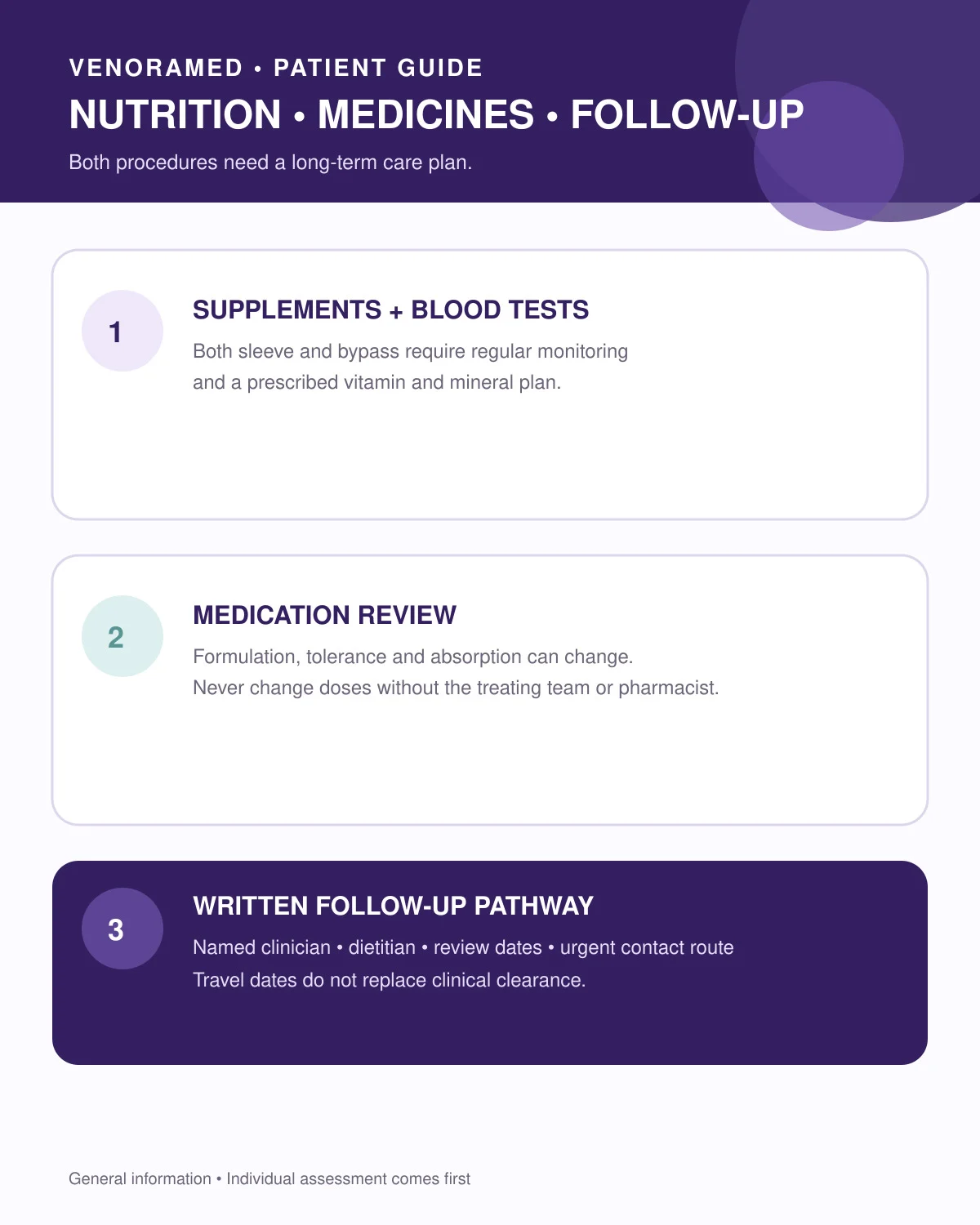
Follow-up is part of the comparison
The question is not simply, “Which operation has fewer appointments?” Both procedures need ongoing follow-up. The practical difference is whether the patient can realistically engage with the clinical, nutritional and medication support their particular plan requires.
Before accepting a proposal, ask for the follow-up pathway in writing. It should identify the named surgeon or bariatric service, dietitian support, review dates, blood-test schedule, prescription process, contact route for symptoms and who will coordinate care after you return home. Written discharge records matter because they allow a local clinician to understand the procedure, medicines, supplements, complications considered and planned reviews.
For international patients, the early review and return-flight date should be set by the treating clinical team, not by the number of hotel nights in a package. Venoramed’s guides to medical records for an online consultation, how long to stay in Turkey after surgery and complications after treatment abroad can help patients prepare the practical questions before booking non-changeable travel.
Which procedure is “best” for a patient?
There is no universal best procedure. A responsible recommendation may take account of reflux or oesophageal symptoms, diabetes and other medical conditions, current medicines, nutritional deficiencies, prior abdominal surgery, smoking or nicotine use, alcohol use, eating behaviour, pregnancy plans, support at home and the ability to attend long-term follow-up.
The most useful comparison is therefore not a checklist that awards points to sleeve or bypass. It is a documented discussion of the clinical trade-offs in the patient’s own case. If a provider can explain only the headline package, a fixed number of nights and a single promised outcome, key parts of that comparison are missing.
Use Venoramed’s doctor and clinic safety checklist to verify the hospital, named clinicians, procedure-specific experience, anaesthesia arrangements, aftercare responsibility and emergency pathway. A coordinator can organise communication and travel, but coordination is not the same as a clinical recommendation or surgical responsibility.
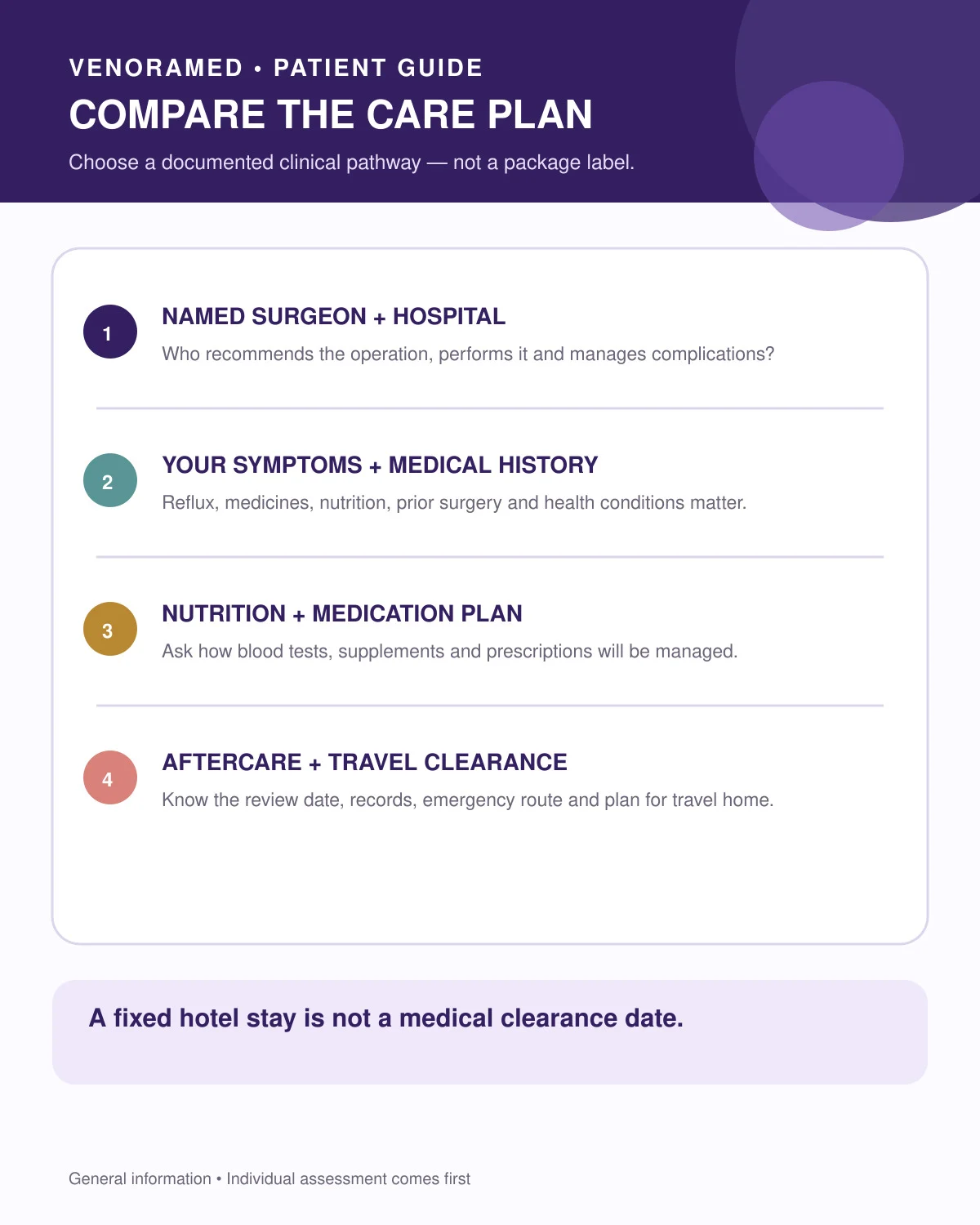
Questions to ask before deciding
- Why is gastric sleeve or gastric bypass being considered for me specifically?
- Which symptoms, conditions or test results are influencing that recommendation?
- How have reflux, swallowing symptoms or a hiatal hernia been assessed?
- What alternatives, including non-surgical treatment, are being considered?
- Who is the named bariatric surgeon, and where will the operation take place?
- What are the relevant short-term and long-term risks for my case?
- What is the plan for medications before surgery, during the early diet stages and after discharge?
- Which vitamins, minerals and blood tests will I need, and who will review them?
- How will diabetes, blood pressure, sleep apnoea or another long-term condition be monitored?
- What happens if I cannot tolerate fluids, food or medicines as expected?
- When is an in-person review required before I travel home?
- Who will provide clinical support after I return, and what is the urgent escalation route?
- What is included and excluded in the written quotation, including extra nights, tests, complications and follow-up?
For help comparing scope rather than a headline price, read Venoramed’s guide to medical treatment costs and written quotations in Turkey.
Frequently Asked Questions
Is gastric sleeve safer than gastric bypass?
Neither label is universally safer for every patient. The procedures have different anatomical changes and different potential complications. Individual health, reflux, medications, nutritional status, previous surgery, hospital capability and follow-up access all matter. Ask the named bariatric team to explain the risks most relevant to your case.
Is gastric bypass better for reflux?
Gastric bypass may be considered for some people whose reflux is clinically important, while sleeve surgery can worsen or create reflux in some patients. That does not turn bypass into an automatic answer. Reflux symptoms need individual assessment, and the team should explain the proposed plan, uncertainties and follow-up route.
Do I need vitamins after both procedures?
Yes. Long-term supplements and blood monitoring are commonly part of care after both sleeve and gastric bypass. The precise products, doses, tests and timing must come from the responsible clinical team and should be adjusted to the patient’s medical history and results.
Does gastric bypass affect medications more than sleeve surgery?
It can. Gastric bypass changes the route through the small intestine, so absorption and formulation may be affected for some medicines. Sleeve surgery can also change tolerance and medication planning. A surgeon, prescribing clinician and pharmacist should review the individual medicine list rather than relying on an online rule.
Which procedure causes more weight loss?
Research may show different average outcomes between procedures, but an average is not a prediction or a guarantee for one person. Long-term results depend on the procedure, health conditions, nutrition, activity, medicines, follow-up and many other factors. The appropriate choice is the one a qualified team can explain for the individual patient.
Can gastric sleeve or gastric bypass be reversed later?
Sleeve gastrectomy removes stomach tissue and is generally not considered reversible. Gastric bypass changes the stomach and intestinal route; revision or reversal is complex and may be considered only in selected clinical circumstances. Neither procedure should be chosen on the assumption that it can simply be undone later.
Can I fly home as soon as the hotel stay ends?
Do not treat the itinerary as medical clearance. The treating team should decide whether early review, recovery, symptoms, medication, flight duration or other health factors mean a different travel plan is needed.
Explore bariatric-surgery options with Venoramed
Explore Bariatric Surgery treatment information and compare available Bariatric Surgery doctor profiles before requesting consultation or coordination support.
Venoramed is a medical marketplace and coordination platform. It does not provide direct treatment, select a bariatric procedure, prescribe aftercare, diagnose complications or guarantee outcomes. Any treatment, recovery and travel decision should follow an individual assessment by an appropriately qualified bariatric team.




Leave a Comment
Share your question or experience. Venoramed reviews comments before publishing.